

You notice a soft bump at your baby’s belly button that seems to swell when they cry and flatten when they relax. For many parents, this is their first sight of an umbilical hernia. It can look alarming, but in most babies it is common, painless and something doctors simply monitor. Knowing what an umbilical hernia baby bulge usually looks like, and which signs mean you should seek help quickly, can save you a lot of worry.
This article is general information, not medical advice. Your baby’s doctor, polyclinic or paediatrician is the right person to examine any bulge and advise on your child specifically. For emergencies, go to the nearest hospital emergency department or call 995.
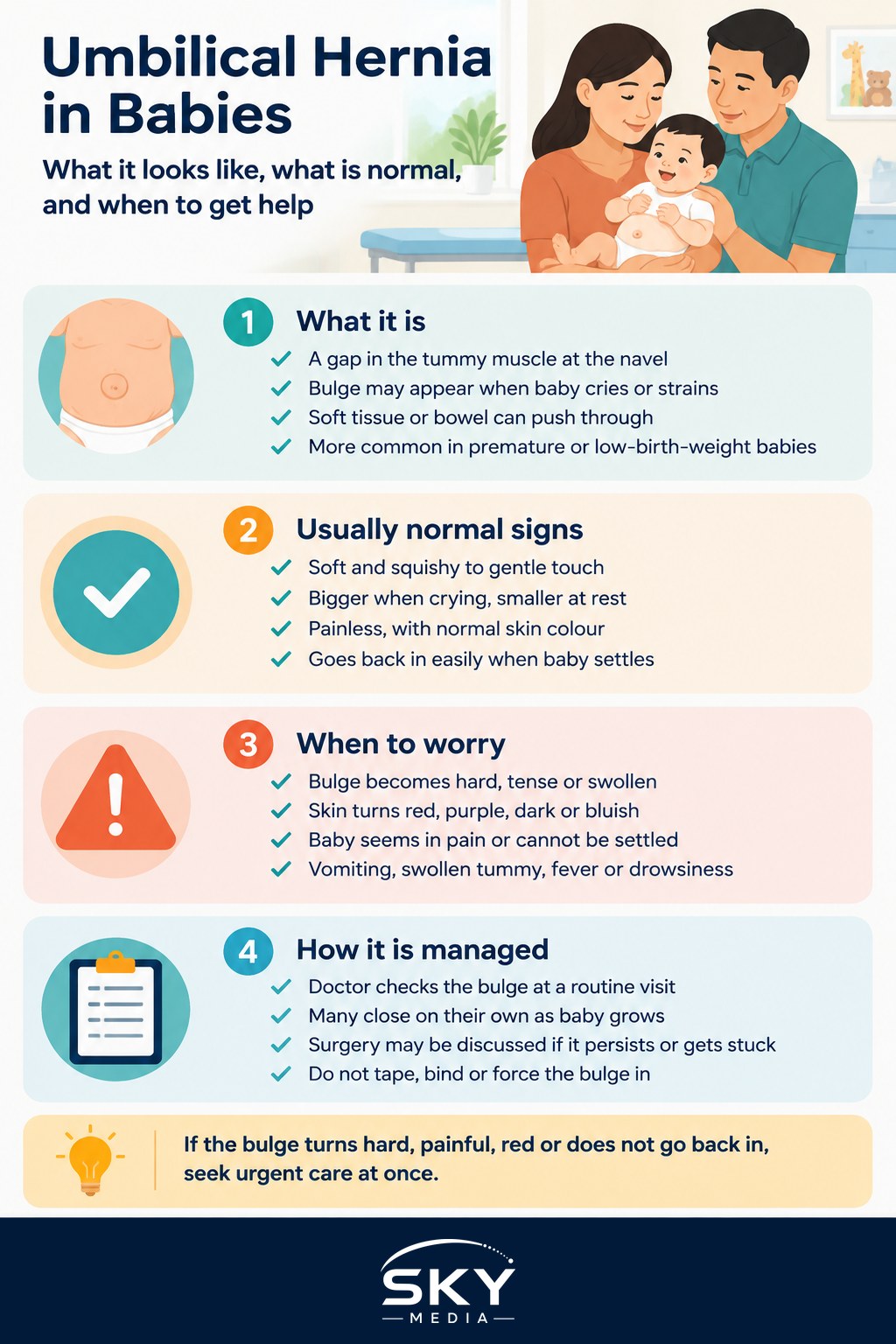
What an Umbilical Hernia Is
Before birth, the umbilical cord passes through a small opening in the baby’s tummy muscles. After birth, that opening normally closes. In some babies, it does not close completely, leaving a small gap in the muscle wall. When the baby cries, strains, coughs or passes stool, pressure inside the tummy pushes a little of the lining, and sometimes a small loop of intestine, through the gap. That creates the bulge you see under the skin at the belly button.
Umbilical hernias are seen more often in babies born prematurely and in babies with a low birth weight, though full-term babies get them too. They are usually not caused by anything parents did, and they are not caused by how the cord was cut or cared for.
How It Differs From Other Belly-Button Problems
Parents often confuse a hernia with other belly-button issues in the first weeks. Here is how they typically differ. If you are still caring for the stump, Umbilical Cord Care for Newborns covers that stage in detail.
| What you see | Likely issue | Typical next step |
|---|---|---|
| Soft, skin-covered bulge that grows with crying and shrinks at rest | Umbilical hernia | Mention at the next check-up; doctor examines and monitors |
| Small, moist, pinkish lump inside the belly button after the stump falls off | Umbilical granuloma | See a doctor, who may treat it in clinic |
| Redness spreading around the belly button, swelling, pus or a bad smell | Possible infection | Seek medical attention promptly, same day |
| Bulge that is hard, painful, discoloured or will not go back in | Possible trapped hernia | Go to an emergency department immediately |
An “outie” belly button that stays the same size whether the baby is calm or crying is often just the shape of the navel, not a hernia. A doctor can tell the difference quickly.
Signs That Usually Mean It Is a Typical Hernia
Most umbilical hernias in babies share these features:
- Soft and squishy to a gentle touch
- Bigger when crying or straining, smaller or flat when relaxed or lying down
- Painless. Your baby feeds, sleeps and behaves normally
- Normal skin colour over the bulge
- Goes back in easily on its own when the baby settles
Babies cry for many reasons, and the hernia itself is not usually the cause. Crying makes the bulge more visible, which can make it look as though the bulge is upsetting the baby when the reverse is true.
When to Worry: Red Flag Symptoms
Rarely, a loop of intestine can become trapped in the opening and lose its blood supply. This is called an incarcerated or strangulated hernia, and it is an emergency. Seek urgent medical care, at a hospital emergency department or by calling 995, if you notice:
- The bulge becomes hard, tense or swollen and does not go back in when your baby is calm
- The skin over it turns red, purple, dark or bluish
- Your baby seems in pain when the area is touched, or cries in a way you cannot settle
- Vomiting, especially repeated vomiting or green vomit
- A swollen, firm tummy or your baby stops passing stool or wind
- Fever together with any of the above, or your baby is unusually drowsy, floppy or refusing feeds
Trust your instincts. If something feels wrong, it is always reasonable to get your baby checked. For a wider view of symptoms that need attention in infants, see Common Baby Illnesses and When to Worry in Singapore.
How Doctors Usually Manage It
At a routine check, the doctor will look at and gently feel the bulge, check that it goes back in, and may estimate the size of the opening. In most babies, the plan is simply to watch. Many umbilical hernias get smaller and close on their own as the tummy muscles strengthen over the first few years of life.
Your doctor may talk about referral to a paediatric surgeon if:
- The hernia is still present as your child approaches the age your doctor considers typical for closure
- The opening is large or getting bigger over time
- There has been any episode of the hernia becoming stuck or painful
If surgery is suggested, it is usually a planned procedure, and the surgical team will explain the details, timing and recovery. Ask them any questions you have. Every child’s situation is different, so follow the advice given for your baby.
What Not to Do at Home
Older relatives sometimes suggest traditional remedies. These are well meant but not recommended by doctors:
- Do not tape a coin, button or band over the belly button. It does not help the opening close and can irritate the skin or cause infection.
- Do not bind the tummy tightly. This can be uncomfortable and does not treat the hernia.
- Do not try to push the bulge in forcefully. If it does not go back gently on its own, that is a reason to see a doctor, not to press harder.
- Do not stop your baby from crying to “protect” the hernia. Normal crying does not cause harm.
You can bathe, dress, carry and play with your baby as usual. Tummy time and normal handling are fine unless your doctor advises otherwise.
Keeping Track Between Check-Ups
A little simple record-keeping helps your doctor assess the hernia accurately:
- Take a photo of the bulge when your baby is crying and when calm, every few weeks, so you can compare size over time.
- Note any changes, such as colour, firmness or whether it is harder to go back in.
- Bring your questions to routine developmental and vaccination visits, and record notes in your child’s health booklet or HealthHub records.
- Keep emergency details handy, including the nearest children’s emergency department and how to get there.
Explore more: Premature Babies and NICU Care
An umbilical hernia is usually one of those baby things that looks worse than it is. Watch for the red flags, keep your doctor informed, and in most cases you will see the bulge become less noticeable as your child grows.
Official sources: HealthHub
Further reading: Hydrocele and Inguinal Hernia in Baby Boys: What Parents Should Know · Your Baby’s Soft Spot: Understanding the Fontanelle · Oral Thrush in Babies and Breastfeeding Mums