

We like to think of ourselves as rational when it comes to money. We compare, we calculate, we choose the sensible option. Yet the same person who researches a phone for hours might panic-sell an investment in a downturn, or keep paying for a subscription they never use. The gap between how we should decide and how we actually decide is the heart of behavioural finance in Singapore and everywhere else. Understanding the mental shortcuts that trip us up is one of the most practical forms of financial education, and this article covers them as general information rather than advice.
Behavioural biases are not signs of stupidity. They are built-in mental shortcuts that helped our ancestors survive but often misfire in a modern world of markets, marketing, and instant spending. The good news is that once you can name a bias, you can build simple guardrails against it.
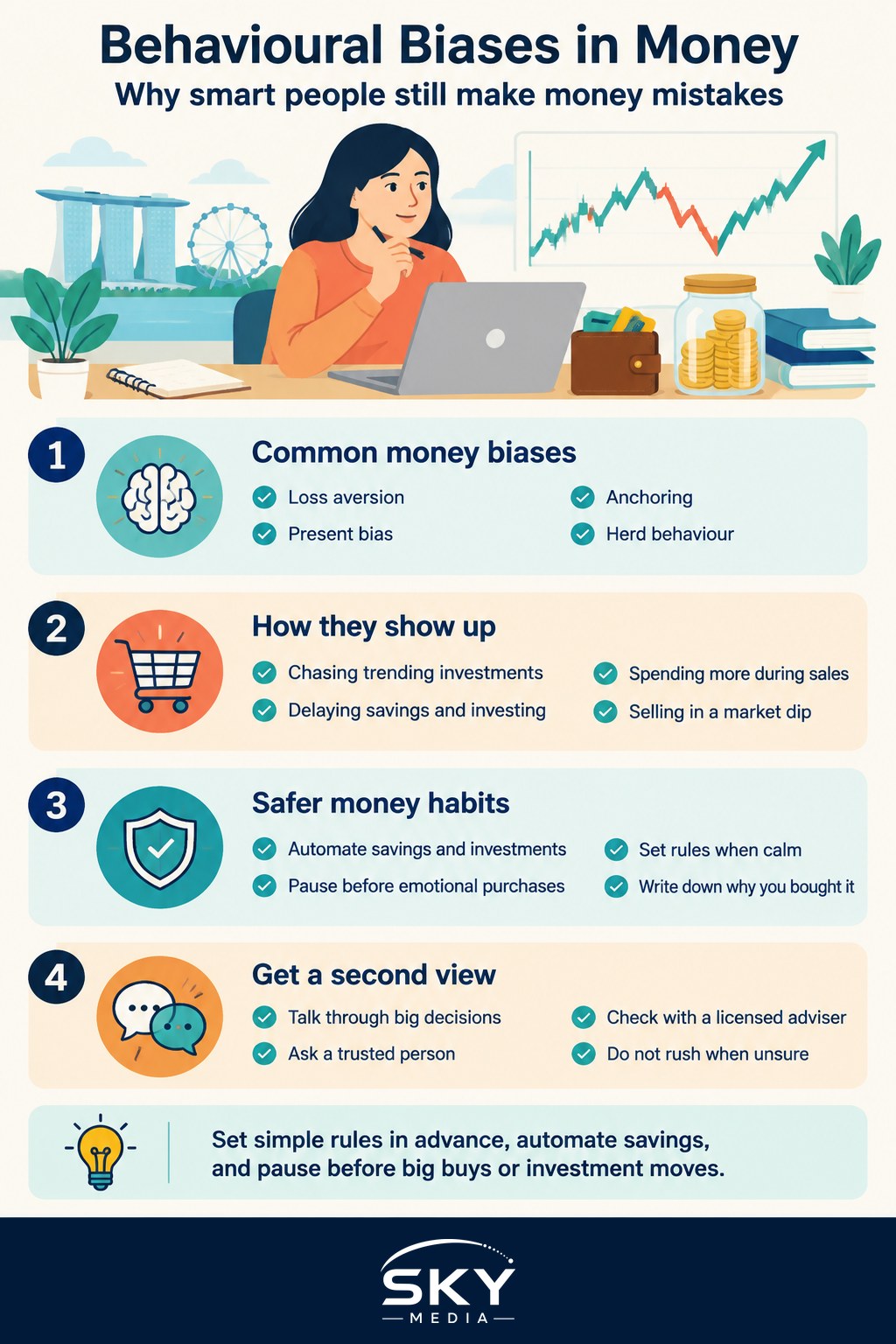
The Biases That Cost Us Most
A handful of biases show up again and again in everyday money decisions. Recognising them is the first line of defence.
- Loss aversion. Losing money hurts far more than gaining the same amount feels good. This can make people hold onto losing investments too long, or avoid sensible risks altogether. Understanding your risk tolerance helps you separate genuine caution from fear.
- Present bias. We heavily favour rewards now over rewards later, which is why saving for a distant retirement feels so much harder than buying something today. It is not weakness, it is wiring.
- Anchoring. The first number we see shapes how we judge everything after it. A “was 200, now 90” sticker makes 90 feel like a bargain even if the item is not worth it.
- Herd behaviour. When everyone around us is buying a hot stock, a property, or a trending crypto coin, the fear of missing out pushes us to follow, often near the peak. Scammers and hype cycles exploit this ruthlessly.
- Confirmation bias. Once we have decided something, we seek out information that agrees and ignore what does not. This keeps us in bad decisions long after the evidence has changed.
- Mental accounting. We treat money differently depending on where it came from, splurging a bonus we would never have spent from our salary, even though a dollar is a dollar.
- Sunk cost fallacy. We keep pouring money or time into something because of what we have already spent, rather than judging it on its future merits.
You will recognise several of these in yourself. That is normal. Everyone is subject to them, including professionals.
How Biases Show Up in Singapore
These patterns are not abstract. They shape real choices in daily life here.
Herd behaviour and fear of missing out fuel rushes into whatever investment is trending, often promoted heavily online. This is exactly the environment where scams thrive, which is why it pays to read up on investment scams and to remember that there are no guaranteed returns and higher potential gains always mean higher risk. Deal only with MAS-regulated entities and check the MAS Investor Alert List before parting with money.
Present bias makes it tempting to delay building an emergency fund or starting to invest, telling yourself you will begin “next year”. Anchoring and mental accounting show up every festive sale and every time a bonus lands, nudging spending that you would never approve of in the cold light of a budget. Loss aversion can keep someone frozen during a market dip, selling at the worst possible moment out of fear.
None of this means you are bad with money. It means you are human, and the environment is designed to press these buttons.
How to Outsmart Your Own Brain
You cannot delete these biases, but you can design your money life so they do less damage.
The most powerful move is to make good decisions automatic and hard decisions slow. Automating your savings and investments removes present bias from the equation, because the money moves before you can talk yourself out of it. Adding a deliberate pause, such as a waiting period before any large or emotional purchase, defuses anchoring and impulse. The habits in how to break bad spending habits are built around exactly this idea.
Set rules in advance while you are calm, then follow them when emotions run high. Deciding your investment approach before a market wobble means you are not making decisions in a panic. Writing down why you bought something helps you judge it honestly later, rather than clinging to sunk costs.
Finally, invite a second opinion. Talking a big decision through with a trusted person, or a licensed financial adviser, breaks confirmation bias by exposing you to views you might otherwise dodge. Awareness plus a few simple systems will not make you perfectly rational, but it will keep your worst instincts from steering the ship. This article is general information only, so consider your own circumstances and consult a licensed, MAS-regulated financial adviser before acting.
Frequently Asked Questions
Which money bias is the hardest to overcome? Most people find loss aversion and present bias the stickiest, because they are tied to emotion and short-term reward. They cannot be removed, only managed. Automating savings, setting rules in advance and sleeping on big decisions work better than relying on willpower.
Do professional investors suffer from these biases too? Yes, professionals are affected as well, which is why many use checklists, written rules and team reviews. Knowing a bias exists does not make you immune. The practical lesson is to build processes that slow you down, rather than assuming you will think clearly in the moment.
How do I stop impulse buying during sales? Add a waiting period before any non-essential purchase, such as sleeping on it for a day or two. Set a spending limit before you browse, and unsubscribe from promotional messages. Asking yourself whether you would buy it at full price helps counter the pull of a crossed-out original price.
Can behavioural finance help me invest more calmly? It can, mainly by helping you set a plan before markets move. Decide how much risk you can tolerate and when you will review, then stick to that plan during dips. Writing down your reasons for each investment helps you judge it fairly later.
Is it a bias to follow what my friends are investing in? Often, yes. It is called herd behaviour, and it tends to push people in when prices are already high. A friend’s gain does not mean the investment suits your goals or risk level. Check whether the seller is MAS-regulated and consider speaking to a licensed adviser.