

We usually think of forests when we picture nature soaking up carbon. But some of the most powerful carbon stores on Earth are not on land at all. They are in the mud and shallow waters along our coasts. Understanding blue carbon in Singapore means looking at the quiet, muddy, salty habitats that lock away carbon far more effectively than their size suggests, and realising why protecting them is one of the smartest things a small coastal nation can do for the climate.
Blue carbon is the term for carbon captured and stored by coastal and marine ecosystems, chiefly mangroves, seagrass meadows, and tidal marshes. For an island like Singapore, ringed by sea and dotted with these habitats, it is a surprisingly relevant idea.
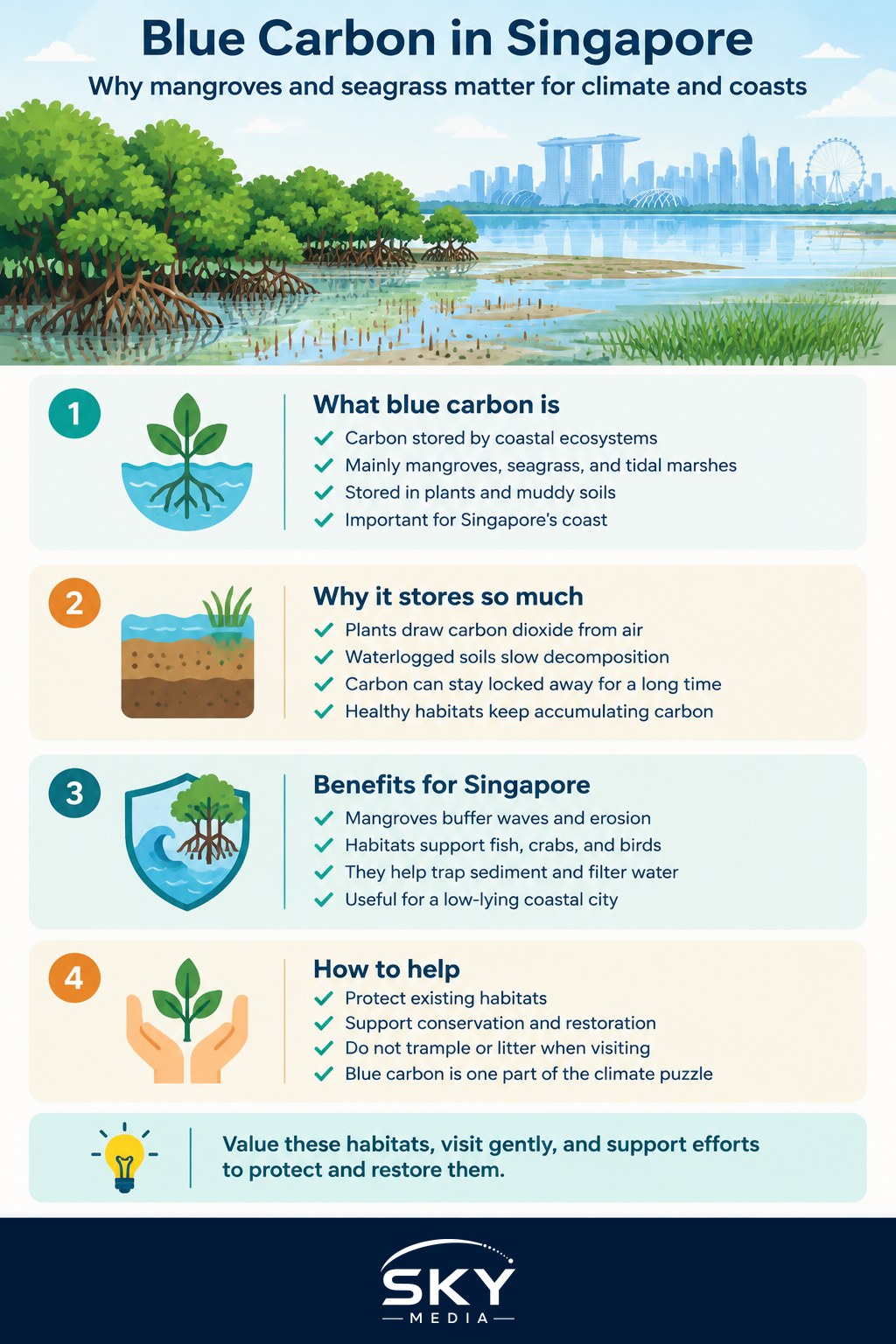
What blue carbon is and why it is special
Like all plants, mangroves and seagrasses pull carbon dioxide from the air through photosynthesis. What makes them special is where the carbon ends up. Much of it is stored not just in the plants themselves but in the waterlogged, oxygen-poor soils beneath them, where it can stay locked away for a very long time.
This gives blue carbon habitats some remarkable qualities:
- They store carbon densely. Per unit of area, these coastal ecosystems can hold a great deal of carbon, much of it buried in the sediment.
- They store it for a long time. Because the soils are waterlogged, buried carbon decomposes slowly, keeping it out of the atmosphere for a very long time if left undisturbed.
- They keep accumulating. As long as they are healthy, these habitats keep drawing down and burying more carbon over time.
The flip side is important. When these habitats are cleared or damaged, that stored carbon can be released, turning a valuable carbon sink into a source of emissions. Protecting what exists is therefore just as important as growing more.
Why blue carbon matters for Singapore
Singapore is a low-lying coastal city taking climate change seriously, which makes blue carbon doubly relevant. Beyond storing carbon, these habitats deliver benefits that matter enormously here.
- Coastal protection. Mangroves buffer shorelines against waves and erosion, a valuable service for a low-lying island thinking hard about rising seas.
- Biodiversity. Mangroves and seagrass meadows are nurseries and homes for fish, crabs, birds, and other wildlife, supporting the richness of our coasts.
- Water quality. These habitats trap sediment and filter water, keeping coastal environments healthier.
You can see why conserving them is a national interest, not just an environmental nicety. This connects closely to coastal and mangrove conservation, where much of the on-the-ground protection happens, and to the broader story of climate change and Singapore.
How blue carbon fits the bigger picture
It is worth keeping blue carbon in perspective. These habitats are genuinely valuable, but they are one piece of a much larger climate puzzle. Protecting and restoring them cannot replace the harder work of cutting emissions across energy, transport, and industry. Think of blue carbon as a natural ally that complements those efforts, offering carbon storage, coastal defence, and thriving wildlife all at once, rather than a standalone fix.
For most of us, the practical link is about care and awareness rather than direct action. We can support the conservation of coastal habitats, visit them respectfully without trampling or littering, and back efforts to protect and restore them. Understanding why a muddy mangrove or an unglamorous seagrass patch matters is itself a small act of stewardship, and it sits comfortably within a wider appreciation of protecting our coral reefs and Singapore’s marine life more broadly.
Small habitats, outsized value
Blue carbon is a lovely reminder that nature’s climate solutions are not always grand or green in the way we expect. Sometimes they are muddy, tidal, and easy to overlook. Singapore’s mangroves and seagrass meadows quietly store carbon, shield our coasts, and shelter a wealth of wildlife, doing several jobs at once. You do not need to do anything dramatic to help. Simply valuing these habitats, treating them gently when you visit, and supporting their protection all count. In a warming world, the humble mangrove turns out to be a very good friend to have.
Official sources: National Parks Board (NParks)
Further reading: Seagrass Meadows in Singapore: Why They Matter and Where to See Them