
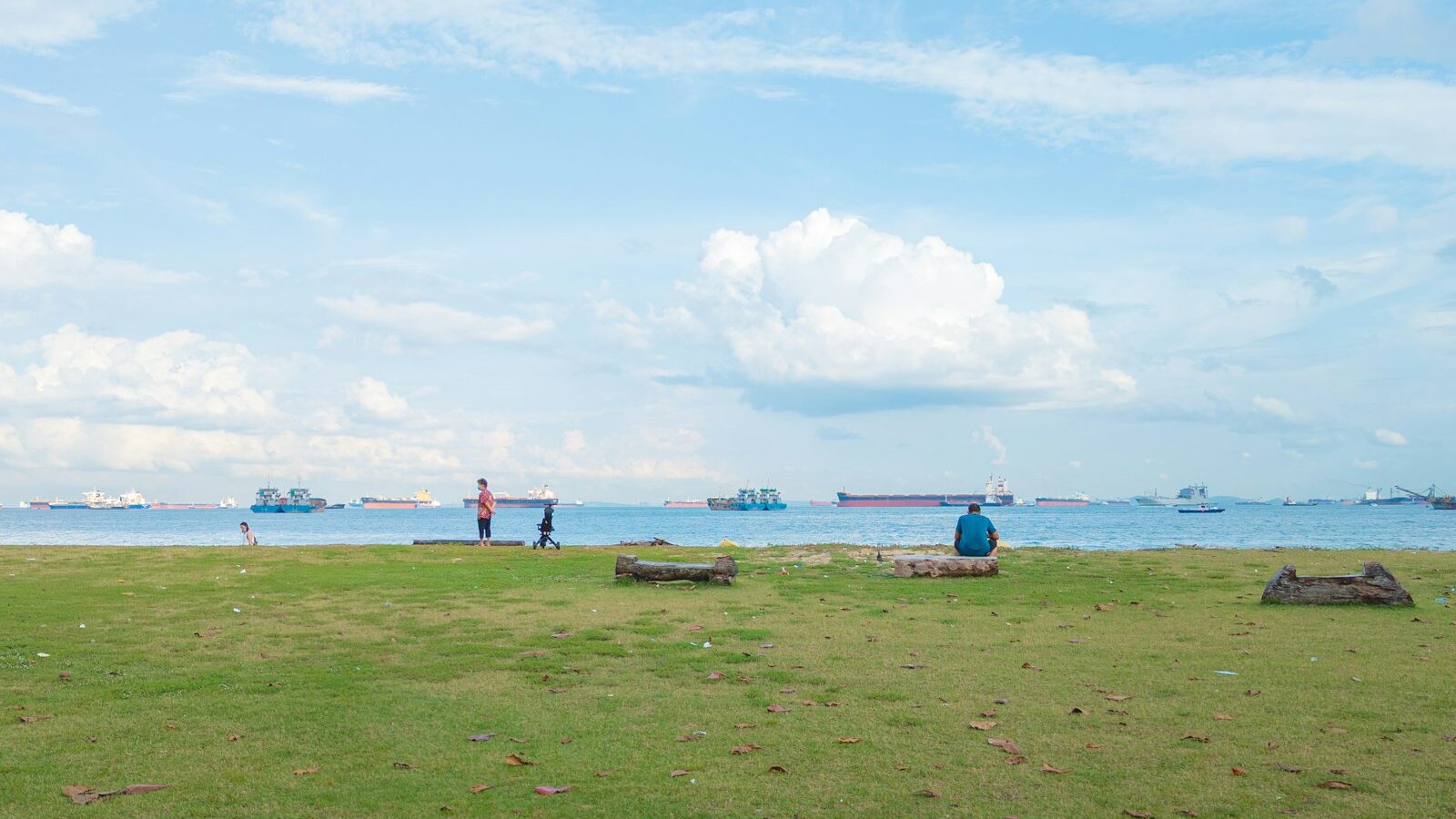
Most people picture Singapore’s coastline as sea walls, container terminals and reclaimed land. Yet at low tide, on a handful of shores, a quieter world appears: soft green meadows of seagrass, dotted with sea stars, crabs, sea cucumbers and small fish. Seagrass in Singapore is easy to overlook, but these meadows are some of the most valuable habitats around our island.
This guide explains what seagrass is, why the meadows matter, where you can see them, and how to visit without harming them. For related habitats, see our guides to coastal and mangrove conservation and protecting our coral reefs.

What Seagrass Actually Is
Seagrasses are not seaweeds. Seaweeds are algae, while seagrasses are flowering plants, closer relatives of lilies and grasses on land, that have adapted to live fully submerged in shallow seawater. They have roots, stems (called rhizomes) that spread under the sediment, and leaves. Many even flower and produce seeds underwater.
Singapore has a surprisingly rich variety. NParks notes that our waters are home to around a dozen seagrass species, which is a significant share of those found in the region. Some common ones you may see:
- Tape seagrass, the largest local species, with long ribbon-like leaves that can reach well over half a metre.
- Spoon seagrass, with small, oval, paddle-shaped leaves, often growing in patches on sandy flats.
- Needle and noodle seagrasses, with thin, fine leaves that look like underwater lawns.
Meadows can be a mix of several species, and their appearance changes with the seasons and the tides.
Why Seagrass Meadows Matter
Seagrass meadows punch far above their size in what they do for the sea and for us.
- Nurseries for marine life. Young fish, crabs, prawns and other creatures shelter among the leaves. Many grow up in seagrass before moving to reefs or open water, including some species that end up in fisheries.
- Food for grazers. Dugongs, the gentle marine mammals sometimes called sea cows, feed on seagrass. Dugongs are occasionally sighted in Singapore waters, especially near the Johor Strait, and feeding trails have been recorded in local meadows. Green turtles also graze on seagrass in the region.
- Blue carbon storage. Seagrass traps organic matter and stores carbon in the sediment beneath, sometimes for a very long time. This is part of the wider “blue carbon” story alongside mangroves and salt marshes.
- Clearer water. The leaves slow water movement, letting fine particles settle, which improves water clarity for nearby corals.
- Shoreline protection. Roots and rhizomes bind sediment and help reduce erosion.
- Indicators of health. Because seagrass is sensitive to sediment and pollution, the state of the meadows tells scientists a lot about the condition of our coastal waters.
Where to See Seagrass in Singapore
Most local seagrass is intertidal, which means it is only exposed or easily visible at low spring tides. Many sites are protected or have restricted access, so check before you go.
| Site | How to see it | What to expect |
|---|---|---|
| Chek Jawa Wetlands, Pulau Ubin | Boardwalk at low tide; guided intertidal walks run by NParks or volunteer groups at some times | Seagrass, sand flats, sea stars and a mix of coastal habitats; boardwalk access suits most visitors |
| Cyrene Reefs, off the southern coast | Only via organised trips by approved groups, usually during very low tides | Large meadow with knobbly sea stars and diverse life against an industrial skyline |
| Labrador Nature Reserve shore | Viewed from the shore and park paths; shore access may be controlled | A rare natural rocky shore on the mainland, with seagrass patches at low tide |
| Pulau Semakau | Organised guided walks on the intertidal area | Seagrass and reef flats beside the offshore landfill |
| Changi and other northern shores | Seen during public guided shore walks when offered | Patches of seagrass on sandy and muddy shores |
Chek Jawa is the most accessible option. A boardwalk lets you look down on the shore without stepping on it, and at low tide you can spot seagrass patches and their residents. The NParks website lists guided walk programmes and low tide information when available.
Cyrene Reefs is a remarkable patch reef between Pulau Bukom, Jurong Island and the Keppel area. Access is only possible on organised trips by approved groups, and spaces are limited.
Pulau Semakau shows how seagrass and reefs can survive next to infrastructure. Our guide to Semakau Landfill and why it matters explains the island’s unusual story.
How to Visit Without Harming the Meadows
Seagrass is fragile. Footprints crush leaves and roots, and repeated trampling can leave bare patches that take a long time to recover. Shore etiquette matters.
- Join guided walks on sensitive shores rather than going alone. Guides know safe routes and tide timings.
- Stay on boardwalks and marked paths where they exist.
- Walk on bare sand rather than through seagrass, and step carefully.
- Look, do not touch or take. Do not pick up animals, turn over rocks or collect shells. Collecting marine life in nature reserves is not allowed.
- Never feed wildlife.
- Take all rubbish home.
- Respect closures. Some shores close to protect wildlife or for safety.
Safety basics. Low tides that expose seagrass often fall very early in the morning or in the evening. Wear covered shoes with a firm grip, as shores are slippery and can hide sharp objects or stinging creatures. Bring water, sun protection and insect repellent, and watch the weather; leave immediately if lightning is near. Always be aware of the incoming tide.
Threats and How Seagrass Is Being Protected
Seagrass meadows around the world have declined, and Singapore’s are under particular pressure:
- Land reclamation and coastal development, which can bury or remove meadows.
- Sediment from construction and dredging, which clouds the water and blocks light.
- Pollution and litter, including plastics that snag on leaves.
- Trampling during unsupervised shore visits.
- Climate change, with warmer water and rising sea levels.
Protection efforts include including key shores in nature reserves and marine parks, environmental impact studies for coastal projects, and long-term monitoring. A well-known example is Team Seagrass, a volunteer group that works with NParks under the international Seagrass-Watch programme. Volunteers record the condition of meadows on regular low tide surveys, building a valuable picture of change over time.
How You Can Help
- Volunteer. Look out for citizen science programmes with NParks and partner groups that train volunteers for shore monitoring.
- Join a coastal clean-up. Several organisations run regular clean-ups on beaches and mangroves.
- Share responsibly. When posting shore photos, encourage friends to join guided walks rather than visiting sensitive spots unsupervised.
- Cut single-use plastics. Less litter in drains means less reaching the sea.
- Learn more. NParks’ website and local nature groups publish guides to shore life and upcoming walks.
Seagrass meadows will never be as famous as coral reefs, but they quietly hold Singapore’s shores and sea life together. A low tide walk to see them is one of the best ways to discover how much nature still lives at the edge of our city.
Official sources: National Parks Board (NParks)