
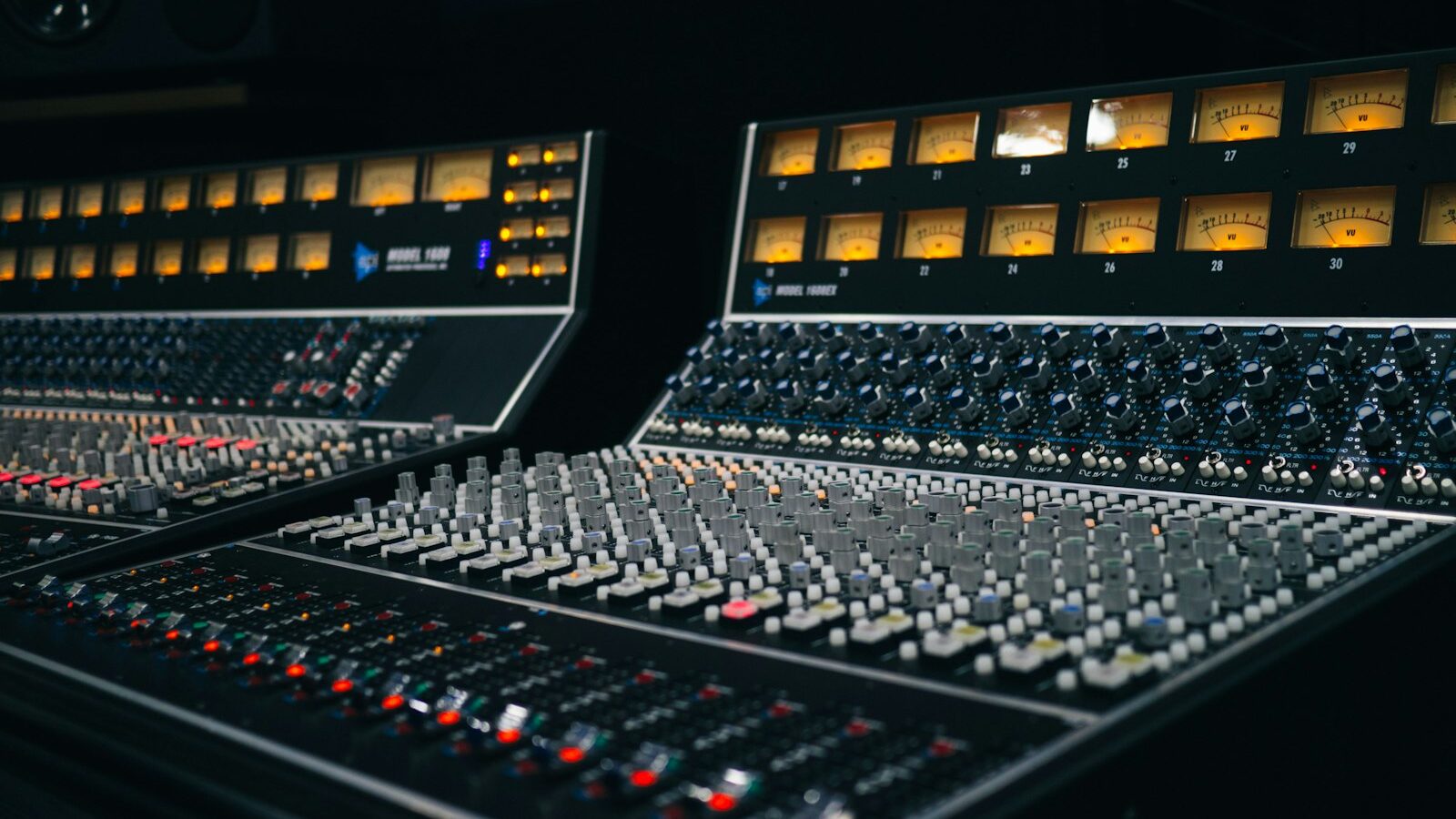
If compression controls how loud a sound is, EQ controls what a sound is made of. EQ in music, short for equalisation, is the tool that lets you brighten a dull vocal, tame a boomy bass, or carve space so every instrument in a mix can be heard clearly. It is probably the single most used tool in music production, and once you understand it, a whole world of tonal control opens up. This guide explains EQ in plain language, so you can shape sound with intent rather than twisting knobs and hoping.
You do not need expensive gear to learn this. A laptop, a pair of headphones or studio monitors, and the EQ that ships free with almost every DAW (the software you record and mix in, short for digital audio workstation) are all you need.
What EQ Actually Does
Every sound is made of many frequencies stacked together, from deep lows to airy highs. A frequency is just how fast a sound wave vibrates, measured in hertz, and we hear low frequencies as bass and high frequencies as treble. When you play a single note on a piano, you are not hearing one pure tone but a rich blend of frequencies, and that blend is what gives the piano its recognisable character, or timbre.
EQ lets you turn individual slices of that blend up or down. Boost the highs and a sound gets brighter and airier. Cut the lows and it gets thinner and lighter. That is the whole idea: EQ is a set of volume controls, but instead of controlling the whole sound, each one controls only a specific band of frequencies.
Why does this matter? Because in a mix, instruments compete for the same frequency space. A vocal and a guitar might both crowd the same middle range and turn muddy. EQ lets you make room, nudging each sound into its own lane so the whole thing sounds clear.
The Frequency Bands, Explained Simply
You do not need to memorise exact numbers to start. It helps far more to know the broad regions and what lives in each.
- Sub and low bass. The deep rumble you feel as much as hear. Kick drums and bass guitars live here. Too much makes a mix boomy; too little leaves it weak.
- Low mids. The body and warmth of most instruments. This region muddies up quickly when several sounds pile into it.
- Mids. Where much of the character of vocals, guitars and pianos sits. Our ears are very sensitive here, so changes are obvious.
- High mids. Presence and attack. Boosting here helps a vocal or snare cut through; overdo it and things get harsh.
- Highs. Air, sparkle and detail. A gentle lift adds sheen; too much sounds brittle and tiring.
Learning to hear these regions is a skill that builds over months. A useful exercise is to take a full mix, sweep a boosted EQ band slowly across the spectrum, and listen to how each region changes the feel.
The Core EQ Controls
Most EQs share the same handful of controls. Understand these and you can use almost any equaliser you meet.
- Frequency. Which point in the spectrum you are working on.
- Gain. How much you boost or cut at that point, in decibels. Positive lifts it, negative lowers it.
- Q, or bandwidth. How wide or narrow your adjustment is. A narrow Q affects a tiny sliver of frequencies, useful for surgically removing a problem. A wide Q gently shapes a broad region, better for musical tone changes.
- Filters. A high-pass filter removes everything below a set point, handy for clearing unwanted rumble from a vocal. A low-pass filter does the opposite, rolling off the highs.
The golden habit is to make small moves. Beginners tend to boost hard, but a few decibels usually does the job. And whenever you boost or cut, match your overall level afterwards so you are judging the tone, not just the loudness, because louder always seems better to our ears.
Boosting Versus Cutting
New producers reach for boosts, but experienced engineers often prefer cuts. Here is why the choice matters, and when to use each.
| Move | Best used for | Why it works |
|---|---|---|
| Wide gentle boost | Adding air or warmth to a whole sound | Sounds natural and musical |
| Narrow cut | Removing a specific harsh or boomy note | Fixes the problem without thinning the sound |
| High-pass filter | Clearing rumble from vocals and guitars | Frees up low-end headroom for the bass |
| Wide cut in low mids | Reducing mud when a mix is cluttered | Opens space so parts separate clearly |
| Narrow boost | Emphasising a signature frequency | Use sparingly; easy to overdo and sound harsh |
The broad principle is to cut to fix problems and boost to add character, always in small amounts. Cutting a crowded frequency on one instrument often does more good than boosting the instrument you want to hear.
EQ Alongside Your Other Tools
EQ rarely works alone. It sits within a chain of mixing decisions, and knowing how it connects to the rest makes it far more powerful. Many engineers shape tone with EQ first, then control dynamics, though there is no single correct order. Our guide to understanding compression in music covers that partner tool, and the two together form the backbone of nearly every mix.
Space effects respond to EQ too. A muddy sound sent to a reverb turns into a muddy wash, so cleaning it with EQ first keeps effects clear, as explained in understanding reverb and delay. And when you play software instruments, EQ is how you carve each one into its place; if you are new to those, using virtual instruments is a friendly starting point.
Much of this work happens quietly on headphones in an HDB flat or a small condo room, which suits EQ perfectly, since it rewards careful listening rather than loud playback. Keep the volume moderate for the sake of your ears and your neighbours, and take regular breaks. Tired ears stop hearing frequency detail, and if you notice any ringing, rest and see a doctor.
Building Your Ear
The secret to EQ is that it is far more about listening than about numbers. Two engineers can reach a great mix with completely different settings, because what matters is how the finished sound serves the song. Trust your ears over presets, make small moves, always compare against the untouched sound at matched loudness, and give it time.
Spend a few weeks putting an EQ on one sound at a time, sweeping to find what helps and what hurts, and the frequency spectrum slowly turns from an abstract idea into a place you can navigate by ear. That is when EQ in music stops being intimidating and starts being one of the most satisfying tools you own.