
Whenever a beloved book, comic, or play arrives on screen, the same debate begins. Was it faithful enough? Was the book better? Understanding film adaptations Singapore viewers argue over so happily is a wonderful way to enjoy both the source and the screen version more fully. Adapting a story is a genuine art form with its own challenges, and once you see how it works, you will watch these films with fresh appreciation.
What an Adaptation Actually Does
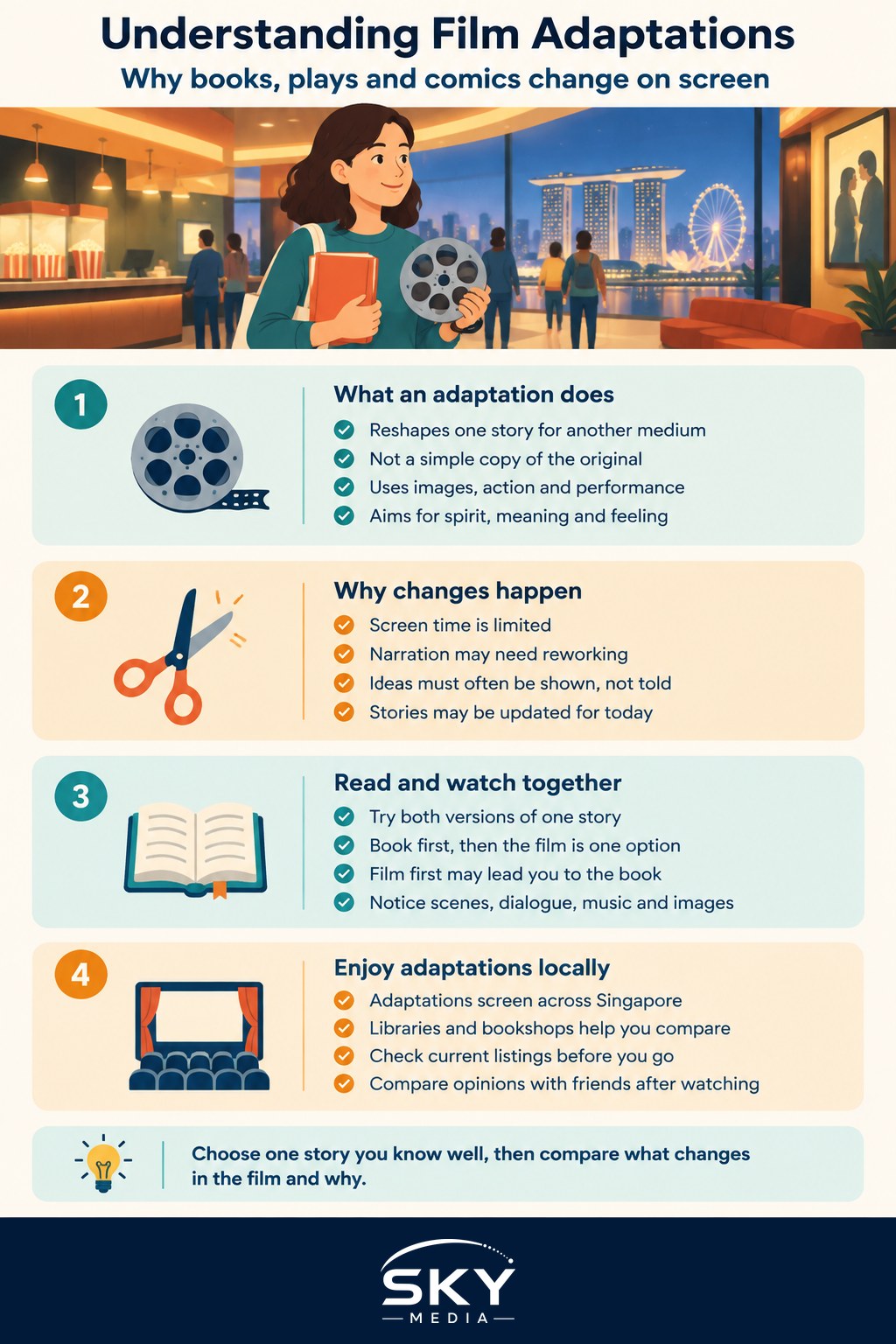
An adaptation takes a story that already exists in one medium and reshapes it for another. That reshaping is not a simple copy. A novel might spend twenty pages inside a character’s thoughts, but film has no easy way to show private thought, so the filmmakers must find images, actions, and performances that reveal the same inner life. A play written for a bare stage might be opened up into real locations. A comic’s bold panels must become moving images with sound and rhythm.
Because each medium has different strengths, a good adaptation is a translation rather than a photocopy. Just as a poem translated word for word can lose its music, a film that copies a book slavishly can feel flat. The filmmaker’s job is to capture the spirit, the meaning, and the feeling of the original, even when that means changing the surface details.
This is why the familiar phrase, the book was better, can be a little unfair. The book and the film are different works with different tools. Judging a film only by how closely it matches the book misses the point of what a film can do that a book cannot.
Why Adaptations Make Changes
Adaptations cut, combine, and reinvent for good reasons. Knowing these reasons helps you watch with a more generous and curious eye.
- Time. A long novel cannot fit into two hours, so subplots and minor characters are often trimmed or merged.
- Point of view. A story told through one narrator’s voice may need reworking when the camera shows everything from the outside.
- Visual storytelling. Some ideas that are described in prose must be shown through action, setting, or a single striking image.
- Fresh meaning. Filmmakers sometimes update a story to speak to today’s audiences, drawing out themes that feel newly relevant.
When you notice a change, try asking what the filmmaker gained or lost by making it, rather than simply marking it wrong. This small shift in attitude makes watching adaptations far more interesting. If you enjoy thinking this way, our guide to how to analyse a film offers gentle tools for looking closer.
Reading and Watching Together
One of the richest ways to enjoy adaptations is to experience both versions. You might read the book first and enjoy imagining the world, then see how the filmmakers pictured it. Or you might watch the film first and let it lead you to a book you would never otherwise have picked up. Many people have discovered a lifelong love of reading through a film they adored, and our guide to building a reading habit can help you keep that momentum going.
Pay attention to how the two forms handle the same moment. Notice how a chapter becomes a scene, how dialogue is trimmed, and how music and images carry feelings that were once written on the page. Understanding these choices also draws on the craft of turning a story into a screenplay, which our overview of screenwriting explains in an approachable way.
Enjoying Adaptations in Singapore
Adaptations are everywhere, from big franchise films drawn from comics and novels to quieter works based on stage plays and short stories. Cinemas across Singapore regularly screen new adaptations, and local libraries and bookshops make it easy to find the source material so you can compare the two. Do check current listings for yourself, since what is showing changes constantly, but the pairing of page and screen is always available to explore.
You might even make a game of it with friends, reading a book together and then watching its film to swap opinions afterwards. These conversations are some of the most enjoyable parts of being a fan, because there is rarely a single right answer.
Understanding film adaptations is really about respecting two art forms at once and enjoying the conversation between them. Choose a story you love this month, experience it in both forms, and notice the clever choices along the way. You will come away with a deeper appreciation for the storytellers on both sides.
Frequently Asked Questions
Should I read the book before watching the film adaptation? Either order works. Reading first lets you imagine the world and then see how the filmmakers pictured it, while watching first may lead you to a book you would never have picked up. Choose based on whether you prefer to be surprised by the film or compare it with your own mental picture.
Why do filmmakers cut so much from the book? A long novel cannot fit into a couple of hours, so subplots and minor characters are often trimmed or merged. Film also cannot easily show private thoughts, so ideas are turned into actions or images. Asking what the change gained or lost is more useful than marking it wrong.
Is the book always better than the film? Not necessarily. They are different works with different tools, so judging a film only by how closely it copies the book misses what film can do that a book cannot. A good adaptation is a translation of spirit and feeling, not a photocopy.
How are plays and comics adapted differently from novels? A play written for a bare stage may be opened up into real locations, while a comic’s bold panels must become moving images with sound and rhythm. Novels face the challenge of showing inner thoughts. Each source medium forces different choices on the filmmaker.
How can I compare a book and its film with friends? Read the book together, then watch the film and swap opinions afterwards. Notice how a chapter becomes a scene, how dialogue is trimmed and how music carries feelings once written on the page. There is rarely one right answer, which is what makes the conversation fun.
Further reading: Getting Into Cult Classic Films · How to Write a Film Review · Understanding Film Editing