
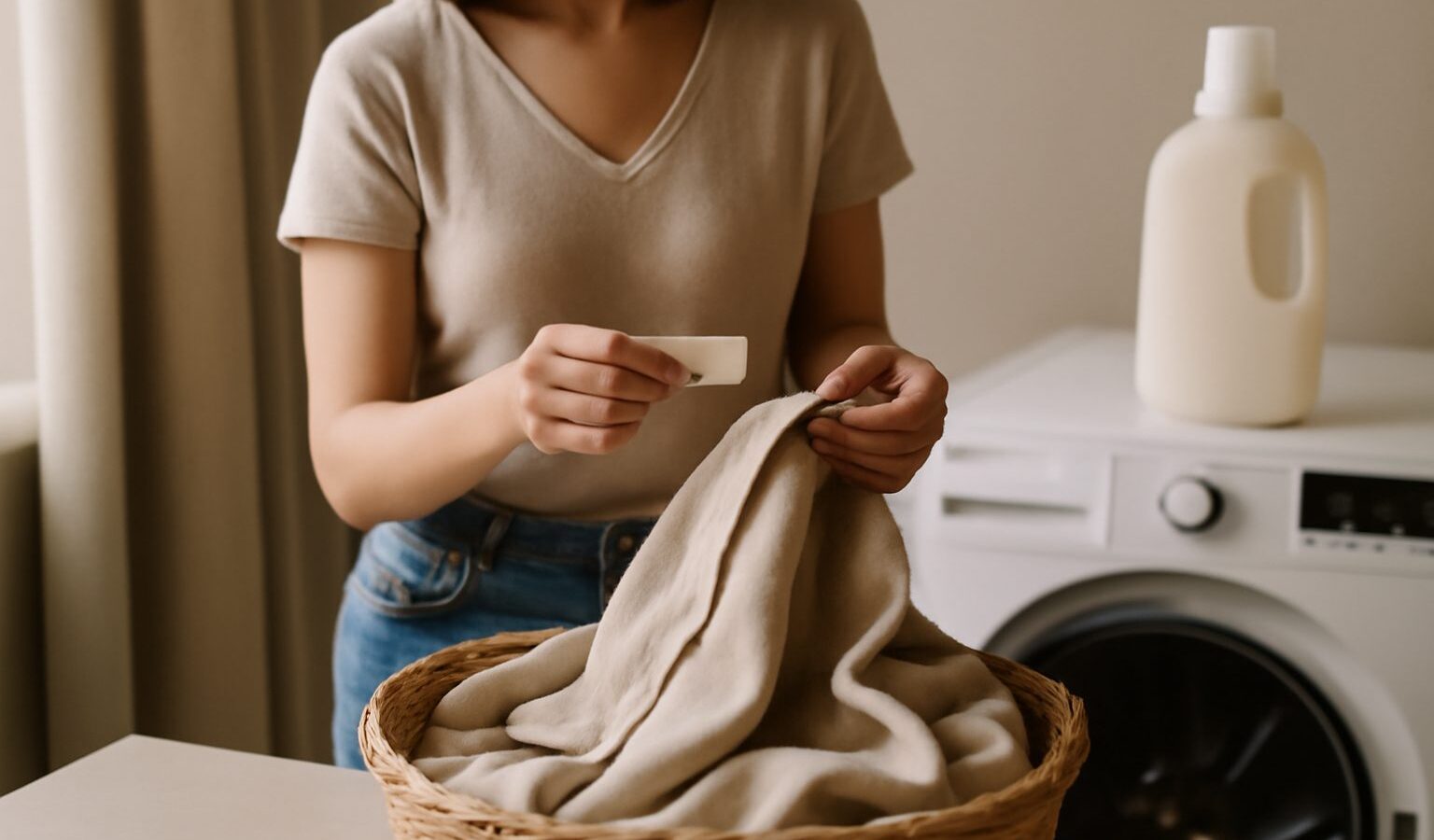
That little tag sewn into the seam of your clothes is trying to tell you something useful, if only you could read it. Those tiny tubs, triangles and circles are a universal code that tells you exactly how to treat each garment. Getting a handle on laundry labels and settings in Singapore is one of the simplest ways to stop clothes from shrinking, fading or falling apart before their time. Once you learn the basic shapes and match them to the dials on your machine, laundry becomes a lot less of a guessing game, and your favourite pieces last far longer in our demanding climate.
This guide decodes the symbols you will actually meet, then translates them into the machine cycles and temperatures we use here. You do not need to memorise everything at once. Learn the handful of shapes below and you will read almost any label with confidence.
The Five Symbols on Every Care Label
Care labels around the world use the same small family of shapes. Once you know what each basic outline means, the dots and lines inside simply add detail.
- The washtub tells you how to wash. Dots or numbers inside show the temperature, and a hand in the tub means hand wash only. A cross through it means do not wash at all.
- The triangle is about bleaching. A plain triangle allows bleach, while a crossed-out triangle means keep bleach away from this fabric.
- The square with a circle inside covers tumble drying. Dots show the heat level, and a cross means do not tumble dry. A plain square gives natural drying hints, such as a line for hang drying.
- The iron shape is straightforward. Dots show how hot the iron should be, from cool for delicates to hot for cotton, and a cross means do not iron.
- The circle stands for professional cleaning, usually dry cleaning. A letter inside guides the cleaner, and a crossed circle means do not dry clean.
A general rule of thumb: the more dots inside a symbol, the more heat is allowed. When in doubt, choose the gentler option, because a cooler, softer treatment rarely harms a garment, while an overly harsh one can ruin it in a single wash.
Reading the Dots and Lines
The extra marks inside each shape carry the real detail, and they follow a logic that is easy to remember once it clicks.
Dots signal heat across washing, drying and ironing alike, with one dot being cool or low, two being medium or warm, and three being hot. Lines underneath a symbol call for gentleness: one line beneath the washtub or dryer square means a milder, reduced cycle, and two lines mean very gentle, the treatment reserved for delicates. Numbers inside the washtub simply state a temperature guide directly. When you see a hand shape in the tub, skip the machine entirely and wash by hand in cool water, which our guide on how to care for delicate fabrics at home walks through step by step.
If a label has faded or been cut out, judge by the fabric instead. Treat anything thin, stretchy, beaded or clearly delicate as gentle and cool, and wash it inside a mesh bag to be safe.
Translating Labels Into Machine Settings
Now for the part that trips people up: turning those symbols into the cycle you actually select. Modern washers offer many programmes, but most of daily life needs only a few. Here is how common labels map to the settings you will find on machines here.
| Care label says | Suggested machine cycle | Temperature | Good for |
|---|---|---|---|
| Washtub, 30 or one dot | Everyday or cottons cycle | Cool | Most tops, tees, general wear |
| Washtub with two lines | Delicate or gentle cycle | Cool | Fine knits, thin synthetics |
| Hand in the washtub | Hand wash, or hand-wash cycle | Cool | Silk, wool, embellished items |
| Washtub, two or three dots | Cottons cycle | Warm to hot | Towels, bed linen, hygiene washes |
| Heavily soiled everyday wear | Longer or intensive cycle | Cool to warm | Sports kit, kitchen cloths |
A gentle spin protects delicate weaves, while a faster spin wrings more water out of towels and jeans so they dry quicker, which is a real bonus in our humid air. Choose an extra rinse for anyone with sensitive skin. And remember that a cooler wash is kinder to most clothes, saves on your utilities bill, and is perfectly effective for the light, everyday grime we accumulate in the heat.
Settings That Suit Our Climate
Beyond simply following the label, a few local habits help your laundry cope with heat and humidity. Because clothes here need to dry fast to avoid a musty smell, a slightly higher spin speed on sturdy items is your friend, as it removes more water before the load ever reaches the line. For delicate fabrics that cannot take a hard spin, accept the extra dampness and give them more airflow instead.
Avoid overloading the drum, since clothes packed too tightly neither wash nor rinse properly, and they hold more water. Use the right amount of detergent rather than too much, because residue traps odour in the humid environment. If your machine offers a steam or refresh option, it can gently freshen lightly worn items between full washes. On a practical note, run an empty maintenance wash on your machine now and then, as the warm, damp inside of a washer can grow its own musty smell over time.
When the Label Says Leave It to the Professionals
Some labels are a clear instruction to step back, and it pays to respect them. A crossed-out washtub or a plain professional-cleaning circle means the garment is not built for home washing, and forcing it through your machine risks shrinking, warping or ruining it. Structured tailoring, many suits and blazers, heavily beaded eveningwear and certain natural fibres genuinely do better with a reputable dry cleaner.
For everything else, the labels are simply a friendly set of instructions, not a test. Learn the five shapes, respect the dots and lines, pick the matching cycle, and lean towards the gentler, cooler choice whenever you are unsure. Your clothes will reward you by lasting longer and looking better, season after humid season.
Explore more
Reading labels is the foundation of a good routine, so pair it with how to do your laundry properly for the full washing and drying flow. When a symbol warns you to be gentle, follow through with how to care for delicate fabrics at home, and once clothes are clean and dry, finish them off with how to iron and steam clothes at home.