
Walk through Katong or step into the Peranakan Museum, and you meet one of Singapore’s most distinctive heritages: a culture born from centuries of mingling between Chinese settlers and the Malay world. Peranakan culture in Singapore is a living blend of Chinese, Malay and, later, European influences, expressed in food, dress, language and craft. For a newcomer, and especially for someone arriving from the mainland, it offers a fascinating window into how earlier Chinese migrants put down roots and became something new. This guide gives a respectful overview of who the Peranakans are and where you can experience their heritage today.
Who the Peranakans Are
The word “Peranakan” comes from Malay and broadly means “locally born” or “descendant”. It refers to communities whose ancestors, many of them Chinese traders, settled in the port cities of the Malay Archipelago, including Malacca, Penang and Singapore, from as early as the fifteenth century, and who over generations blended with local Malay culture.
The best known group is the Chinese Peranakans, often called the Baba-Nyonya or Straits Chinese. A Peranakan man is a Baba and a woman a Nyonya. There are also other Peranakan communities, such as the Chitty Melaka, who are of Indian Hindu descent, and the Jawi Peranakan, of Indian Muslim heritage. When most Singaporeans speak of Peranakan culture, they usually mean the Baba-Nyonya, though it is good to know the wider picture.
Historically many Straits Chinese were English-educated and prominent in colonial commerce and public life. That layering of Chinese ancestry, Malay everyday culture and British-era influence is what gives Peranakan heritage its particular flavour. It is a reminder that identity in this region has long been mixed, shaped by trade, marriage and the daily business of living alongside neighbours from many backgrounds.
A Culture You Can Taste and Wear
Nothing introduces Peranakan culture more deliciously than its food. Nyonya cuisine takes Chinese ingredients and cooking and marries them to the aromatic spice pastes, or rempah, of Malay kitchens. The results are dishes such as laksa, ayam buah keluak, itek tim and a rainbow of bite-sized kueh, the soft, colourful cakes often coloured with pandan and blue pea flower and sweetened with coconut and palm sugar. The cooking is famously labour-intensive, a sign of the care that ran through Peranakan households.
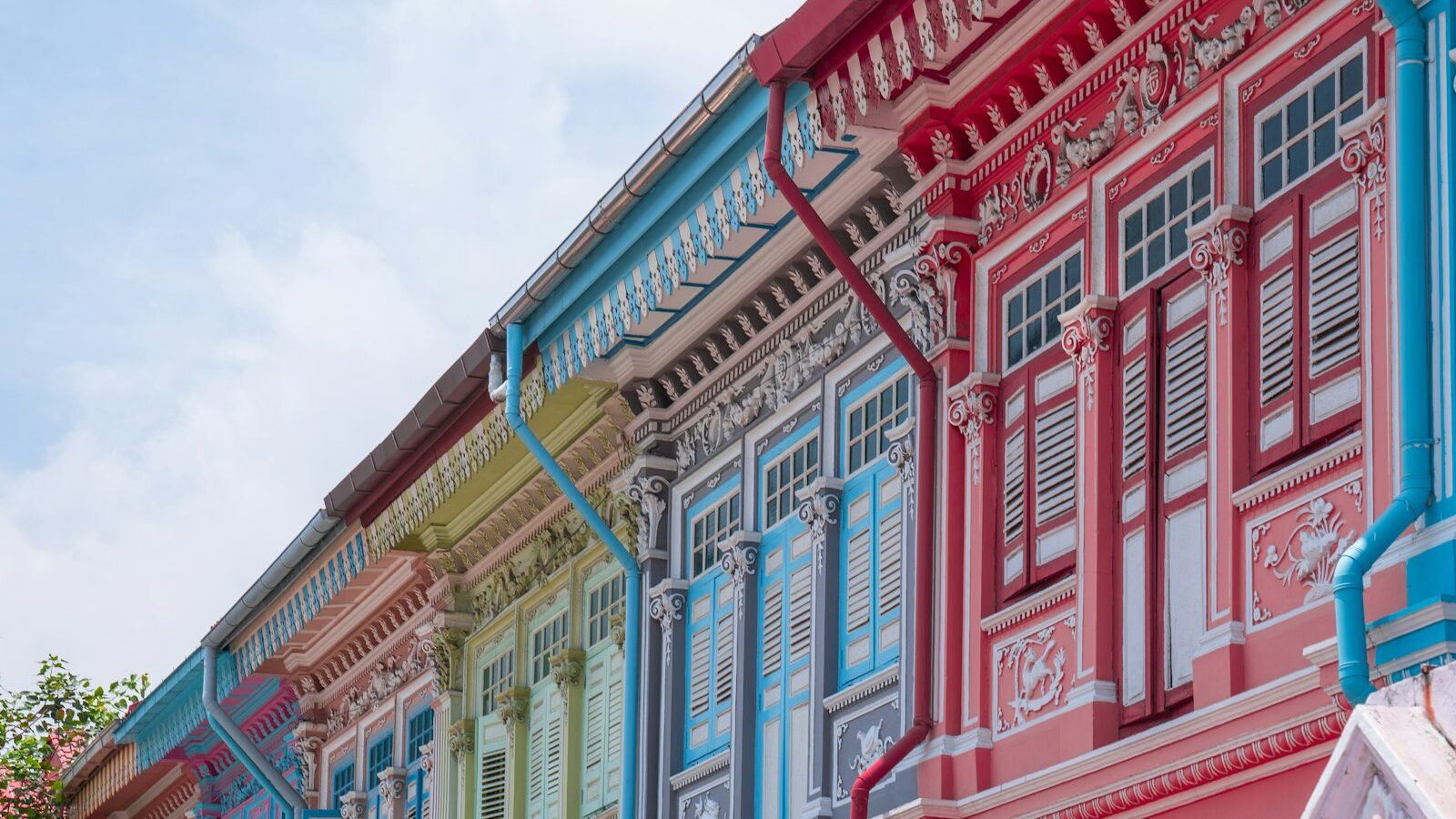
The visual culture is just as striking. The Nyonya wears the sarong kebaya, a fitted, often sheer embroidered blouse paired with a batik sarong, fastened with a set of linked brooches called a kerosang, and finished with beaded slippers known as kasut manek. Homes were filled with brightly coloured porcelain, sometimes called Nyonya ware, and the ornate shophouses of Peranakan districts are decorated with glazed tiles and carved facades that still catch the eye today.
Language and Everyday Heritage
Language is one of the clearest signs of how deeply the community localised. Many Baba-Nyonya families spoke Baba Malay, a creole that pairs Malay grammar and vocabulary with Hokkien loanwords, rather than a Chinese language. In the colonial era many were also fluent in English. For a newcomer used to Mandarin, this can be surprising and telling: here is a community of Chinese descent whose mother tongue for daily life was often not Chinese at all.
Peranakan heritage also lives in customs around family, hospitality and celebration. Traditional weddings were elaborate multi-day affairs rich in symbolism, and while few are held in full today, their imagery endures in museums and family memory. Popular culture has kept the heritage visible too, with television dramas set in Peranakan households introducing new generations to the world of the Baba-Nyonya.
Where to Experience Peranakan Culture Today
You do not need a special occasion to encounter this heritage. The table below suggests where different aspects come alive, much of it cared for by the National Heritage Board and other institutions.
| To experience | Where to go | What you will find |
|---|---|---|
| The full story | Peranakan Museum, near Armenian Street | Galleries on history, dress, food and faith |
| A historic home | Baba House, a restored heritage residence | A furnished Straits Chinese townhouse |
| Streets and shophouses | Katong and Joo Chiat in the east | Colourful facades, tiles and eateries |
| The food | Nyonya restaurants and kueh shops | Laksa, ayam buah keluak and festive cakes |
| Crafts and dress | Heritage shops and museum stores | Beaded slippers, kebaya and porcelain |
Start with a walk around Katong and Joo Chiat, where the pastel shophouses and family-run eateries give an easy, unhurried introduction. Follow it with a visit to the Peranakan Museum to understand what you have seen, and a Nyonya meal to taste it.
Why It Matters for Newcomers
For someone settling in from mainland China, Peranakan culture is more than a tourist curiosity. It is a reminder that earlier waves of Chinese migrants arrived, adapted and created a distinctly local identity, keeping some ancestral customs while embracing the food, dress and language around them. Their story is a gentle encouragement that putting down roots does not mean erasing where you came from; it means adding new layers.
Approaching this heritage with respect is important. It belongs to living families, not just to museums, so enjoy it with curiosity rather than treating it as a costume or a novelty. Learn a dish, appreciate the craftsmanship of a kebaya, and recognise the community’s real history. In doing so you will not only understand Singapore better, you will feel the quiet welcome of a country built by people who, like you, once arrived from somewhere else and chose to belong.
Explore more
Peranakan heritage sits alongside the island’s many living traditions. To understand two of Singapore’s great festivals, read our guide to Deepavali and Hari Raya for newcomers. For more on the national story, see National Day and what it means for newcomers, and for a look at a local mindset, try kiasu and kiasi explained for newcomers.