
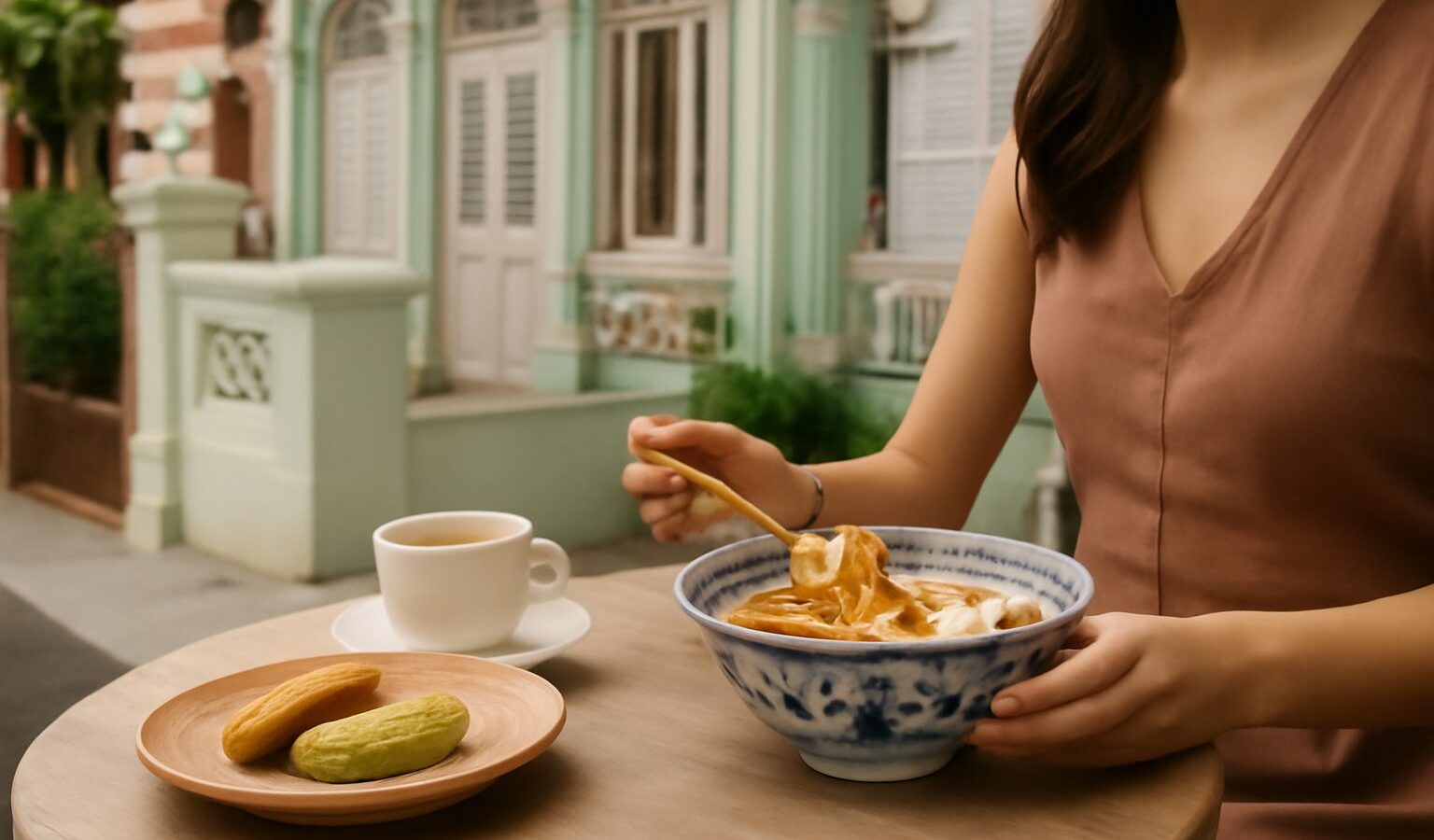
The east coast neighbourhoods of Katong and Joo Chiat are among the most colourful corners of the city, and this Katong Joo Chiat heritage guide is your introduction to their Peranakan soul. Here you will find rows of pastel shophouses with elaborate tiles, some of the best-loved food in Singapore, and a community story that stretches from coconut plantations by the sea to a bustling, gazetted conservation area. It is a place where you can eat a bowl of laksa, admire a century-old terrace house, and feel the layered history of the island all in one morning.
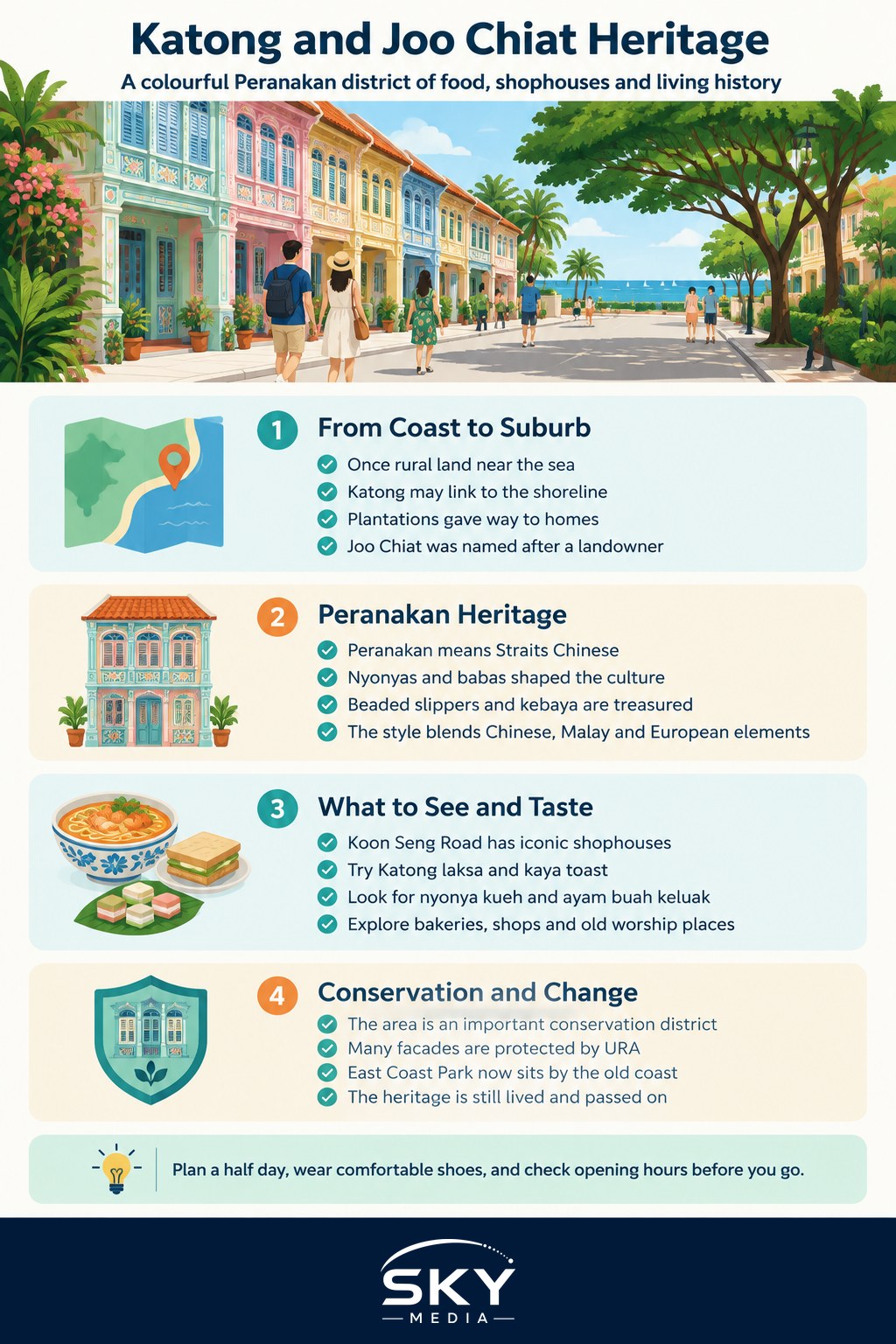
From Coastline to Suburb
In the nineteenth century, this stretch of the east was rural land close to the sea. The name Katong is often linked to the coastline and the shore that once lapped much nearer than it does today, before land reclamation pushed the waterline outward. The area was known for coconut and other plantations, and wealthy families built seaside villas and weekend homes here to escape the crowded town centre.
Joo Chiat takes its name from a prominent landowner of the era, a Chinese businessman whose holdings gave the road and district their identity. As roads and transport improved, the plantations gave way to residential streets, and the area grew into a lively suburb. For the precise chronology and the people behind these names, the National Heritage Board is the authoritative source.
The Peranakan Heart
What gives Katong and Joo Chiat their distinctive character is the Peranakan, or Straits Chinese, community that flourished here. The Peranakans are descendants of early Chinese immigrants who intermarried and blended with local Malay culture over generations, creating a unique heritage of language, dress, cuisine, and craft. The women were known as nyonyas and the men as babas, and their beaded slippers, embroidered kebaya blouses, and richly flavoured cooking remain cultural treasures.
This heritage is written across the buildings. Along Koon Seng Road stand some of the most photographed shophouses in Singapore, their facades a riot of colour with ornate plasterwork, ceramic tiles, carved timber, and pintu pagar, the low swing doors that let air flow while keeping some privacy. These terraces show the eclectic style typical of the era, mixing Chinese, Malay, and European decorative elements into something wholly local.
To make sense of what you are seeing, this simple guide to the district’s highlights can help.
| Highlight | Where | Why it matters |
|---|---|---|
| Koon Seng Road shophouses | Off Joo Chiat Road | Iconic, brightly painted Peranakan terrace facades |
| Joo Chiat Road | Main spine | Shophouses, eateries, traditional trades and shops |
| East Coast Road | Katong stretch | Home of Katong laksa and long-standing family businesses |
| Peranakan food and craft | Throughout | Kaya toast, laksa, kueh, beadwork and kebaya makers |
What to See and Taste Today
Food is one of the great pleasures of a visit. Katong laksa, a rich, spicy coconut noodle soup traditionally eaten with a spoon alone, is closely tied to this area, and several long-running stalls stake their claim to it. You will also find kaya toast, nyonya kueh in jewel-like colours, and Peranakan restaurants serving dishes such as ayam buah keluak. As always, opening hours differ from shop to shop, so check ahead if a particular place is your goal.
Beyond eating, walk slowly. Joo Chiat Road and its side streets reward curiosity, with traditional bakeries, provision shops, and craftspeople alongside newer cafes and boutiques. Look up to appreciate the shophouse details, and notice the old places of worship and community buildings tucked among the terraces. Some grand former villas and institutional buildings survive too, hinting at the seaside gentility of earlier days. The whole area repays a camera and an unhurried pace.
Conservation and Change
Katong and Joo Chiat form one of Singapore’s important conservation areas, with many buildings protected by the Urban Redevelopment Authority so their facades and character are preserved even as uses change inside. This protection is why the streetscape still feels coherent, a rare survival of pre-war and early twentieth-century architecture in a fast-changing city.
Change is constant all the same. Land reclamation long ago moved the sea away, and East Coast Park now sits between the old neighbourhoods and the water. New condominiums and hotels have appeared, and the mix of residents has broadened well beyond the original Peranakan families. Yet the community continues to celebrate and pass on its heritage, from cooking classes to cultural events, keeping the nyonya and baba traditions alive rather than freezing them in a museum.
Cultural Significance
Katong and Joo Chiat matter because they are the living home of Peranakan culture in Singapore, a heritage recognised as an important thread in the national story. The cuisine, crafts, and architecture here have influenced how Singaporeans understand their own multicultural identity, and Peranakan food in particular has become a point of shared pride. For newcomers, few places offer such an accessible, delicious introduction to the island’s plural past.
The district also shows how a neighbourhood can hold onto its identity while adapting. It is not a preserved relic but a working community where families still live above shops, worshippers still visit temples and churches, and food traditions are handed down in kitchens rather than textbooks.
Visiting Katong and Joo Chiat
The area is well connected. Stations on the Thomson East Coast Line have brought the MRT closer to Katong and Joo Chiat, and numerous bus services run along the main roads. From the nearest station it is an easy walk into the shophouse streets, though the district is spread out, so comfortable shoes help.
Plan a half day to do it justice. Combine a food crawl along East Coast Road and Joo Chiat Road with a photo walk around Koon Seng Road, and consider ending at East Coast Park if you want a sea breeze. Dress for the heat, and if you enter any temple, mosque, or church, be respectful and modestly dressed. Many family businesses keep their own hours and some close on rest days, so a quick check before you set out can save disappointment.
Explore More
The Peranakan east pairs naturally with other conserved neighbourhoods. For more heritage shophouses and old trades, read our Tiong Bahru heritage guide, or explore the early Chinese immigrant story in the Telok Ayer Street heritage guide. To see how the arts and civic district grew, visit our Bugis and Bras Basah heritage guide.
Further reading: Kampong Kapor Methodist Church: A Peranakan Heritage Guide · Siglap and Upper East Coast Heritage in Singapore