
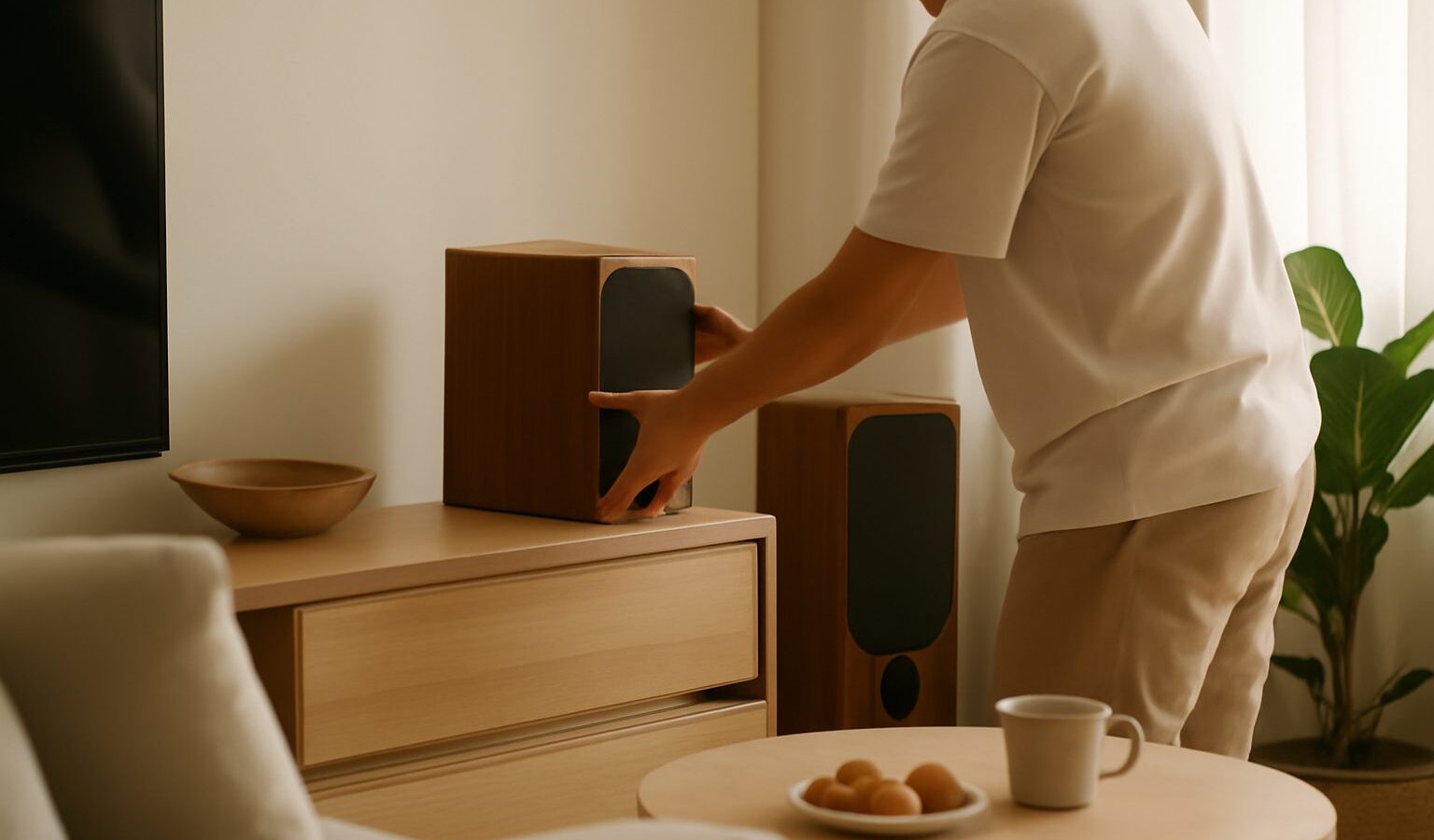
Good speaker placement is the cheapest upgrade in audio, because it costs nothing but a bit of patience. The room you listen in shapes the sound as much as the speakers themselves, and in a typical Singapore flat with hard walls and tiled floors, getting the positioning right can transform a system you already own. This guide keeps things practical.
Why the Room Matters So Much
When a speaker plays, sound reaches your ears twice: once directly, and again after bouncing off walls, the floor, the ceiling and furniture. Those reflections arrive slightly later and can smear detail, exaggerate certain notes and shift where instruments seem to sit. A great pair of speakers in a badly set-up room will sound worse than modest speakers placed with care.
You cannot change the laws of physics, but you can work with them. The goal is to strengthen the direct sound, tame the worst reflections and even out the bass.
Getting the Distance Right
Three distances matter most.
Speakers from the front wall
Pulling speakers away from the wall behind them usually cleans up the bass and opens the sound. Too close and bass gets boomy and thick; too far and you lose useful reinforcement and floor space. Start a reasonable distance out and adjust by ear.
Speakers from the side walls
Keeping some gap from the side walls reduces strong early reflections that blur the stereo image. In a narrow flat this is a real constraint, so do what you can rather than chase perfection.
The listening triangle
Aim for a roughly equal-sided triangle: the distance between the two speakers should be similar to the distance from each speaker to your ears. Sit too close and the sound splits into two halves; sit too far and it collapses into the middle.
Toe-In: Angling the Speakers
Toe-in means turning the speakers inward to face you rather than firing straight ahead. More toe-in sharpens the central image and can add focus, while less toe-in widens the soundstage and softens the tone. There is no single correct angle. Start with a mild inward angle, play a familiar vocal track and rotate the speakers a little at a time until the singer sits solidly in the centre.
Room Modes and Bass Problems
Bass is where rooms misbehave most. Room modes are resonances created when sound waves bounce between parallel surfaces and reinforce each other at particular frequencies. The result is bass that booms in one spot and disappears in another.
Corners make this worse, which is why a subwoofer or a bass-heavy speaker shoved into a corner often sounds bloated. You cannot remove room modes, but you can dodge the worst of them by moving the speakers and, crucially, by moving your seat. Shifting your listening chair even a short way can turn muddy bass tight and even.
Placement Choices Compared
| Adjustment | Move it more | Move it less |
|---|---|---|
| Distance from front wall | Tighter, leaner bass | Fuller, warmer, boomier bass |
| Toe-in angle | Sharper centre image | Wider, softer soundstage |
| Speaker separation | Broader stage, weaker centre | Solid centre, narrower stage |
| Seat from rear wall | Cleaner bass, less reinforcement | More bass, risk of boom |
| Speaker height | Aim tweeters at ear level for clarity | Off-axis dulls the treble |
Speaker Height and the First Reflections
Most speakers sound best with the tweeter roughly at seated ear level, so bookshelf models usually want proper stands rather than a shelf or the floor. Beyond that, the first reflection points on the side walls, the floor and the ceiling do the most damage. You can find a side-wall point using the mirror trick: have someone slide a mirror along the wall while you sit, and wherever you can see a speaker in it is a first reflection point worth treating.
Simple Treatment That Helps
You do not need a studio to hear a difference. Soft furnishings absorb reflections, and most homes already have some.
- A rug or carpet on a tiled or wooden floor tames the floor bounce and is often the single biggest easy win.
- Curtains over windows and hard walls soften reflections and reduce glare in the sound.
- A bookshelf full of varied items scatters sound pleasantly and acts as a natural diffuser.
- A sofa, cushions and even a wardrobe against a bare wall all help.
If you want to go further, dedicated absorption panels at the first reflection points and bass traps in the corners give the cleanest results, but treat them as a later step rather than a starting point.
A Sensible Order of Work
Work in this sequence and listen after each change:
- Set the listening triangle and get your seat in a sensible spot.
- Adjust distance from the front wall for even bass.
- Dial in toe-in for a solid centre image.
- Add a rug and soften the biggest bare surfaces.
- Only then consider dedicated panels or a subwoofer.
A Note on Humidity
Foam and fabric treatment can trap moisture in our climate, so keep panels off damp walls and let the room breathe. Aircon and a little airflow protect both your treatment and your speakers over the long run.
The Takeaway
Thoughtful speaker placement and a few soft furnishings will get you most of the way to great sound without spending a cent on gear. Move your speakers, move your seat, listen carefully and trust your ears. The room is part of your system, so treat it as one, and the music you already love will open up in ways a new box on the shelf rarely matches.
Explore more: Bookshelf vs Floorstanding Speakers · Subwoofers Explained · Building a Hi-Fi System on a Budget