

Have you ever been told that a phone with a cracked screen or a laptop with a swollen battery is “not worth fixing” and that you should just buy a new one? That frustration is exactly what the right to repair movement is about. Understanding the right to repair singapore consumers face means understanding a simple idea: when you own a device, you should be able to fix it, or have it fixed affordably, rather than being pushed to throw it away.
What “Right to Repair” Means
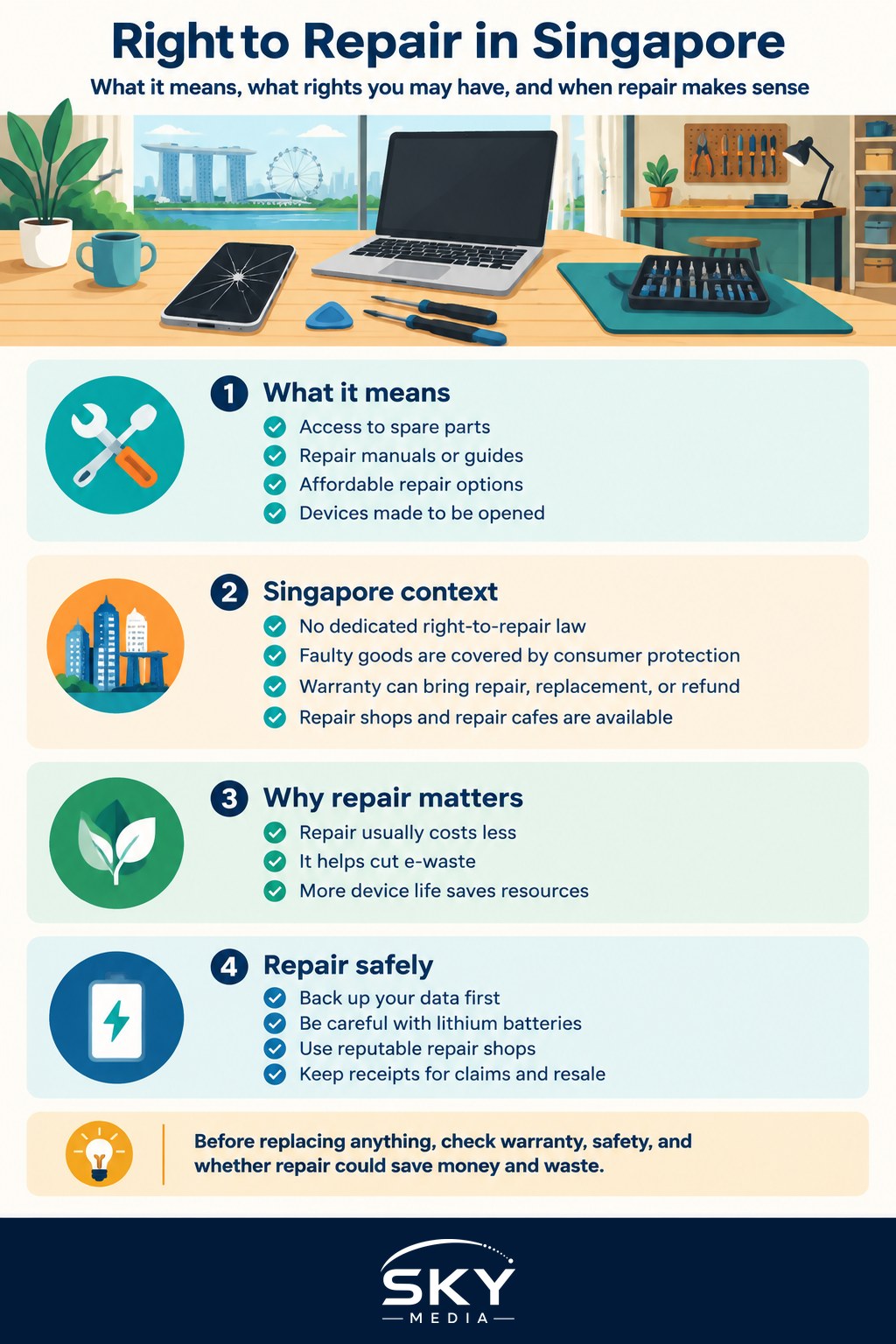
The right to repair is a broad idea, not a single law. It generally covers a few things:
- Access to spare parts. Being able to buy genuine replacement parts, such as batteries, screens, or charging ports.
- Access to repair information. Having manuals or guides that explain how a device comes apart and goes back together.
- Affordable repair options. Being able to choose between the manufacturer, an independent workshop, or doing it yourself.
- Designs that can be opened. Devices built so that a battery or screen can actually be replaced, rather than glued shut.
In some countries, governments have started requiring manufacturers to make parts and manuals available for a certain number of years. The trend is slowly spreading, and many big electronics makers have begun offering self-repair kits and longer software support in response.
Where Singapore Stands
Singapore does not currently have a dedicated right to repair law in the way some regions do. What we do have is consumer protection covering faulty goods and warranties. If a product is defective within its warranty period, you generally have rights to a repair, replacement, or refund. Knowing these rights is genuinely useful, and warranty and consumer rights for electronics explains them in plain terms.
Beyond formal rights, Singapore has a healthy ecosystem of repair options. Sim Lim Square, neighbourhood phone shops, and authorised service centres all offer repairs, often at a range of prices. There is also a growing culture of “repair cafes” and community events where volunteers help fix household items for free, which is worth looking out for.
Why Repairing Matters
Choosing to repair rather than replace has real benefits.
It saves money. A battery swap or screen replacement usually costs a fraction of a new device. For a family with several phones, tablets, and laptops, this adds up.
It cuts electronic waste. Every device we throw away contributes to a growing pile of e-waste, which is hard to recycle and often contains harmful materials. Keeping a device in use for an extra year or two makes a genuine difference. When something truly reaches the end of its life, dispose of it properly through e-waste recycling rather than the general rubbish chute.
It respects the resources already used. A phone takes a lot of energy and raw material to make. Getting more years out of it honours that investment.
Repair Safely and Sensibly
Repairing is good, but do it wisely. Some fixes are easy and safe, such as replacing a case, cleaning ports, or swapping a memory card. Others are genuinely risky. The most important warning concerns batteries. Modern phones and laptops use lithium batteries, which are a fire and injury hazard if punctured, bent, or badly handled. Never try to pry out a built-in battery yourself. For anything involving the battery, use an authorised or professional repair service.
A few sensible guidelines:
- Back up your data first. Any repair carries a small risk of data loss, so back up your photos and files before handing over a device.
- Use reputable shops. Ask about warranty on the repair itself and whether they use genuine or compatible parts.
- Weigh the cost. If a repair costs almost as much as a new device, and the device is very old, replacing may be the sensible choice. Our guide on when to repair or replace your computer helps you decide.
- Keep receipts. These matter for warranty claims and for reselling later.
Making Repair Your Default
The right to repair is ultimately about giving you a real choice. You do not have to accept that a small fault means a whole new purchase. Before you replace anything, ask three questions: Is it under warranty? Can it be repaired affordably and safely? Would another year of use save money and waste? More often than not, repair is the smarter answer.
As consumer awareness grows and manufacturers respond, expect more spare parts, longer software support, and easier repairs over time. In the meantime, treat repair as your first instinct, protect yourself around batteries, and lean on Singapore’s healthy repair scene. Your wallet and the environment will both thank you.
Further reading: Phone Screen Repair in Singapore: Official vs Third-Party · Understanding Planned Obsolescence