

Two people can earn the same salary, live in similar flats, and still feel completely different about money. One checks every transaction and sleeps soundly only when the emergency fund is full. The other would rather treat friends to a good meal than watch a balance grow. Neither is wrong. They simply have a different money personality, and understanding your money personality in Singapore is one of the most useful things you can do before reaching for any budgeting app or investment plan. This article is general information, not financial advice, and the goal is self-awareness rather than fitting you into a box.
Your money personality is the mix of instincts, feelings, and habits that shape how you earn, spend, save, and give. It is formed by how you grew up, what your family said and did about money, your temperament, and your experiences with scarcity or comfort. Once you can name your default tendencies, you can build a system that works with them instead of fighting them every single day.
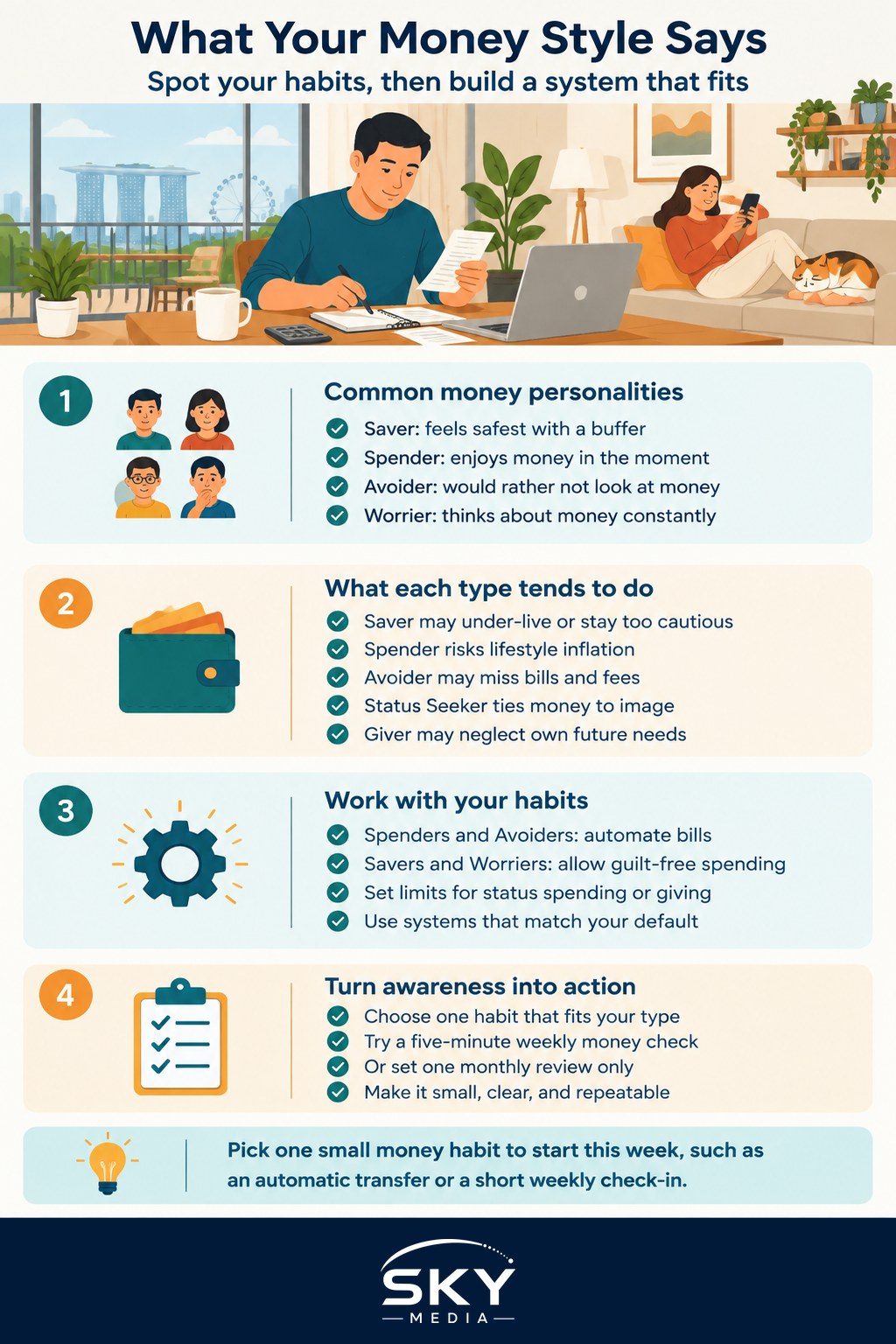
The Common Money Personalities
Most people recognise themselves in one or two of these patterns. You are rarely just one type, and your type can shift with life stages.
- The Saver. You feel safest with a healthy buffer and dislike spending on anything that feels frivolous. Your strength is discipline. Your blind spot can be under-living, missing out on experiences, or being so cautious that your money never grows beyond a savings account.
- The Spender. You enjoy using money now, whether on food, travel, gadgets, or gifts. Your strength is that you actually enjoy what you earn. Your risk is lifestyle inflation, thin savings, and stress when an unexpected bill lands.
- The Avoider. Money makes you anxious, so you would rather not look. Bills pile up unopened and you avoid checking balances. This is very common and nothing to be ashamed of, but avoidance quietly costs you through late fees and missed opportunities.
- The Worrier. You think about money constantly, even when you are doing fine. You may over-check accounts and struggle to spend on yourself. The stress can outweigh the actual risk you face.
- The Status Seeker. Money is tied to how you want to be seen, so brands, upgrades, and keeping pace with peers matter. Used well, this can motivate you to earn more. Used badly, it leads to spending you cannot comfortably afford.
- The Giver. You find real joy in supporting family, friends, and causes. This is generous and admirable, but it can leave your own needs, and your retirement, underfunded.
Read these without judgement. In Singapore, where the cost of living is visible everywhere from hawker prices to condo launches, every personality faces its own pressures. The point is not to change who you are, but to see your patterns clearly.
How to Work With Your Natural Habits
Once you know your leanings, you can design your money life to suit them rather than relying on willpower.
If you are a Spender or an Avoider, automation is your best friend. Set up transfers so that savings and bills leave your account the moment your salary arrives, before you can spend or forget. Our guides on how to automate your money and savings and how to stop impulse buying are built exactly for this. When good decisions happen by default, your personality stops being a liability.
If you are a Saver or a Worrier, the work is often about permission rather than restraint. Build a small, guilt-free spending allowance into your budget so that enjoying money becomes part of the plan, not a moral failing. Reminding yourself that a funded emergency buffer already protects you can quiet the anxiety. If money worry is affecting your sleep or mood, it is worth reading how to cope with financial stress and speaking to a doctor or counsellor.
For Status Seekers and Givers, the key is defining your own limits in advance. Decide what you genuinely value, cap what you spend on image or on helping others, and protect your own future first. You cannot support the people you love for long if your own finances quietly crumble.
Couples especially benefit from this exercise. When a Saver marries a Spender, friction is almost guaranteed unless both understand where the other is coming from. Naming your types turns “you are so careless” or “you are so stingy” into a calmer conversation about differing instincts.
Turning Self-Awareness Into Action
Understanding your money personality is only useful if it changes something small and concrete. Pick one habit that matches your type. An Avoider might set a five minute weekly money check. A Spender might automate one extra transfer. A Worrier might schedule a single monthly review and then leave the accounts alone in between.
Your personality is not a fixed sentence. It is a starting point. When your systems fit the way you actually think and feel, staying on track stops being a constant battle and becomes something closer to second nature. This article offers general information only, so consider your own circumstances and speak to a licensed, MAS-regulated financial adviser before making any big decisions.
Frequently Asked Questions
Can my money personality change over time? Yes, it is a starting point rather than a fixed label. Life stages, income, family changes and experiences with scarcity or comfort can shift your tendencies. Revisiting your habits once a year helps your system keep fitting you.
How can couples with different money personalities avoid arguments? Name each person’s instincts so criticism turns into curiosity about why the other thinks differently. Agree on shared goals and a joint approach, with some personal spending money each. A short, regular money chat keeps small frictions from building.
What is a good first step for someone who avoids looking at their finances? Make it small and scheduled, such as a five-minute weekly check where you only look at one balance. Pair it with something pleasant. Automation of bills and savings also reduces how much you need to face.
How do I tell if I am a saver or just anxious about money? Notice how you feel. A saver feels comfortable with a buffer, while an anxious person feels dread even when finances are fine, and struggles to spend on needs. If worry affects sleep or mood, speak to a doctor or counsellor.
Is there a money personality that is better for building wealth? No, each type has strengths and blind spots. Savers have discipline, spenders enjoy their money, and givers are generous. What helps is a system suited to your tendencies, such as automation or a guilt-free allowance, rather than changing who you are.