

For many incoming students, the first real taste of university life is not a lecture but a camp. A university orientation camp in Singapore, often called a “freshie camp”, is a few days of games, group activities and late nights designed to help new students make friends before term begins. For some it becomes a highlight of their first year. For others, especially those who are shy, international or juggling work, it can feel daunting.
This guide explains the main types of camps, what usually happens, what to budget for, the safety rules that apply, and how to opt out if a camp is not for you. It focuses on orientation itself, not on coursework or settling into academic life.
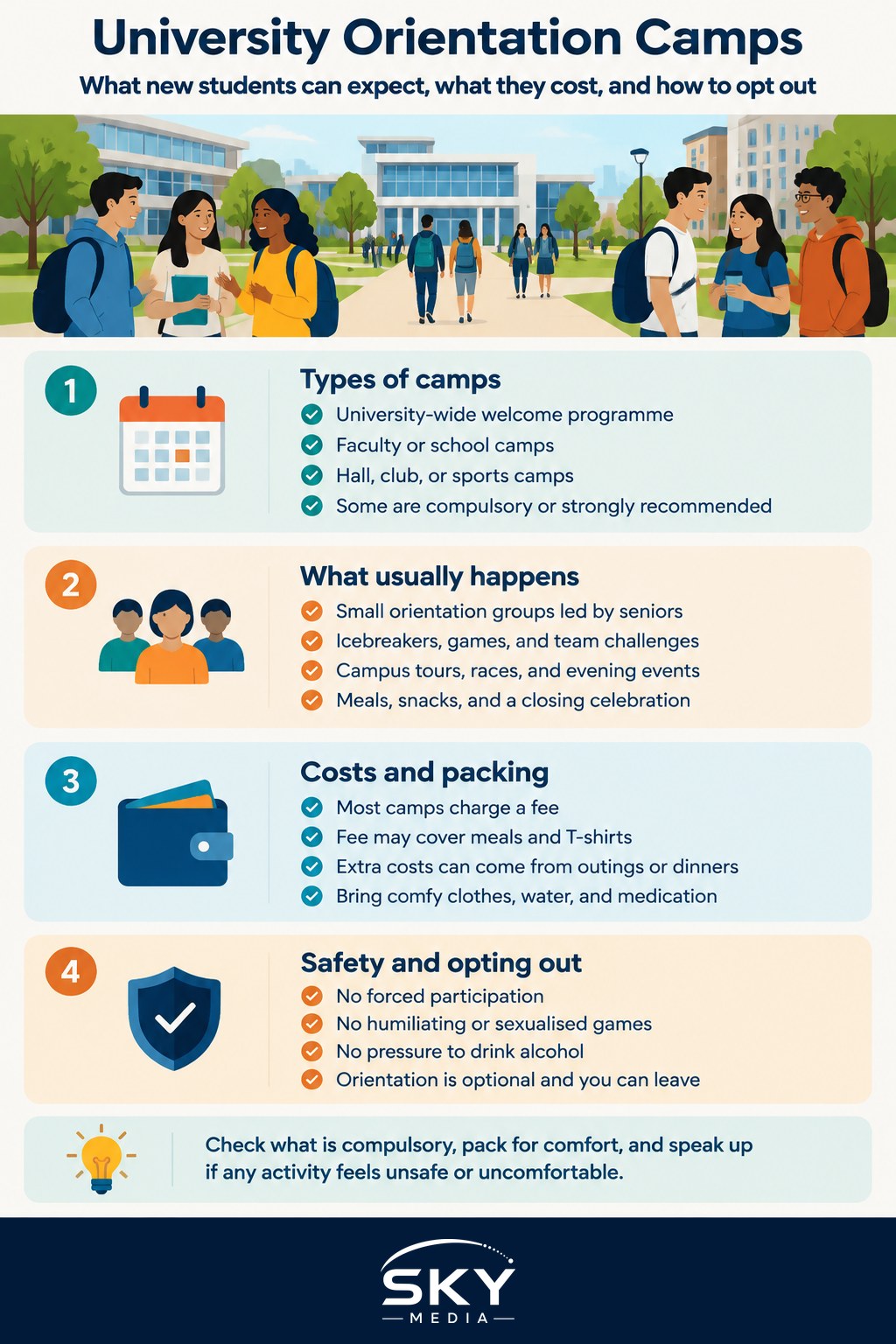
Types of University Orientation Camps
Singapore’s universities usually offer several overlapping orientation activities, and you can sign up for some, all or none.
- University-wide orientation. An official welcome programme with briefings on academic matters, student services, IT and campus facilities. Some parts may be compulsory or strongly recommended.
- Faculty or school camps. Run by student clubs within your faculty, these group you with coursemates. They help you find study partners and seniors who can advise on modules.
- Hall or residential college camps. If you live on campus, your hall or residential college may run its own orientation. These can be more intense and closely tied to hall culture, sports and activities.
- Club and interest group camps. Some clubs, such as cultural, adventure or community service groups, run their own camps for new members.
- Sports or adventure camps. Outdoor-focused camps with activities like kayaking, hiking or team challenges.
Faculty and hall camps are usually organised by student leaders, with staff oversight, under rules set by the university.
What Happens at a Typical Camp
Camps vary, but most follow a similar pattern:
- Grouping. You are placed in a small group, often called an “orientation group” or “OG”, led by seniors.
- Icebreakers and games. Name games, cheers and team challenges are common.
- Campus tours and races. Amazing race style challenges help you learn your way around.
- Night activities. Some camps include evening events such as performances or social nights. Overnight stays may be on campus or at an outside venue.
- Welfare and meals. Organisers usually provide meals and snacks. Tell them about dietary needs or allergies when you register.
- Closing event. Many camps end with a celebration, performances by groups, or a dinner.
Activities can be loud and energetic, and the pace can be tiring. Bring comfortable clothes, sports shoes, a water bottle, sunscreen, insect repellent and any personal medication.
Faculty Camps vs Hall Camps
The two most common camps feel quite different. Here is a general comparison, though details differ between universities and halls.
| Aspect | Faculty camp | Hall or residential college camp |
|---|---|---|
| Who you meet | Coursemates in your faculty or school | Fellow residents from many faculties |
| Main benefit | Study networks, module advice from seniors | Close friendships, hall activities and culture |
| Intensity | Usually moderate, day and some evening events | Can be more intense, with late nights and traditions |
| Impact of skipping | Easy to meet coursemates later in class | May feel harder to join hall life later, though possible |
Costs and What They Cover
Most camps charge a fee, paid during online registration. Fees vary by camp and by year, and we do not quote figures here. The fee commonly covers:
- Meals and snacks during the camp.
- A camp T-shirt and sometimes other merchandise.
- Transport and venue costs for off-campus activities.
- Materials for games and events.
- Insurance arranged by organisers, in some cases.
Extra spending can come from group outings, themed costumes or optional dinners. If cost is a concern, ask the organisers whether financial assistance or a fee waiver is available. Universities often have student financial aid offices that can advise.
Safety Rules and Your Rights
Orientation in Singapore’s universities is guided by rules that prohibit unsafe, degrading or sexualised activities. Universities have tightened their oversight of orientation over the years, and organisers are generally required to have programmes vetted, have staff or appointed advisers involved, and follow a code of conduct.
You should expect:
- No forced participation. You can decline any activity that makes you uncomfortable, without being punished or mocked.
- No humiliating or sexualised games. Activities that involve inappropriate touching, degrading chants or embarrassing forfeits are not acceptable.
- No pressure to drink alcohol. You should never be pressured into drinking.
- Rest and hydration. Reasonable rest and water breaks, especially for outdoor activities in Singapore’s heat.
- A way to raise concerns. Camps should have designated welfare leaders or staff contacts you can approach.
If something feels wrong, speak to a welfare leader or a staff member immediately. You can also contact the university’s student affairs office or campus security. Universities have channels for reporting misconduct, and reports can be made confidentially in many cases. If you feel unsafe at any point, leave the activity and seek help.
How to Opt Out or Leave a Camp
Orientation camps are optional. You do not need to attend to graduate, make friends or join clubs later. Reasons students skip include work commitments, family responsibilities, health needs, religious practice or simply preferring a quieter start.
If you want to opt out or reduce your involvement:
- Check what is compulsory. Official university briefings may be required, while student-run camps usually are not.
- Decline at registration. Simply do not sign up, or choose day-only options if available.
- Withdraw early if you change your mind. Check the refund policy before paying.
- Tell your group leader if you need to leave midway. You can leave for health, personal or comfort reasons. Let a leader know so they know you are safe.
- Make friends other ways. Join clubs, attend welcome events in the first weeks of term, sit with coursemates in tutorials or join a study group.
Tips for International and Mainland China Students
If you are new to Singapore, orientation can be a valuable way to understand local student life. Cheers and games may mix English with Singlish, Malay or Hokkien words, and seniors are usually happy to explain. Bring an open mind, and do not worry if your English feels rusty at first. Many universities also run separate orientation for international students covering visas, housing and banking. Our guide to choosing a university in Singapore gives broader background on the local system.
Preparing Well
Orientation is meant to welcome you, not test you. Sign up for what interests you, pack sensibly, know your rights, and remember you can step back at any time. If you have attended camps before, such as the Sec 3 Outward Bound camp, some routines will feel familiar, but university camps are run by students for students, with more freedom and more responsibility. Approach it at your own pace, and university life will have plenty of other chances to find your people.