
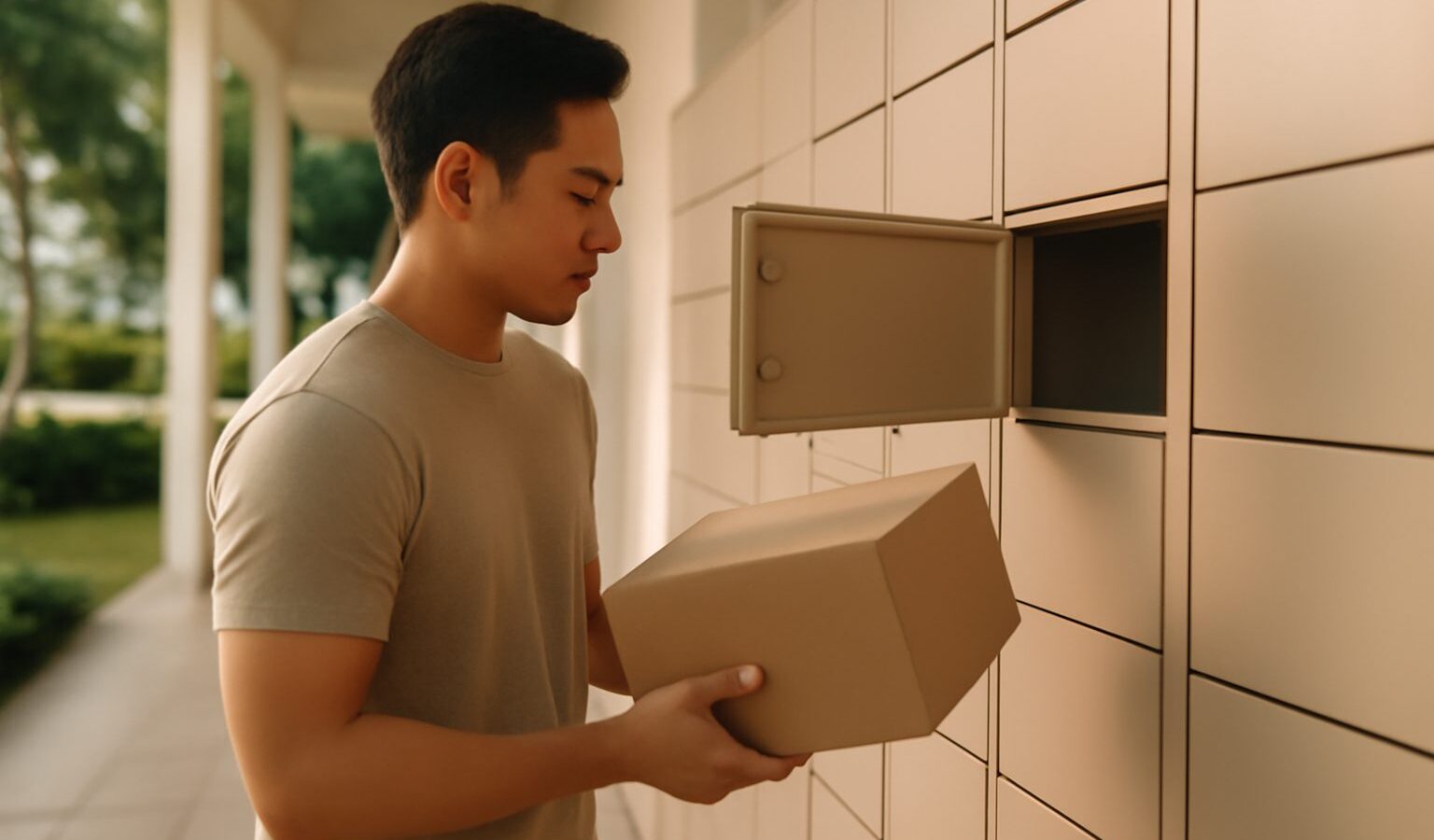
If you are tired of waiting at home for a delivery van, parcel lockers Singapore shoppers rely on are a tidy fix. These self-service lockers and staffed collection points let you pick up orders on your own schedule, often within walking distance of home. This guide explains how they work and how to use them smoothly.
What a parcel locker actually is
A parcel locker is a bank of secure compartments, usually placed at void decks, community clubs, MRT stations, shopping malls, petrol stations and convenience stores. When a courier drops your order inside, the system emails or texts you a collection code. You key the code into the screen (or scan a QR code in the courier app), the correct door pops open, and you take your parcel. No signature, no waiting, no small talk.
Collection points work a little differently. Instead of a locker, your parcel sits behind the counter at a partner shop. You show your ID or collection code to a staff member, who hands it over. Collection points suit larger or heavier items that will not fit in a locker slot.
Both options exist because Singapore runs a national locker network alongside lockers operated by individual courier companies and by e-commerce platforms. You do not need to memorise which is which. At checkout, you simply choose the pickup location the seller offers.
How to choose a locker at checkout
When you buy online, look for a delivery option labelled something like “collect at locker”, “pickup point” or “self-collection”. Selecting it usually opens a map. From there:
- Search by postcode, MRT station or neighbourhood.
- Check the opening hours. Lockers in HDB void decks are often accessible around the clock, while those inside malls follow mall hours.
- Note the locker size limits if you are buying something bulky.
- Confirm the exact address, since two lockers can sit near the same block.
Pick a spot you pass anyway, such as the station near your office or the mall by your gym. That is the whole point of the convenience.
Collecting your parcel step by step
Once your order arrives, you get a notification with a collection code and a deadline. Here is the routine:
- Go to the locker or counter listed in the message.
- For a locker, tap the screen, choose “collect”, then enter your code or scan the QR code.
- The assigned door opens. Remove your parcel and close the door firmly.
- For a staffed point, show the code or your ID and collect over the counter.
Most lockers hold your parcel for a set number of days before returning it to the sender, so collect promptly. If you cannot make it in time, some networks let you extend the hold or redirect the parcel through their app.
Comparing your collection options
Different collection methods suit different orders. This table gives you a quick sense of the trade-offs.
| Option | Best for | Access hours | You need |
|---|---|---|---|
| Neighbourhood locker | Small to medium parcels, privacy | Often 24 hours | Collection code or app QR |
| Mall or station locker | Convenience on your commute | Venue opening hours | Collection code or app QR |
| Staffed collection point | Bulky or heavy items | Shop opening hours | Code plus photo ID |
| Home delivery | Fragile or urgent goods | Scheduled slot | Someone to receive it |
Sending returns and drop-offs
Lockers are not only for collecting. Many networks let you drop off returns and outgoing parcels too. When a seller approves a return, they often generate a return label or a locker drop-off code. You then:
- Pack the item and attach the label if required.
- Select “drop off” or “return” on the locker screen.
- Enter the code, place the parcel in the door that opens, and close it.
- Keep the confirmation message as proof of lodgement.
This is handy for sending back the wrong size without queueing at a post office counter. If your return follows a faulty or misdescribed item, it helps to understand your consumer rights, returns and refunds before you ship anything back.
Handy tips to avoid hiccups
A few habits make locker life easier:
- Save the code. Screenshot the notification so you are not hunting through email at the locker.
- Mind the deadline. Uncollected parcels get returned, and reshipping wastes days.
- Check the size. A parcel that outgrows the locker gets diverted to a counter or redelivered, which can confuse first-time users.
- Bring your phone. Many networks now use app-based QR codes rather than typed codes.
- Inspect before you leave. Open the box near the locker if you suspect damage, so you can report it while you still have the packaging and any CCTV nearby.
When a parcel goes missing or wrong
Occasionally a locker shows empty, or you receive someone else’s order. Stay calm and act in order:
- Note the locker ID, door number, date and time.
- Contact the courier or platform through the tracking link, not a random hotline.
- Quote your order number and collection code.
- Keep every message. If the seller and courier point fingers at each other, written records protect you.
For cross-border orders, the handover chain is longer, so read our guide on receiving parcels and mail from China in Singapore to understand where delays usually creep in.
Costs and coverage
Using a locker is often free when the seller offers it as a delivery choice, and some platforms even price locker pickup lower than doorstep delivery to encourage self-collection. Charges, hold periods and coverage vary by network and by seller, so always read the option shown at your own checkout rather than assuming. Coverage keeps expanding across HDB estates, transport nodes and retail chains, so a convenient locker is rarely far away.
The bottom line
Parcel lockers turn deliveries from a chore into a quick errand. Choose a location you already pass, collect within the hold window, keep your code handy, and use the same lockers for painless returns. Once the routine clicks, you will wonder how you ever planned your day around a delivery window.
Explore more: Receiving parcels from China · Consumer rights, returns and refunds · Small Claims Tribunal for newcomers