
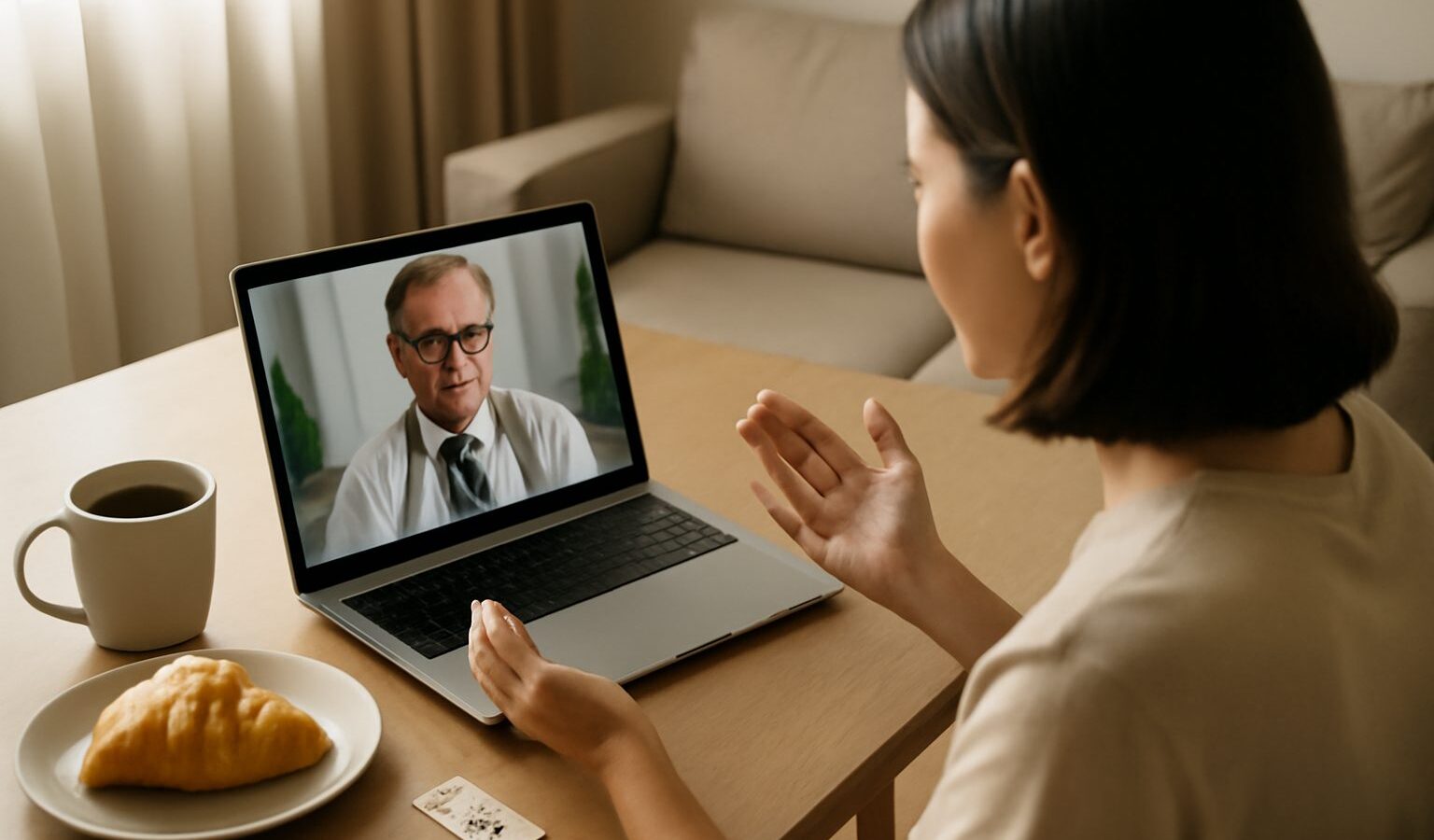
Seeing a doctor without leaving home has become a normal part of healthcare, and telemedicine in Singapore is now widely available through video and app-based services. For a newcomer from mainland China, this can be a convenient way to get medical help, especially in the early months when you are still learning where the nearest clinic is. This guide explains how these services generally work here, what they are good for, where their limits lie, and when it is better to see a doctor in person. It offers general information rather than medical advice, and any diagnosis or treatment should come from a qualified doctor.
Telemedicine simply means receiving medical care remotely, usually through a video call, phone call, or secure app, rather than sitting in a clinic. In Singapore, legitimate services are provided by licensed healthcare providers under national rules, so the doctor you speak to is a real, registered practitioner, not a chatbot. Knowing that these services are regulated should give you confidence, while also reminding you to choose properly licensed providers rather than unknown ones.
How telemedicine works in Singapore
The typical experience is straightforward. You download an app or open a website from a healthcare provider, create an account, and provide some basic details about yourself and your symptoms. You may join a video consultation more or less immediately or book a slot, depending on the service. During the call, a doctor asks about your symptoms and history much as they would in person, offers advice, and where appropriate can issue a prescription, arrange for medication to be delivered, provide a referral, or issue a medical certificate. Payment is handled through the app, and some services can be used with certain insurance or employer health benefits, so it is worth checking what applies to you.
An important point for newcomers is that telemedicine in Singapore is overseen by the Ministry of Health, and reputable providers operate under its licensing framework for such services. This matters because it means clinical standards, record-keeping, and prescribing are held to proper rules. When choosing a service, favour established providers linked to recognised clinics or healthcare groups rather than obscure apps, and check that a real registered doctor is involved. If a service will not tell you who is treating you or seems to prescribe medicines with no genuine consultation, treat that as a warning sign.
Language can be a real advantage of these services. Some platforms let you request a consultation in Mandarin or note your language preference when booking, which can make it far easier to describe your symptoms accurately. Being understood clearly is not a luxury when it comes to your health, so do ask about language options if that would help you.
What telemedicine is good for, and its limits
Telemedicine suits many common, straightforward situations well, but it is not a replacement for all in-person care. Understanding the difference helps you use it wisely and stay safe.
It tends to work well for minor, familiar complaints such as coughs, colds, mild sore throats, simple skin concerns you can show on camera, and follow-up conversations about a stable condition. It can be handy for repeat prescriptions of ongoing medication where a doctor judges it appropriate, for general health questions, and for getting quick advice on whether a symptom needs closer attention. For a busy newcomer, or for a mild illness at an odd hour, that convenience is genuine.
Its limits are equally important. A doctor on a screen cannot physically examine you, listen to your chest, feel your abdomen, or run tests on the spot. Anything that needs a physical examination, a scan, a blood test, or a procedure will require an in-person visit, and a good telemedicine doctor will tell you so and refer you on. Serious, severe, or rapidly worsening symptoms are not suitable for a video call. If you have chest pain, difficulty breathing, signs of a stroke, severe bleeding, a high fever that will not settle, or any emergency, do not wait for an app. Call 995 for an ambulance or go to the nearest hospital emergency department. When in doubt, err on the side of seeing someone in person.
Here is a simple guide to when telemedicine may fit and when it may not.
| Situation | Telemedicine may suit | Better to see a doctor in person |
|---|---|---|
| Minor cough or cold | Often yes | If breathing becomes difficult |
| Simple visible skin issue | Often yes | If it is severe or spreading fast |
| Repeat prescription review | Sometimes, at doctor’s discretion | If a new examination is needed |
| Severe or emergency symptoms | No | Yes, urgently; call 995 if serious |
Prescriptions, medical certificates, and staying safe
Two practical questions newcomers often ask are whether a video doctor can prescribe medicine and whether they can issue a medical certificate, often shortened to MC. In general, a licensed telemedicine doctor in Singapore can issue prescriptions where clinically appropriate, and medication can often be delivered to your home, which is convenient. They can also issue a medical certificate if, in their professional judgement, your condition warrants time off work. However, this is always at the doctor’s discretion based on a genuine consultation. No responsible service will simply sell you an MC or a medicine on demand, and you should be wary of any that appears to, since that is neither safe nor legitimate.
A few habits will help you get the most from telemedicine safely. Be honest and thorough about your symptoms, your medical history, and any medicines you already take, because the doctor cannot examine you and relies on what you say. Have good lighting and a stable connection so the doctor can see any visible problem clearly. Keep a copy of your prescription, consultation notes, and receipts, both for your records and for any insurance claim. And always follow up in person if your symptoms do not improve, change, or worsen, rather than assuming one online consultation has settled the matter.
Used sensibly, telemedicine is a genuinely useful tool for newcomers finding their feet in Singapore, offering quick, licensed medical help for everyday complaints. Treat it as one part of your healthcare rather than the whole of it, know when to switch to an in-person visit, and you will have a convenient extra option whenever you or your family need advice.