

The phone rings, the recruiter sounds warm, and you hear the words you have been waiting for: “We would like to offer you the role.” It is a great moment, but a verbal job offer in Singapore is usually the start of the offer process, not the end of it. What you do in the next few days, especially what you confirm and when you hand in your resignation, can protect you from awkward surprises later.
This guide explains what a verbal offer means, how to respond on the call, and when to wait for paperwork. It is general information, not legal advice. For questions about your rights, refer to the Ministry of Manpower (MOM) or a qualified adviser.
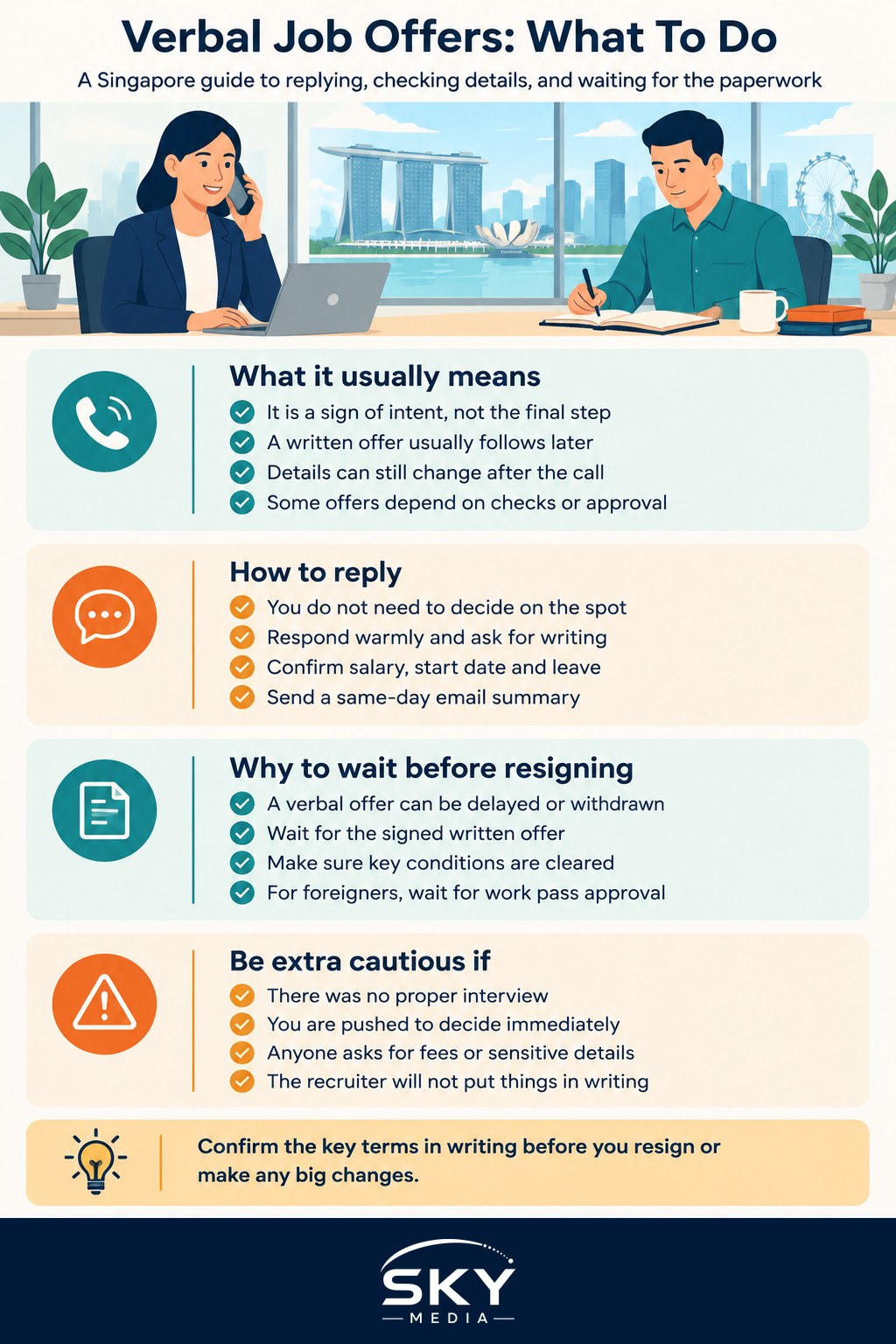
What a Verbal Offer Usually Means
The typical verbal job offer Singapore employers make is a signal that they have chosen you and want to move ahead. In most companies, it is followed by a written offer letter or employment contract once internal approvals, background checks or reference checks are done.
A few things are worth understanding:
- It signals intent, but details can still change. Salary bands, job titles, start dates and benefits are sometimes adjusted after the call, often because the hiring manager spoke before HR finalised the package.
- It can be conditional. Many offers depend on reference checks, verification of qualifications, a medical check or, for foreigners, approval of a work pass by MOM.
- Agreements can be made verbally, but proving terms is hard. In general, a spoken agreement can carry weight, but if there is a dispute about what was promised, it becomes your word against theirs. Writing protects both sides.
For employees covered by the Employment Act, MOM requires employers to give Key Employment Terms (KETs), such as salary, working hours and leave, in writing within a set time after the job starts. Check MOM’s website for the current rules and who they apply to. Most reputable employers send a written offer well before your first day anyway.
How to Respond on the Call
You do not have to say yes or no on the spot. A warm, positive response that buys you time is perfectly normal:
“Thank you, I am really pleased to hear that. I am very interested. Could you send the offer in writing so I can review the details?”
Before you hang up, use the moment to confirm the key facts while everyone is in a good mood. Note down:
- Job title and reporting line
- Monthly basic salary, and whether any figure mentioned includes allowances or variable bonus
- Start date and probation period
- Notice period during and after probation
- Annual leave, medical benefits and insurance
- Working hours, work location and any hybrid arrangement
- Conditions attached to the offer, such as references or a work pass
- When you can expect the written offer
Then send a short, polite email the same day summarising what you discussed: “Thank you for the call today. To confirm my understanding, the role is X with a basic salary of Y, starting on Z. I look forward to receiving the written offer.” This creates a record and gives the employer a chance to correct anything early.
If you want to negotiate, this is a good time to raise it, before the letter is drafted. Our guide to negotiating a job offer beyond the salary covers leave, flexibility and other levers.
Verbal Versus Written: What Changes
| Situation | With only a verbal offer | With a signed written offer |
|---|---|---|
| Salary and benefits | Based on memory and notes, easy to misunderstand | Stated clearly, can be checked later |
| Conditions such as references or work pass | Often unclear or not mentioned | Usually listed, so you know what is still pending |
| Resigning from your current job | Risky, the offer could still change or be withdrawn | Much safer, though conditions may still apply |
| Disputes later | Hard to prove what was agreed | Clear reference point for both sides |
Why You Should Not Resign Yet
The biggest mistake people make is handing in their resignation as soon as the verbal offer comes in. Offers can be delayed or withdrawn for reasons that have nothing to do with you: a budget freeze, a reorganisation, a change in the hiring manager, or a work pass application that is not approved.
As a rule of thumb, wait until:
- You have received the written offer or contract.
- You have read it carefully and the terms match what was discussed.
- You have signed and returned it, and received acknowledgement.
- Any key conditions are cleared, or you are comfortable with the remaining risk.
Your current notice period matters here. If it is long, you may feel pressure to resign early so you can start on the date the new employer wants. Instead, tell the new employer honestly that you will resign once the signed contract is in place, and that your start date will follow your notice period. Most employers expect this.
For foreigners, the work pass point is especially important. Do not resign, end a lease or book flights until MOM has approved the pass the new job depends on, and you have checked the outcome.
When to Be Extra Cautious
Some verbal offers deserve a closer look:
- An offer with no interview, or only a short chat on a messaging app. Legitimate employers usually assess you properly first.
- Pressure to decide immediately or to pay any fee for training, equipment or processing.
- Requests for personal details such as bank logins or copies of your NRIC before any written offer.
- A recruiter who refuses to put anything in writing or keeps pushing back the date of the letter with vague reasons.
These can be signs of a scam rather than a real job. Our guide to recognising job scams and fake offers explains the common patterns.
If the Written Offer Differs from What You Heard
It happens more than you might think. Stay calm and professional. Refer to your notes and confirmation email, and ask the recruiter or HR to clarify: “On our call, we discussed a basic salary of Y. The letter shows a different figure. Could you help me understand the difference?” Often it is a simple error or a misunderstanding about allowances. If the employer will not honour what was discussed, you can still decide whether the new terms work for you.
Making the Final Decision
A verbal offer is good news, and it is fine to celebrate quietly. Then slow down, confirm the details, and wait for the paperwork before making changes you cannot undo. When the written offer arrives, review it with the same care you would give any important contract. If you are weighing it against other options or deciding how to respond, see our guide on accepting or declining a job offer.
Employment rules and work pass requirements can change, so confirm anything important with MOM or the employer’s HR team before you act.
Official sources: Ministry of Manpower (MOM)
Further reading: What to Do If Your Job Offer Is Rescinded in Singapore · How to Delay a Job Offer Without Losing It