
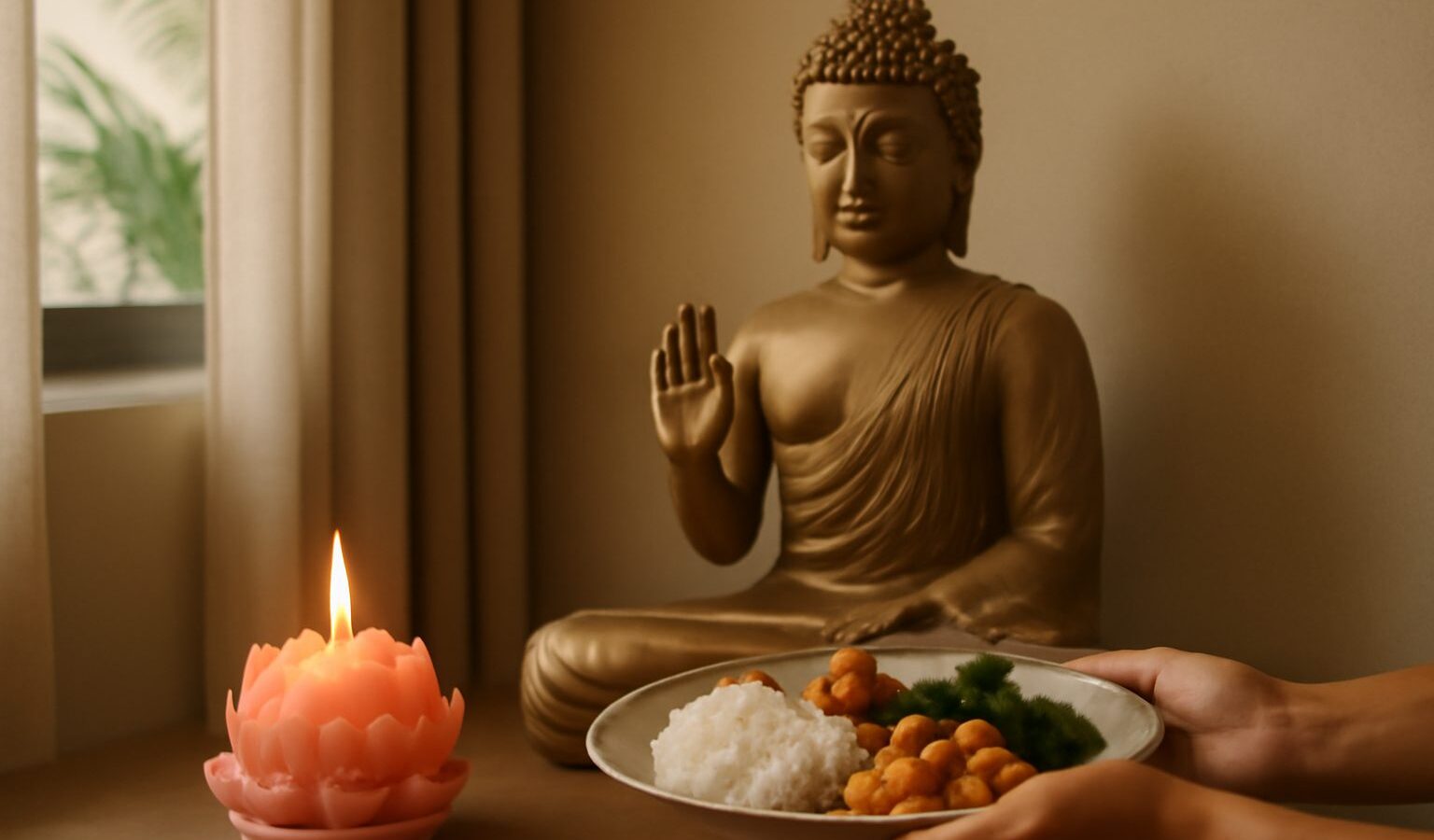
Once a year, Buddhist temples across the island fill with the scent of incense, the glow of candles, and quiet queues of devotees carrying flowers and small ladles of water. This is Vesak Day, the most important day in the Buddhist calendar. If you are new to Singapore and wondering what Vesak Day Singapore involves, why temples stay busy from before dawn, or how to visit respectfully, this guide walks you through it. Vesak Day is a public holiday here, and it is observed with devotion, generosity, and a strong emphasis on kindness towards all living beings.
What Vesak Day Marks
Vesak Day commemorates three key moments in the life of the Buddha, Siddhartha Gautama: his birth, his enlightenment, and his passing into what is described as final peace. For many Buddhists these events are remembered together on a single day, which makes Vesak both a celebration and a time of deep reflection.
The teachings associated with the Buddha centre on themes such as compassion, mindfulness, and the easing of suffering. Rather than making claims on behalf of any tradition, it is fair to say simply that Vesak is a day when Buddhists renew their commitment to living kindly and thoughtfully. Different Buddhist communities, including those following Theravada, Mahayana, and other traditions, may observe the day in slightly different ways, and Singapore is home to all of them.
For observers, the day is less about spectacle and more about intention. The visible activities at temples, the offerings and the candlelight, all point back to an inner aim: to cultivate a calmer, more generous frame of mind and to carry that spirit into everyday life.
How Vesak Day Is Observed in Singapore
In Singapore, Vesak Day begins early. Many devotees arrive at temples before sunrise, when the hoisting of the Buddhist flag and the chanting of scriptures set the tone for the day. Temples such as those in different neighbourhoods across the island open their halls to a steady flow of visitors throughout the morning and into the evening.
Several customs are especially common:
- Bathing the Buddha. Devotees gently pour water, often scented, over a small statue of the infant Buddha. This gesture symbolises the cleansing of the mind and a fresh start in cultivating good conduct.
- Offerings. Flowers, candles, incense, and fruit are offered before images of the Buddha. The fading of flowers and the burning down of candles are often understood as reminders that all things change.
- Free vegetarian food. Many temples and volunteer groups prepare and give out vegetarian meals to visitors and to those in need, reflecting the day’s spirit of generosity.
- Acts of kindness. Vesak is closely tied to charity. Devotees may donate to the needy, contribute to welfare causes, or take part in blood donation drives and other good works.
- Candlelight processions. As evening falls, some temples hold candlelight walks, with devotees carrying candles or lanterns in a calm, reflective procession.
Alongside these, some observe additional practices such as taking a simple vegetarian diet for the day, keeping certain precepts more strictly, or freeing captive animals, a gesture meant to express reverence for life. The common thread across all of it is compassion put into action.
The Public Holiday and What Stays Open
Vesak Day is a gazetted public holiday in Singapore, so most workplaces and schools are closed and many people have the day off. Because it is tied to the lunar calendar, the exact date shifts from year to year rather than falling on a fixed day. For that reason, always check the current year’s public holiday list published by the Ministry of Manpower (MOM) before making plans, and note that when a public holiday falls on a Sunday, the following Monday is typically observed as a holiday.
The table below sets out the essentials at a glance.
| Aspect | Vesak Day in Singapore |
|---|---|
| What it marks | The birth, enlightenment, and passing of the Buddha |
| Who observes it | Buddhist communities across various traditions |
| Public holiday | Yes, a gazetted public holiday |
| Date each year | Follows the lunar calendar, so it varies; check MOM’s list |
| Typical activities | Temple visits, bathing the Buddha, offerings, free vegetarian food, charity, candlelight |
| Atmosphere | Reflective, generous, and calm |
On the day itself, temples are open and often very busy, while public transport runs on a holiday schedule. Some shops and eateries operate as usual, though it is wise to confirm opening hours in advance, especially for smaller businesses. If you plan to visit a temple, going early in the morning or later in the evening can mean a quieter, more contemplative experience.
Respectful Etiquette When Visiting a Temple
Visitors of all backgrounds are generally welcome to observe Vesak at Buddhist temples, and a little courtesy goes a long way. If you would like to visit, keep these simple points in mind.
- Dress modestly. Cover your shoulders and knees. Neat, unfussy clothing is appropriate for a place of worship.
- Remove your shoes where indicated. Many prayer halls require you to leave footwear at the entrance. Follow the signs and the example of those around you.
- Keep your voice low. People are praying, meditating, and chanting. Move quietly and switch your phone to silent.
- Ask before photographing. Photography may be restricted in certain areas. Look for signage, avoid using flash, and never photograph individuals at prayer without their consent.
- Be mindful around offerings and statues. Do not touch altars, images, or offerings unless you are invited to take part in an activity such as bathing the Buddha.
- Follow the flow. Join queues patiently, do not block walkways, and let devotees carrying out rituals go first.
If you are offered vegetarian food, it is perfectly fine to accept graciously, and equally fine to decline politely. The welcome extended on Vesak is genuine, and the best way to honour it is to observe with quiet respect rather than treating the temple as a tourist backdrop.
Why Vesak Matters in a Multireligious Singapore
Vesak Day sits within a wider national picture in which the major festivals of different communities are marked as public holidays and shared across society. Buddhism is one of the significant faiths practised in Singapore, and the visibility of Vesak, like that of other religious festivals, reflects a deliberate commitment to giving each community an equal place in public life.
For newcomers, Vesak offers a gentle introduction to that spirit. You do not need to be Buddhist to appreciate a day built around kindness, restraint, and care for others. Many Singaporeans, whatever their own beliefs, take an interest in their neighbours’ celebrations, and joining in respectfully is one of the small habits that keeps the country’s diversity at ease with itself.
Understood this way, Vesak is more than a day off. It is an annual reminder, carried in candlelight and quiet queues, of values that translate across cultures: compassion, generosity, and mindfulness in how we treat one another and the world around us.
Explore more
To see how festivals like this fit into the national calendar, read our guide to Singapore’s public holidays. For the bigger picture of how different communities live side by side, see our explainer on racial and religious harmony in Singapore, and for context on the many groups that make up the country, our overview of Singapore’s population and demographics.