
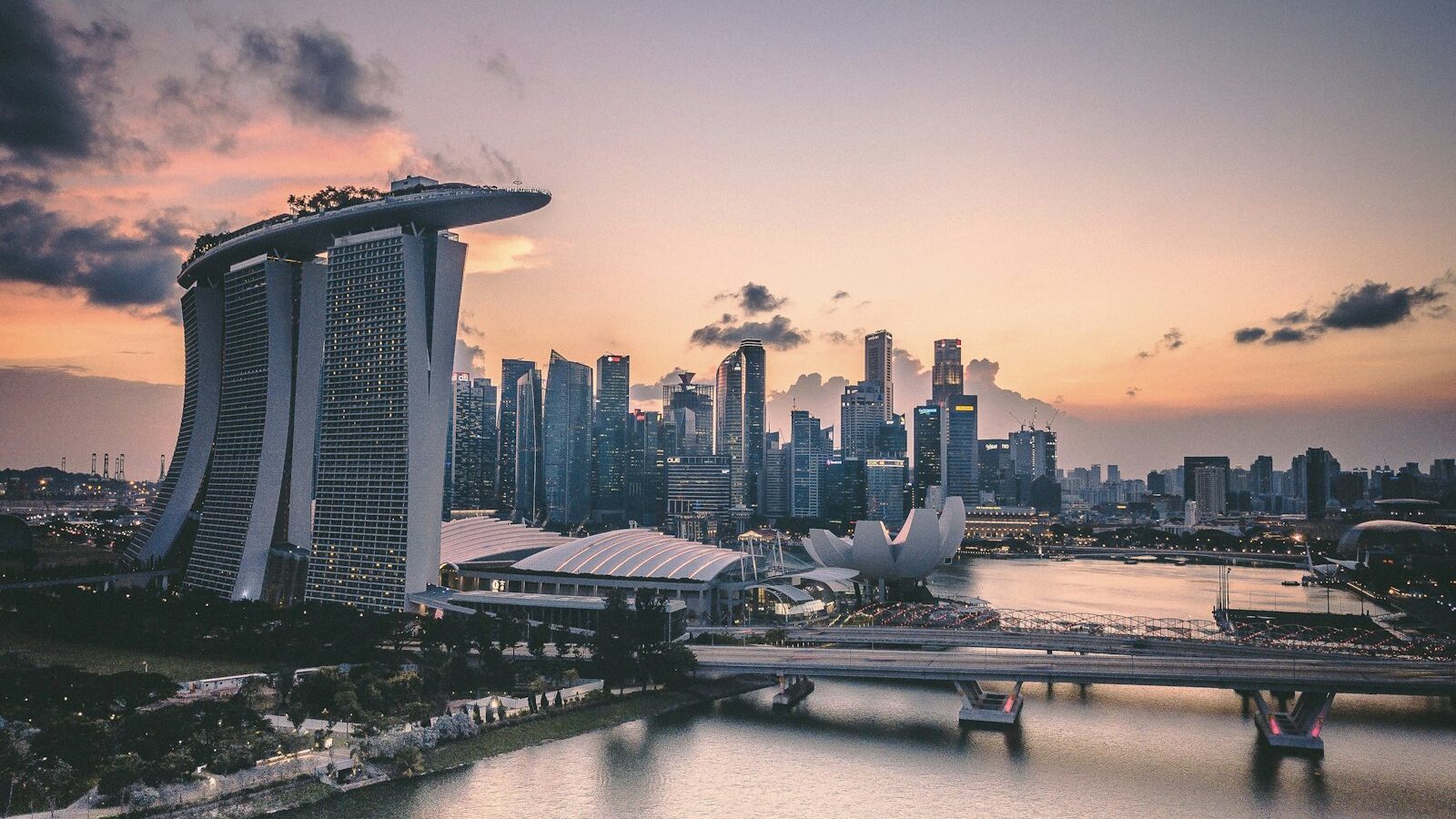
Few skylines pack as much recognisable imagery into so small a space as Singapore’s. In a single sweep across Marina Bay you can see a water-spouting lion, a three-towered hotel crowned by a boat-shaped garden, a cluster of glowing metal trees, and a spiky building that locals affectionately call the durian. This guide to Singapore landmarks explains the icons that appear on postcards and phone screens, what each one signifies, and how the city mixes gleaming modern architecture with carefully kept heritage. Whether you are new to the island or simply curious about the stories behind the sights, here is what these places are and why they matter.
The Merlion and the Making of a National Symbol
The Merlion is Singapore’s most famous mascot, a mythical creature with the head of a lion and the body of a fish. The lion head nods to the name Singapura, which comes from Sanskrit words meaning “lion city,” while the fish tail recalls the island’s origins as a humble fishing settlement called Temasek, meaning “sea town.” The creature is not an ancient legend but a designed emblem, created in the 1960s to represent the young nation and used to promote tourism.
The best-known Merlion statue stands at Merlion Park near the mouth of the Singapore River, spouting a jet of water out over the bay. It faces Marina Bay, making it a natural photo spot with the modern skyline behind it. There is also a smaller “cub” statue nearby. Because the park is compact and popular, mornings and weekdays tend to be quieter for photos. The Merlion is a useful starting point for understanding how Singapore tells its own story, blending myth, history and branding into a single friendly figure.
The Marina Bay Skyline: Modern Icons
Marina Bay is where contemporary Singapore shows off. The star is Marina Bay Sands, an integrated resort whose three hotel towers are linked at the top by the SkyPark, a long platform shaped a little like a ship balanced in the sky. It houses a hotel, a convention centre, shops, restaurants and a public observation deck, and it has quickly become shorthand for the city itself.
Just across the water sits Gardens by the Bay, a vast waterfront park best known for its Supertrees. These are tall, tree-shaped vertical gardens fitted with plants and lighting; in the evening they host a free light-and-sound show. The gardens also contain two cooled conservatories, the Flower Dome and the Cloud Forest, which recreate different climates under glass. Together, Marina Bay Sands and Gardens by the Bay signal Singapore’s ambition to be green, futuristic and world-facing all at once.
Nearby, the Esplanade, Theatres on the Bay is the country’s flagship performing-arts centre. Its twin domes are covered in spiky aluminium sunshades that locals say resemble a durian, the pungent tropical fruit, which is why the building is nicknamed the durian. It hosts concerts, plays and free shows, and its waterfront is a pleasant place to stroll.
Heritage Districts With Living Character
Not every icon is made of glass and steel. Some of Singapore’s most loved places are historic neighbourhoods that still hum with daily life. These districts show the island’s multicultural roots and are protected so that their shophouses and temples survive alongside new development.
- Chinatown grew as an early enclave for Chinese immigrants and today mixes temples, medical halls, food streets and festive decorations, especially around Chinese New Year.
- Little India is a lively quarter of Indian eateries, garland sellers, textile shops and temples, at its most colourful during Deepavali.
- Kampong Glam centres on the golden-domed Sultan Mosque and the historic Malay and Arab trading area, now dotted with cafes and independent shops along Haji Lane.
- Katong and Joo Chiat are known for pastel Peranakan shophouses and the Straits Chinese heritage, a blend of Chinese and Malay culture.
These areas are best explored slowly on foot. They are places of worship and homes as well as attractions, so a respectful, unhurried approach fits the setting.
Colonial-Era Landmarks and the Civic District
Around the mouth of the Singapore River lies the civic district, where many buildings from the colonial era have been preserved and repurposed. Raffles Hotel, opened in the late nineteenth century, is a grand whitewashed institution famous as the birthplace of the Singapore Sling cocktail; it remains a working luxury hotel with a genteel, old-world air. The Fullerton Hotel occupies a stately former General Post Office building beside the river, an example of a heritage structure given a new life.
A short walk away, the National Gallery Singapore joins two national monuments, the former Supreme Court and City Hall, into a single art museum holding an important collection of Southeast Asian and Singapore art. The surrounding Padang, a green field flanked by historic buildings, has hosted national events for generations. This district is where Singapore’s story as a trading port and later a nation is most visible in stone and architecture.
A Quick Guide to the Icons
The table below sums up the main landmarks and what each is best known for, to help you plan a visit or simply match names to sights.
| Landmark | Known for |
|---|---|
| The Merlion | National mascot; lion-fish statue by Marina Bay |
| Marina Bay Sands | Three towers with a boat-shaped SkyPark on top |
| Gardens by the Bay | Supertrees and the cooled Flower Dome and Cloud Forest |
| Esplanade, Theatres on the Bay | Arts centre nicknamed “the durian” |
| Raffles Hotel | Historic luxury hotel and the Singapore Sling |
| The Fullerton | Grand former General Post Office by the river |
| National Gallery Singapore | Art museum in the former Supreme Court and City Hall |
| Sentosa | Resort island of beaches and attractions |
Use it as a shortlist rather than a strict itinerary; many of these sit within walking distance around the bay.
Sentosa and the Southern Playground
Off the southern coast lies Sentosa, an island resort reached by cable car, a road, a boardwalk or a light monorail. Once a military site, it has been transformed into a leisure destination with beaches, a theme park, aquarium, golf courses, hotels and family attractions. It offers a different flavour from the city centre: relaxed, coastal and built for a day out. For many residents it is the go-to escape without leaving the country, and for visitors it rounds out a trip that runs from historic streets to futuristic gardens.
Making the Most of a Visit
A few practical notes help. Singapore is hot and humid year-round, so carry water, plan for short indoor breaks, and expect passing rain. Many icons cluster around Marina Bay and are linked by pleasant waterfront walkways, so it is easy to see several in one outing, ideally in the cooler morning or evening. The Gardens by the Bay light show and the Marina Bay laser display are free and best enjoyed after dark. Public transport reaches nearly all of these sites, and heritage districts reward wandering rather than rushing. Above all, remember that temples, mosques and residential lanes are part of everyday life, so dress and behave respectfully when you pass through.
Explore more
To understand how the waterfront icons came to be, read the Singapore River and Marina Bay story, which traces how a working river mouth became a showpiece bay. And to appreciate why the heritage districts feel so distinct, our guide to racial and religious harmony in Singapore explains the multicultural roots on display in Chinatown, Little India and Kampong Glam.