

Vitiligo is a long-term skin condition in which patches of skin lose their colour and turn lighter or white. It is not contagious, not caused by poor hygiene and not dangerous in itself, but it can affect how people feel about their appearance, especially on the face and hands. If you or a family member are looking into vitiligo in Singapore, this guide walks through how it is diagnosed, the main treatment approaches doctors may discuss, camouflage options, and how subsidies and insurance may fit in.
This article is general information, not medical advice. Please speak to a doctor or dermatologist about your own situation.
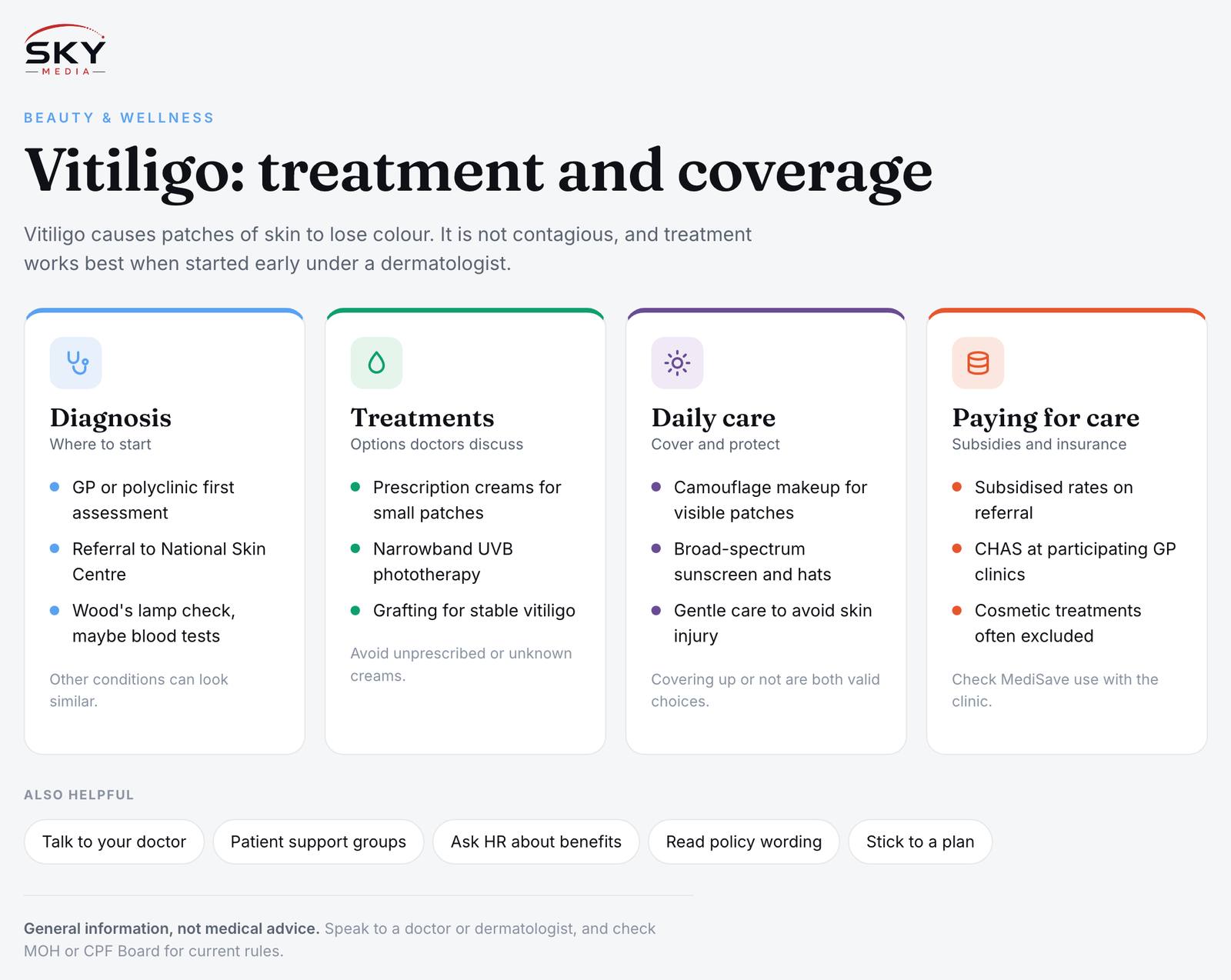
What Vitiligo Is and Why It Happens
Skin colour comes from melanin, a pigment made by cells called melanocytes. In vitiligo, these cells stop working or are lost in certain areas, so the skin there becomes pale. Doctors generally understand vitiligo to involve the immune system mistakenly targeting pigment cells, with genetics and other factors also playing a part.
There are two broad types you may hear about:
- Non-segmental vitiligo, the more common type, where patches often appear on both sides of the body, such as both hands or around both eyes.
- Segmental vitiligo, where patches are usually on one side or one area of the body and tend to stabilise sooner.
Vitiligo can appear at any age and in any skin tone. On darker or tanned skin, the contrast is more noticeable, which is one reason it can feel very visible in a sunny country like Singapore.
Getting a Diagnosis
Not every light patch is vitiligo. Fungal infections, post-inflammatory changes and other conditions can look similar, so a proper diagnosis matters before starting any treatment.
Where to start
- A GP or polyclinic doctor can do a first assessment. If they suspect vitiligo or are unsure, they can refer you to a dermatologist.
- The National Skin Centre (NSC) is Singapore’s public specialist centre for skin conditions. Subsidised patients are usually seen on referral from a polyclinic or a participating GP. Public hospitals also have dermatology departments.
- Private dermatologists can be seen directly, though costs are higher and you will usually pay without government subsidy.
What happens at the appointment
A dermatologist will typically ask about when the patches appeared, whether they are spreading, family history and any other health conditions. They may examine the skin under a special ultraviolet lamp, often called a Wood’s lamp, which makes depigmented areas easier to see. In some cases, they may suggest blood tests, because vitiligo is sometimes linked with other autoimmune conditions such as thyroid problems. A skin biopsy is not always needed but may be used if the diagnosis is unclear.
Treatment Options Doctors May Discuss
There is no single cure for vitiligo, but several treatments can help stop patches from spreading and encourage colour to return, especially when started early. Response varies a lot from person to person, and the face and neck often respond better than the hands and feet. Your dermatologist will advise which options suit you.
Prescription creams and ointments
- Topical corticosteroids may be used for limited areas, under medical supervision because of possible side effects with long-term use.
- Topical calcineurin inhibitors are non-steroid options that doctors often consider for delicate areas such as the face.
- Newer targeted creams have been developed in recent years. Ask your dermatologist whether any are available in Singapore and suitable for you.
Never use steroid creams bought without a prescription, or “whitening” or “repigmenting” products of unknown origin. Some contain harmful ingredients, and the Health Sciences Authority (HSA) regularly warns about such products.
Phototherapy
Phototherapy uses controlled ultraviolet light to stimulate pigment cells. The most common form is narrowband UVB, usually given in short sessions at a clinic a few times a week over several months. Targeted light or excimer treatment focuses on smaller patches. Phototherapy needs commitment, because results build slowly and sessions must be regular.
Surgical and other options
For people whose vitiligo has been stable for a long time, some dermatologists offer procedures that transfer pigment cells from normal skin to affected areas. These are specialist treatments and not suitable for everyone. Oral medicines may occasionally be used to slow rapidly spreading vitiligo, always under close supervision.
The table below summarises the main approaches.
| Approach | What it involves | Typically suited to | Things to know |
|---|---|---|---|
| Prescription creams | Applying medicine to patches at home | Small or early patches, face and body | Needs regular follow-up to watch for side effects |
| Narrowband UVB phototherapy | Clinic light sessions over months | Wider or spreading patches | Time-consuming, results build gradually |
| Targeted light treatment | Focused light on specific spots | Small, stubborn patches | Fewer areas treated per session |
| Surgical grafting | Moving pigment cells to affected skin | Stable vitiligo that has not changed for a long time | Specialist procedure, not for active vitiligo |
| Camouflage makeup | Covering patches cosmetically | Anyone, alongside or instead of treatment | Does not treat vitiligo, but can boost confidence |
Camouflage Makeup and Daily Skin Care
Many people choose to cover visible patches for work, photos or special occasions, while others prefer to leave them as they are. Both are valid choices.
- Camouflage or corrective makeup is more opaque than everyday foundation and designed to stay put in humidity. A dermatology clinic or a trained makeup professional can help you match your skin tone.
- Self-tanning products can darken pale patches for a while and are an option some people like. Patch test first.
- Sun protection is important, because depigmented skin burns easily. Use a broad-spectrum sunscreen, wear hats and seek shade during the strongest midday sun. Tanning of surrounding skin also makes patches more noticeable.
- Gentle skin care helps, since injury or friction to skin can sometimes trigger new patches in some people.
For broader skin concerns, our guide on regulated vs unregulated aesthetic treatments explains how to tell which procedures must be done by doctors.
Paying for Vitiligo Care in Singapore
Costs depend on where you are treated, the type of treatment and how long it lasts. Fees change, so check with the clinic for current charges.
- Subsidised care: Referral from a polyclinic or a participating GP to the National Skin Centre or a public hospital dermatology clinic usually qualifies Singapore Citizens and Permanent Residents for subsidised rates. Subsidy levels can depend on residency and means testing.
- CHAS: The Community Health Assist Scheme (CHAS) offers subsidies at participating GP clinics for eligible Singaporeans. Check the CHAS website or the clinic about what applies to you.
- MediSave and MediShield Life: Whether these can be used depends on the specific treatment and the rules in place at the time. Ask the clinic’s billing team and refer to the Ministry of Health (MOH) or CPF Board for current details.
- Private insurance: Integrated Shield and other plans may or may not cover dermatology outpatient care, and purely cosmetic treatments are commonly excluded. Read your policy wording and confirm with your insurer. Our guide to reviewing your insurance coverage can help you understand what to look for.
- Company benefits: Many employers offer outpatient or specialist benefits. Check with HR before booking.
Looking After Your Wellbeing
Vitiligo affects more than the skin. Some people feel self-conscious, anxious or low, especially when patches appear suddenly or on visible areas. These feelings are common and worth taking seriously.
- Talk to your doctor if the condition is affecting your mood, sleep or daily life. They can refer you for counselling or support.
- Connecting with others who have vitiligo, through patient groups or online communities, can help you feel less alone.
- For children and teens, a calm, matter-of-fact explanation helps them answer questions from classmates with confidence.
Vitiligo is manageable, and many people live full, confident lives with it. With an accurate diagnosis, a treatment plan you can stick to and good sun protection, you can make informed choices that suit your skin and your goals.
Official sources: HealthHub
Further reading: Chronic Hives in Adults: Causes and Treatment