
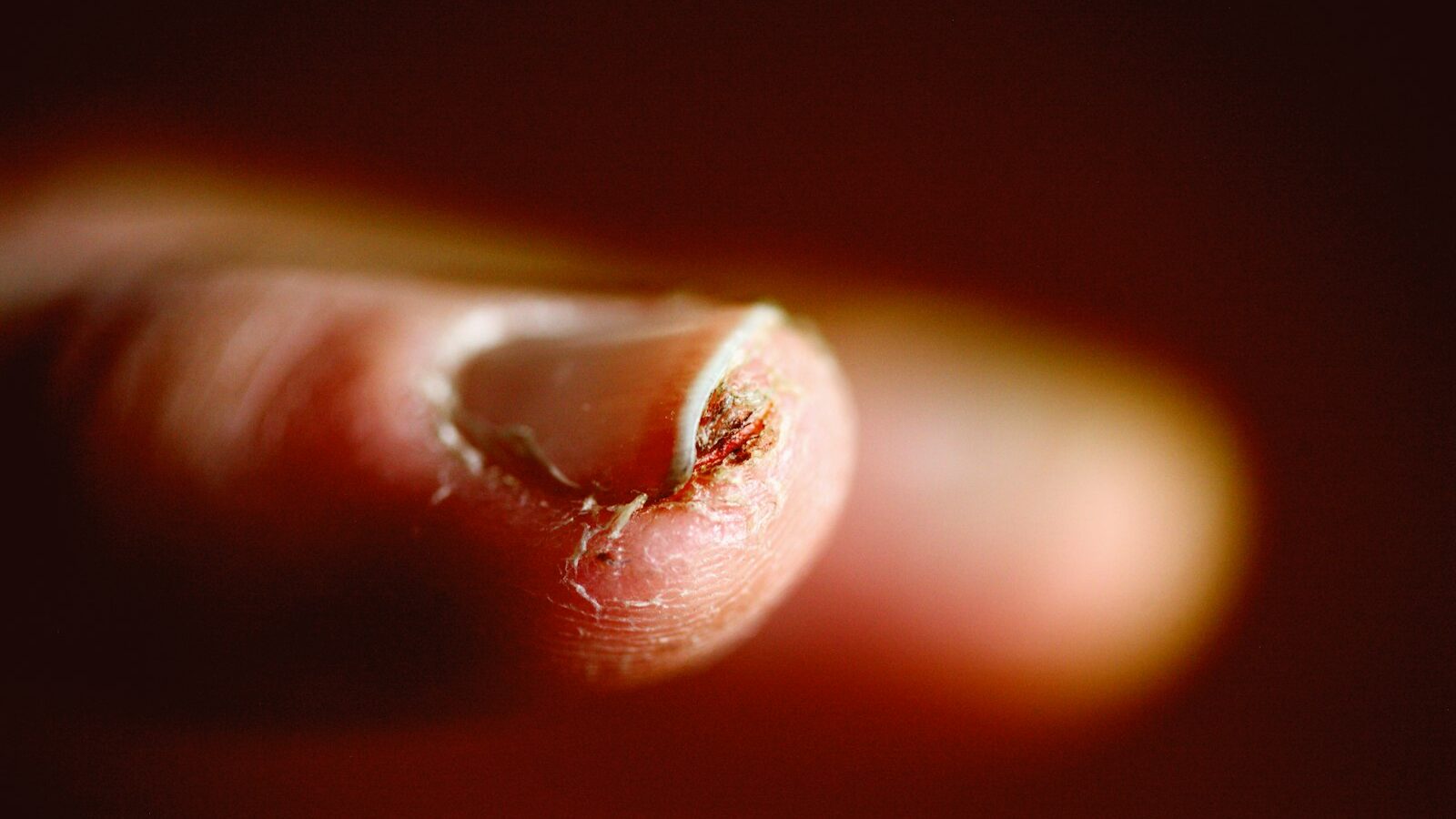
A fungal nail infection usually starts quietly. A toenail turns a little yellow or white at the tip, then slowly thickens, crumbles at the edge or lifts away from the skin underneath. Because it rarely hurts, many people ignore it. In Singapore’s heat and humidity, with feet spending long hours in covered shoes, the fungi that cause it have ideal conditions to spread.
This guide focuses on what happens once you suspect a fungal nail infection: how it is confirmed, what the main treatment options are, how long each realistically takes, and how to stop it coming back. It is general information, not medical advice. A doctor, pharmacist or dermatologist should assess your nails before you start any treatment.
What a Fungal Nail Infection Looks Like
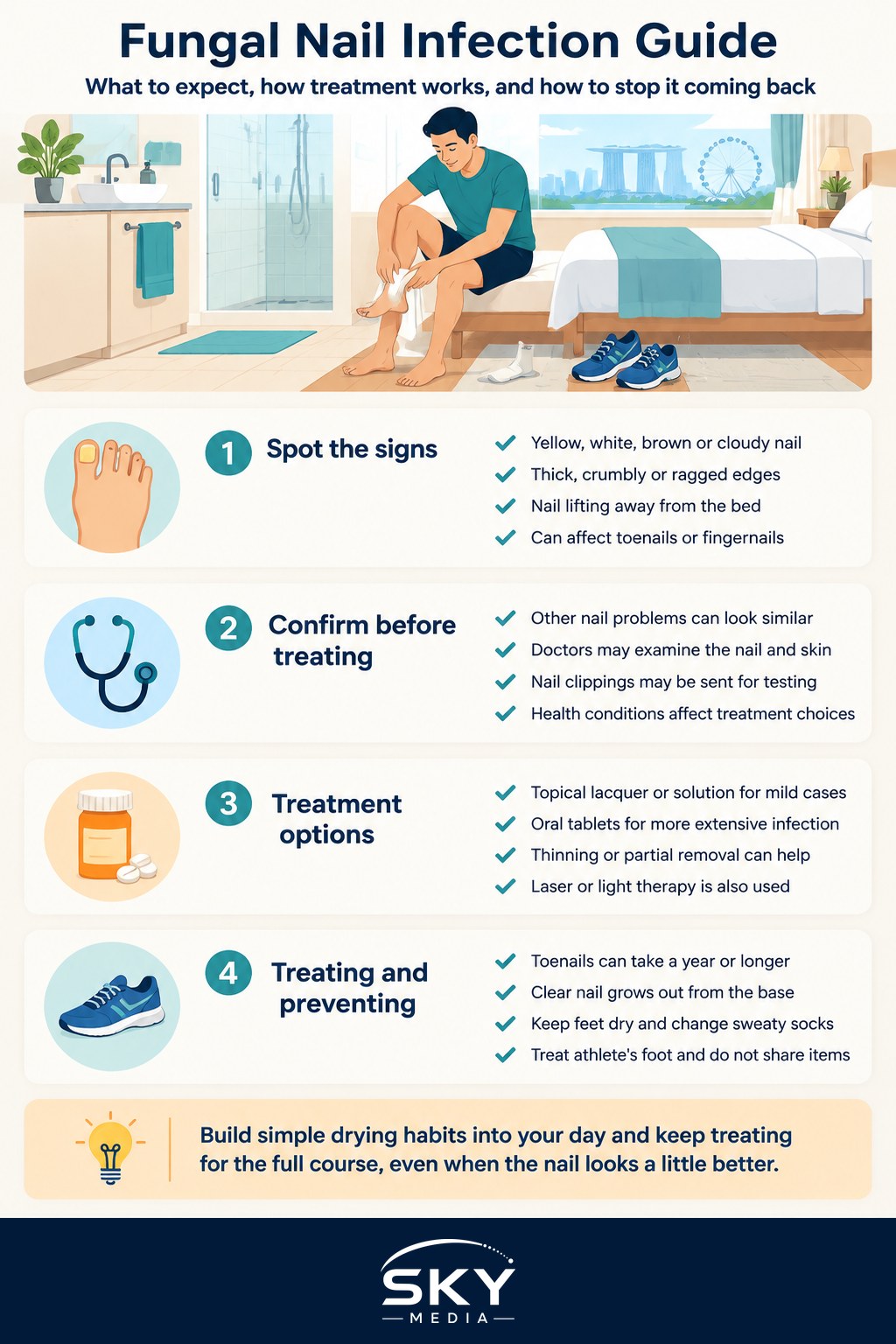
The medical name is onychomycosis. It most often affects toenails, especially the big toe, though fingernails can be involved too. Common signs include:
- Yellow, white, brown or cloudy discolouration, often starting at the tip or the sides
- Thickening that makes the nail hard to cut
- Crumbly, chalky or ragged edges
- The nail lifting away from the nail bed
- Debris building up under the nail
- A mild odour in some cases
The tricky part is that several other conditions look similar. Nail psoriasis, repeated minor injury from tight shoes or sport, bacterial infection and some skin conditions can all produce thick, discoloured nails. That is why guessing and buying a cream off the shelf often fails.
A fungal nail infection is frequently linked to athlete’s foot, since the same fungi live on skin and nails. If the skin between your toes is itchy or peeling, read our guide to athlete’s foot and fungal skin infections, because treating the skin is part of treating the nails.
How Doctors Confirm the Diagnosis
Before prescribing anything stronger than an over-the-counter product, most doctors will want to confirm that fungus is really the cause. Typical steps include:
- Examination. A GP, polyclinic doctor or dermatologist looks at the pattern of changes, the surrounding skin and your other nails.
- Nail sample. Clippings or scrapings from under the nail may be sent to a laboratory for microscopy and culture. Culture can take a few weeks because fungi grow slowly.
- Review of your health. Diabetes, poor circulation, a weakened immune system and certain medicines all affect which treatment is suitable and how closely you need to be monitored.
In Singapore you can start with a GP or polyclinic, who can refer you to a dermatologist if needed. If you hold a CHAS card (the Community Health Assist Scheme, which subsidises care at participating GP clinics), check with the clinic and the CHAS website on what is covered, as subsidy rules change.
Treatment Options Compared
There is no single best treatment. The right choice depends on how much of the nail is affected, how many nails are involved, your age and health, and the other medicines you take. This table gives a broad overview.
| Option | Best suited to | What to expect | Things to discuss with your doctor |
|---|---|---|---|
| Topical antifungal nail lacquer or solution | Mild infection affecting part of one or a few nails, not the base | Applied regularly for many months; slower and less reliable for thick nails | Correct filing and application routine, realistic cure rate |
| Oral antifungal medicine | Moderate to severe infection, several nails, or nail base involved | Taken for a set course of weeks to months; nail continues to improve after the course ends | Liver health, blood tests, drug interactions, pregnancy |
| Nail trimming, thinning or partial removal | Very thick or painful nails, often alongside medicine | Done by a doctor or podiatrist; helps medicine penetrate and relieves pressure | Whether you have diabetes or poor circulation |
| Laser or light-based therapy | People who cannot take oral medicine and prefer to try devices | Several sessions; evidence is still more limited than for medicines | Cost, number of sessions, what results are realistic |
Topical treatments
Antifungal nail lacquers and solutions are painted onto the nail on a regular schedule. Some are sold at pharmacies, while stronger formulations need a prescription. Filing down the surface of the nail first helps the product soak in. Topical treatment has few side effects, but because nail is a dense barrier, it works best when the infection is shallow and limited. Stopping after a few weeks is a common reason it “doesn’t work”.
Oral antifungal medicines
For more extensive infections, doctors may prescribe tablets that reach the nail through the bloodstream. These generally achieve better cure rates than topical products for moderate cases. They are not suitable for everyone. Your doctor will consider liver function, kidney function, other medications and whether you are pregnant or breastfeeding, and may order blood tests before or during treatment. Never take someone else’s prescription or buy antifungal tablets online without a doctor’s advice.
Combination and procedures
Doctors often combine approaches, such as oral medicine with a lacquer, or thinning the nail so medicine penetrates better. Laser treatment is offered at some clinics; ask what evidence supports it and what happens if results are partial.
How Long Treatment Takes and What Success Looks Like
This is where expectations most often go wrong. Even when the fungus is killed, the damaged nail does not turn healthy overnight. It has to grow out and be replaced by clear nail from the base.
- Fingernails grow faster, so improvement may be visible within several months.
- Toenails grow slowly. A big toenail can take a year or longer to fully replace itself.
- The sign that treatment is working is a band of clear, normal-looking nail emerging from the cuticle and moving forward.
Take a photo of your nails at the start and every couple of months so you can compare honestly. Recurrence is common, so a “cured” nail still needs the prevention habits below. If there is no improvement after the time your doctor suggested, go back rather than switching products on your own.
People with diabetes should be especially careful. A thickened nail can press on the skin and lead to wounds that heal poorly, so foot checks with a doctor or podiatrist are worth keeping up. Similar footwear issues come up with bunions and how to choose shoes, and the advice to give toes space applies here too.
Preventing Reinfection in Humid Weather
Fungi thrive in warm, damp, dark places, which describes the inside of a covered shoe on a Singapore afternoon. Prevention is about keeping feet and nails dry and limiting re-exposure.
- Dry thoroughly. After showering, dry between the toes and around the nails. A fan or a few minutes barefoot helps.
- Rotate shoes. Let each pair dry for at least a day. Take insoles out to air if they come out.
- Choose breathable socks. Change them if they get sweaty during the day.
- Wear slippers in shared wet areas. Gym changing rooms, condo pool showers and public pools are common sources.
- Treat athlete’s foot early. Untreated skin infection can reseed the nails.
- Keep nails short and straight. Use your own clippers and file, and clean them after use on an affected nail.
- Be choosy at nail salons. Ask how tools are sterilised, and avoid long-term polish or gel on an infected nail.
- Do not share towels, socks or footwear within the household.
When to See a Doctor Promptly
See a doctor rather than self-treating if:
- You have diabetes, poor circulation or a weakened immune system
- The nail is painful, red, swollen or has pus around it
- Several nails are affected or the change spread quickly
- A dark streak or patch appears in the nail, which should always be checked
- Over-the-counter treatment used properly for several months has not helped
A fungal nail infection is stubborn rather than dangerous for most healthy adults. Get the diagnosis confirmed, pick a treatment you can stick to for the full course, and build simple drying habits into your day. With patience, most people see clear nail growing back.
Further reading: What Your Nails Say About Your Health