

Plenty of seniors grew up kicking a ball at the void deck or playing in the company league, and miss the feeling of being part of a team. Walking football in Singapore, along with a handful of other gentle team games, offers a way back in without the sprinting, sliding tackles and sore knees. This guide explains how these sports work, where seniors tend to find groups, and how to start safely, even if it has been decades since you last played.
If you prefer instructor-led classes such as chair exercise or aqua aerobics, our guide to low-impact exercise classes in Singapore covers those. This article is about playing together, as a team.
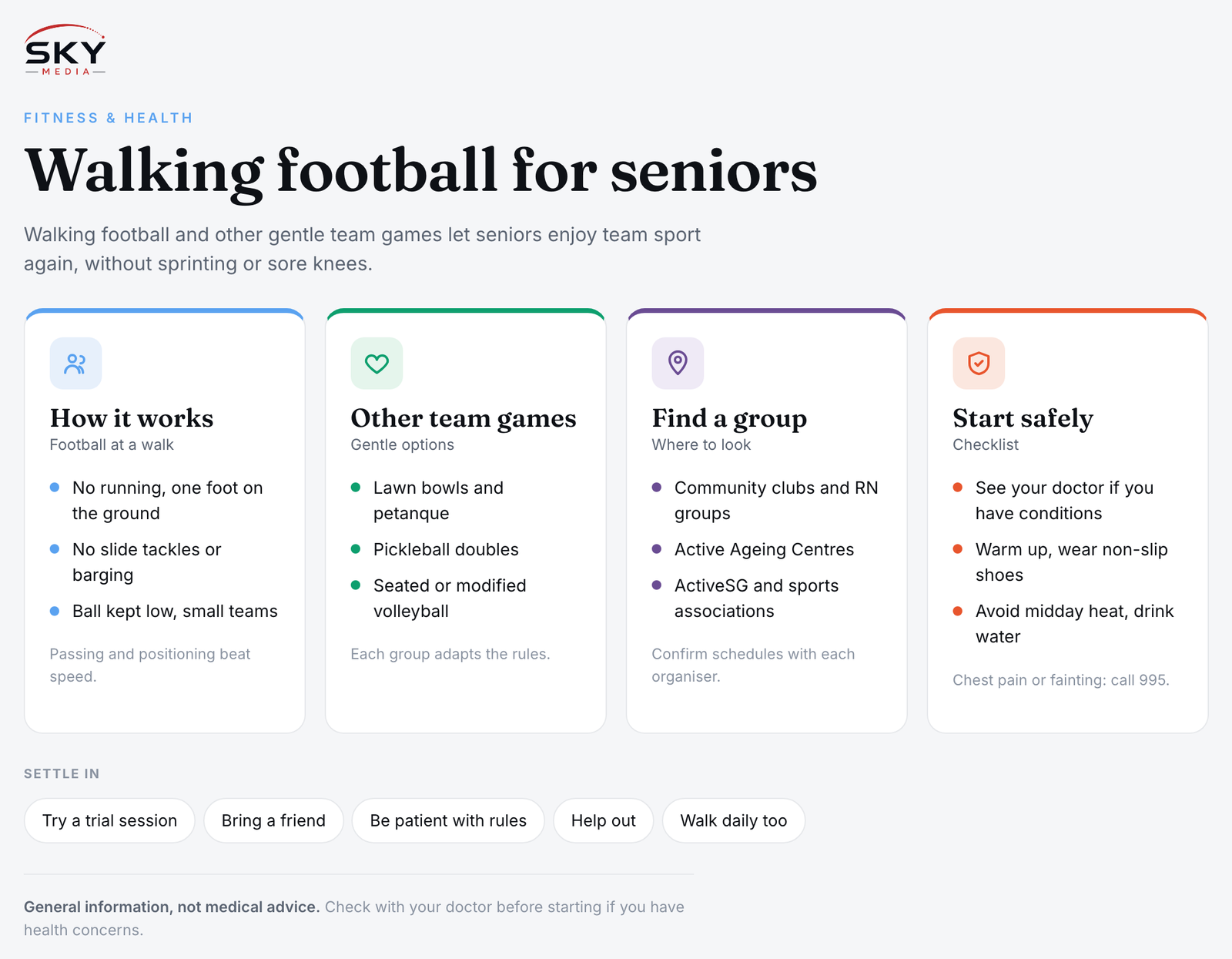
How Walking Football Works
Walking football is exactly what it sounds like: football played at a walk. It started as a way to keep older players in the game, and is now played by men and women of many ages and fitness levels around the world. Rules vary between groups, but the common ones are:
- No running. Players must keep one foot in contact with the ground at all times. Referees or the group usually award a free kick for running.
- Limited contact. No slide tackles, no barging, and often no tackling from behind.
- Ball kept low. Many groups set a height limit, often around head or hip height, and do not allow heading.
- Small teams on small pitches. Games are often five or six a side, on futsal courts or small fields, with short halves and rest breaks.
The pace is slower, but the game is still tactical. Passing, positioning and communication matter more than speed, which levels the field between former players and complete beginners. Many players are surprised at how much of a workout a session turns out to be.
Other Gentle Team Sports Worth Trying
Walking football is not for everyone. If your knees, balance or interests point elsewhere, there are other social, team-based options.
| Sport | How it is played | Physical demand | Who it suits |
|---|---|---|---|
| Walking football | Small-sided football at walking pace, low ball, minimal contact | Light to moderate, plenty of short walks and turns | Former footballers, people who enjoy fast thinking |
| Lawn bowls | Teams roll weighted bowls towards a small target ball on a green | Light, mostly bending, walking and standing | Those wanting precision, calm and outdoor time |
| Petanque | Teams toss metal balls towards a small jack on a gravel or sand court | Light, can be played standing in one spot | Beginners, people with limited stamina |
| Pickleball doubles | A paddle sport on a small court, played two against two | Light to moderate, short bursts of movement | Those who enjoy racket games and lively chatter |
| Seated or modified volleyball | Volleyball adapted with lighter balls, lower nets or seated play | Light, mainly upper body | Wheelchair users and those with balance concerns |
These are general descriptions. Each group adapts the rules to its players, so ask how a session is run before you join.
Where Seniors Find Groups in Singapore
Team sports for older adults are often organised in community settings rather than commercial clubs. Places to look include:
- Community clubs and Residents’ Network groups. Under the People’s Association, many community clubs run interest groups and sports activities. Check your CC’s notice board or the People’s Association website and its activity listings.
- Active Ageing Centres. These neighbourhood centres for seniors organise exercise, games and social activities. Some run or support sports groups, or can point you to nearby ones. Ask at the centre nearest your home.
- ActiveSG sports centres and programmes. Sport Singapore runs programmes and facilities across the island, and listings sometimes include sessions aimed at older adults. Our guide to getting an ActiveSG account and booking facilities explains how the booking system works.
- Sports associations and clubs. National associations and private clubs for sports such as lawn bowls and petanque may offer introductory sessions. Check their official websites for current programmes.
- Workplace alumni, church, temple, mosque and clan association groups. Many informal football and bowls groups grow out of existing communities.
- Word of mouth. Ask regulars at your neighbourhood futsal court or park connector. Informal groups often meet at the same place each week.
Schedules, fees and programme names change, so confirm the current details with each organiser before turning up. If you used to play casually and want to compare with younger, faster games, our guide to social football in Singapore describes how pick-up and social leagues work.
Starting Safely: A Checklist
Gentle does not mean risk-free, especially if you have been inactive for a while.
- Speak to your doctor first if you have heart, lung, joint or balance conditions, have had a recent fall or surgery, or are unsure whether a sport suits you. Your doctor or polyclinic can advise what is appropriate for you.
- Warm up properly. Walking, gentle leg swings and ankle circles for a few minutes help prepare muscles and joints.
- Wear proper shoes. Choose non-slip trainers suited to the surface. Futsal courts, grass and gravel greens all grip differently.
- Respect the heat. Singapore’s weather is hot and humid. Prefer early morning, late afternoon or sheltered courts, drink water regularly, wear a hat outdoors, and stop if you feel dizzy, breathless or unwell.
- Know your limits. Take the rest breaks, sit out a game if needed, and tell the organiser about any health issues they should be aware of.
- Watch for warning signs. Chest pain, severe breathlessness, fainting or sudden weakness need urgent medical attention. Call 995 for an emergency.
This is general information, not medical advice. Your doctor knows your health history and is the best person to guide you.
Getting the Most From Team Play
The social side is half the benefit. Regular team play gives structure to the week, new friendships, and a reason to get out of the house. A few tips help newcomers settle in:
- Go for a trial session first. Watch or join one game before committing to a regular slot.
- Bring a friend or spouse. Many groups welcome pairs, and it is easier to stay committed together.
- Be patient with the rules. Former players often find the “no running” rule the hardest part. It becomes natural after a few sessions.
- Help out. Groups often rely on volunteers to book courts, bring balls and organise drinks. Pitching in is a good way to belong.
- Combine it with everyday activity. Team sessions once or twice a week, plus daily walks, add up. Our guide to walking more in Singapore has ideas for building movement into ordinary days.
When a Team Sport Is Not Right for You
If you find you prefer quieter activity, or a health condition makes team play unsuitable, there are plenty of individual alternatives, from tai chi in the park to guided exercise classes and swimming. The best activity is the one you enjoy enough to keep doing. For many seniors, though, the chance to wear a jersey again, call for a pass and celebrate a goal with teammates is reason enough to give walking football a try.
Frequently Asked Questions
Do I need to be fit before joining a walking football group? No, groups welcome many fitness levels, and passing and positioning matter more than speed. Still, speak to your doctor first if you have heart, lung, joint or balance conditions or a recent fall or surgery. Start with a trial session before committing.
Why is heading banned in walking football? Many groups set a height limit for the ball and do not allow heading, to keep the game low impact and reduce the risk of collisions and injury. Rules vary between groups, so ask how a session is run, including the contact and ball-height rules.
What is the best time of day to play outdoors in Singapore’s heat? Early morning, late afternoon or sheltered courts are the better choice. Drink water regularly, wear a hat outdoors, and stop if you feel dizzy, breathless or unwell. Chest pain, fainting or severe breathlessness need urgent medical attention, so call 995.
Which gentle sport suits someone with limited stamina or balance? Petanque can be played standing in one spot and is light on stamina, while lawn bowls is mostly bending and walking. Seated or modified volleyball suits those with balance concerns or wheelchair users. A doctor can advise what is appropriate for you.
How can I find a team near me if I have no one to play with? Try community clubs under the People’s Association, Active Ageing Centres, ActiveSG programmes and sports associations, or ask regulars at a nearby futsal court. Schedules and fees change, so confirm details with each organiser, and try one session before committing.