
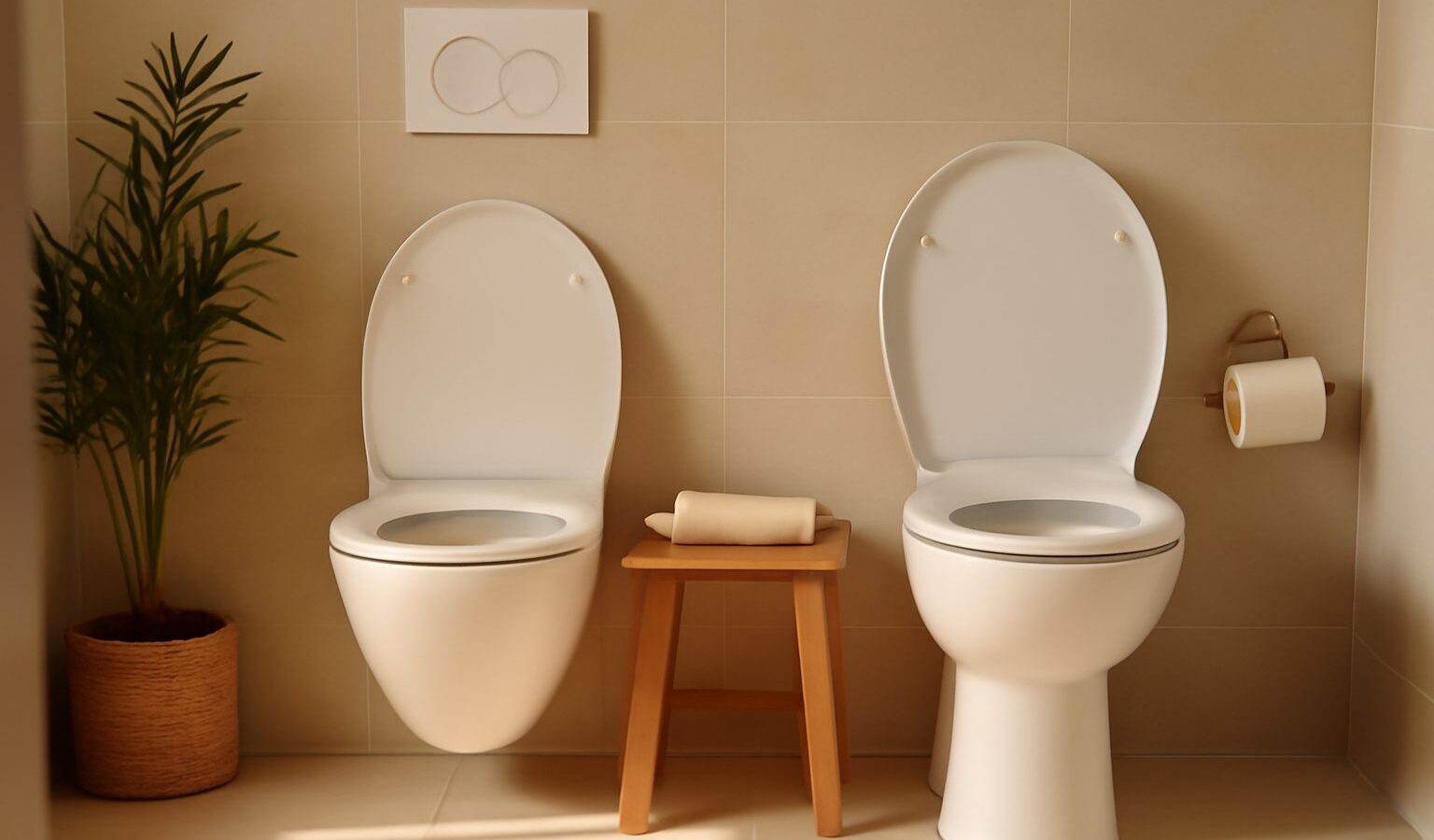
If you are renovating a bathroom, the toilet bowl is one of the few fixtures you will use every single day for the next decade or more. The big choice most homeowners face is whether to go for a wall hung toilet bowl in Singapore’s increasingly popular minimalist style, or stick with a classic floor-mounted model. Both work well. The right one depends on your floor plan, your plumbing, your budget and how much you care about cleaning around the base.
This guide is a buying comparison. It covers bowl types, flush systems and what installation actually involves. If your current toilet is blocked or running, our guide to unclogging drains and toilets is the better starting point.
How Wall-Hung and Floor-Mounted Bowls Differ
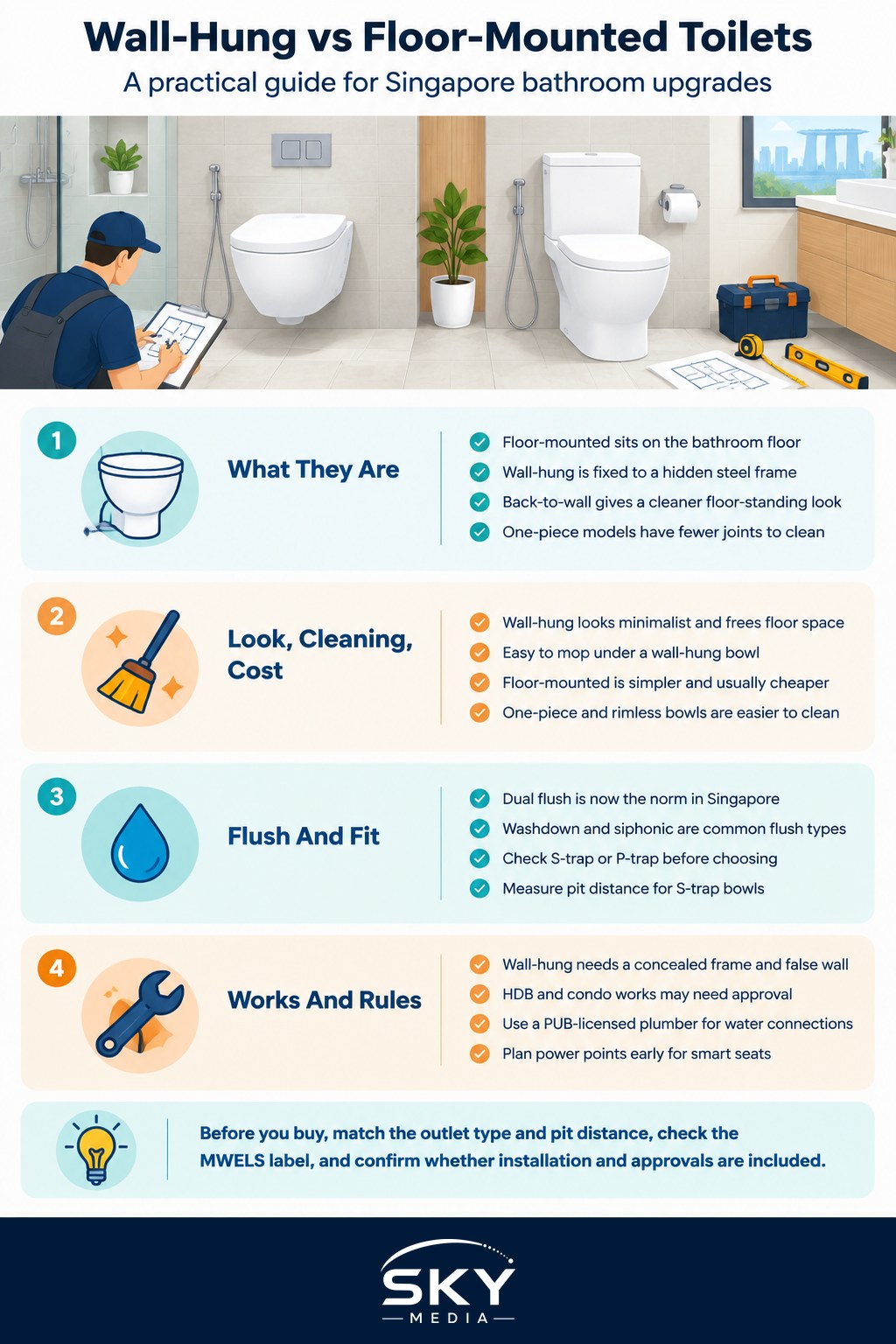
A floor-mounted toilet sits directly on the bathroom floor. It is the type found in most HDB flats and older condominiums. There are two common forms:
- Close-coupled (two-piece): the cistern (water tank) sits on top of the bowl and the two are bolted together. Usually the most affordable option and the easiest to replace.
- One-piece: the bowl and cistern are moulded as a single unit. Fewer joints mean fewer places for grime to collect, and the look is sleeker, though it tends to cost more.
A wall-hung toilet has no base touching the floor. The bowl is bolted to a steel frame (often called a carrier or in-wall frame) hidden behind a false wall. The cistern is also concealed inside that wall, and you flush with a push plate mounted on the wall surface.
There is also a middle option, the back-to-wall floor-standing bowl, which sits on the floor but pushes flush against the wall with a concealed cistern. It gives a cleaner look than a standard close-coupled bowl without the full wall-hung frame.
Side-by-Side Comparison
| Factor | Wall-hung toilet | Floor-mounted toilet |
|---|---|---|
| Look and space | Minimalist, floor visible underneath, bathroom feels larger | Traditional, base takes up floor area |
| Cleaning | Easy to mop underneath, no hard-to-reach base | Dirt collects around the base and behind the bowl |
| Installation | Needs a concealed frame and false wall, more hacking and labour | Usually a straight swap on the existing outlet |
| Cistern access | Through the flush plate opening, parts can be harder to reach | Cistern lid lifts off for easy repairs |
| Height | Can be set at a chosen height during installation | Fixed by the bowl design |
| Overall cost | Higher once frame, false wall and labour are included | Generally lower, especially for two-piece models |
Neither type is “better” across the board. Wall-hung bowls win on looks and floor cleaning. Floor-mounted bowls win on simplicity, cost and ease of future repair.
Flush Systems and Water Efficiency
Whatever style you choose, pay attention to the flushing mechanism, because it affects both performance and your water bill.
- Dual flush: two buttons, a smaller flush for liquids and a fuller flush for solids. This is the norm for new toilets in Singapore.
- Washdown flush: water pushes waste straight down. Simple, reliable and common in local homes.
- Siphonic flush: creates a siphon effect that pulls waste out. Often quieter, but uses a more complex trapway.
- Rimless bowls: no hidden rim under the edge, so there are fewer places for bacteria and stains to hide. Increasingly common in both wall-hung and floor-mounted designs.
Singapore’s national water agency, PUB, runs the Mandatory Water Efficiency Labelling Scheme (MWELS), which shows a tick rating on fittings such as toilets and flushing cisterns. More ticks mean better water efficiency. There are also minimum water efficiency requirements for flushing cisterns sold and installed here. Check the label in the showroom and confirm current requirements on the PUB website before you buy, especially if you are importing a bowl from overseas.
Outlets, Pit Distance and What Your Bathroom Allows
This is where many buyers get caught out. Before falling in love with a model, check two things.
1. Floor outlet or wall outlet. Toilets connect to the waste pipe in one of two ways:
- S-trap (floor outlet): the waste pipe goes down into the floor. Very common in HDB flats.
- P-trap (wall outlet): the waste pipe goes horizontally into the wall. More common in some condominiums and landed homes.
Your new bowl must match your existing outlet, or the plumbing must be modified, which adds cost and work.
2. Pit distance (rough-in). For S-trap toilets, this is the distance from the finished wall to the centre of the floor outlet. Bowls are designed for specific pit distances, and getting this wrong means the bowl either will not fit or sits awkwardly far from the wall. Measure carefully, or ask your contractor to measure, and bring the number to the showroom.
For wall-hung toilets, the concealed frame has to line up with the waste pipe and water supply, which is why the false wall and plumbing layout need planning early. If you are already redoing the bathroom with new tiles, it is a good time to think about anti-slip treatments for bathroom floors too.
Installation, Renovation Rules and Practical Considerations
For HDB flats, renovation works are governed by HDB’s renovation guidelines, and certain works require a permit and must be carried out by a contractor listed in HDB’s Directory of Renovation Contractors. Hacking walls, building a false wall or changing floor finishes in a bathroom can fall under these rules, and there are additional restrictions on bathroom waterproofing layers in some flats. Rules differ depending on the age of the flat and the specific works, so check the latest requirements on the HDB website or with your contractor before committing to a wall-hung setup.
For condominiums, your MCST (Management Corporation Strata Title, the body that manages the estate) may have its own renovation rules, approved working hours and deposit requirements. Check with your management office.
Plumbing works involving water supply connections should be done by a plumber licensed by PUB.
Other practical points:
- Wall strength: wall-hung frames transfer weight into the floor and wall structure. A proper frame from a reputable brand is rated to carry a person’s weight safely when correctly installed, but it must be anchored properly.
- Maintenance access: with a concealed cistern, internal parts are reached by removing the flush plate. Ask the supplier how easy it is to source replacement parts locally in future.
- Bidet sprays and smart seats: many Singapore households add a bidet spray or an electronic bidet seat. Electronic seats need a nearby power point with suitable protection in a wet area, which should be planned with a licensed electrician.
- Toilet height: for elderly family members, a slightly higher seat can make sitting and standing easier. Wall-hung bowls let you choose the mounting height, and some floor models come in “comfort height” versions.
- Small toilets: in compact HDB common bathrooms, a wall-hung bowl or a short-projection floor model can free up a few precious centimetres of legroom.
Which One Should You Choose?
Go wall-hung if:
- You are doing a full bathroom renovation anyway, with hacking already planned.
- You want the easiest floor cleaning and a modern look.
- Your budget can absorb the frame, false wall and extra labour.
Go floor-mounted if:
- You are only replacing the bowl, not the whole bathroom.
- You want the simplest, cheapest and fastest swap.
- You prefer easy access to the cistern for DIY repairs.
- You are renting or plan to move soon and do not want major works.
A one-piece rimless floor-mounted bowl is a good compromise for many homes: easier to clean than a two-piece model, with none of the structural work a wall-hung toilet needs.
Buying Checklist Before You Pay
- Measure your outlet type (S-trap or P-trap) and pit distance.
- Check the MWELS tick rating on the label.
- Ask whether the price includes installation, removal of the old bowl and disposal.
- For wall-hung, confirm the frame brand and that the price covers the false wall and finishing.
- Ask about warranty terms for both the ceramic bowl and the internal flushing parts.
- Confirm any permit or MCST approval needed for your works.
- Sit on the display model if you can. Bowl shape and seat height feel very different in person.
Choose based on how you live and how much work you are prepared to do, and either type will serve you well.
Further reading: Designing a Powder Room or Guest Toilet