

White, cream, pastel and pale linen are natural choices in Singapore’s heat. They reflect sunlight, look fresh and suit almost every setting. The problem is that thin, light fabric often shows more than you intended, especially under bright office lights, in strong sunlight or once you start to sweat. If you have ever wondered how to wear white without see through worries, the answer is a mix of choosing the right fabric, wearing the right layer underneath and getting the fit right.
This guide focuses on that specific problem, so you can wear light colours confidently from the MRT to the meeting room.
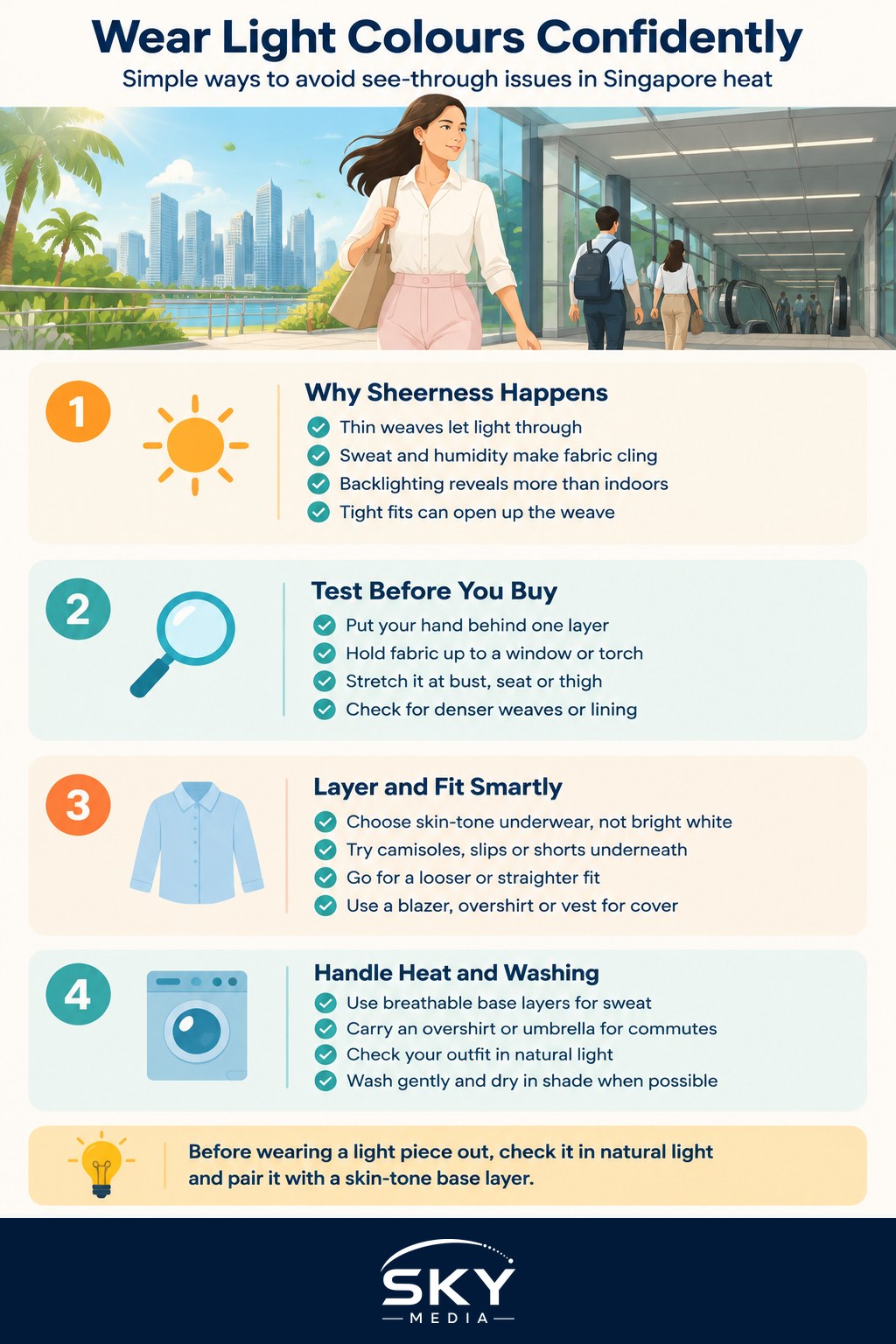
Why Light Fabrics Turn Sheer in the Tropics
A light garment becomes see-through for a few predictable reasons, and Singapore’s climate makes most of them worse.
- Thin, loose weaves. Fine cotton voile, gauze and lightweight linen let light pass between the threads.
- Moisture. When fabric gets damp from sweat, humidity or rain, it clings and becomes noticeably more transparent. This is the biggest issue in a tropical city.
- Strong backlighting. Standing in front of a window, under direct sun or near a bright ring light can reveal outlines that look fine indoors.
- Contrast underneath. Bright white underwear, dark prints and visible straps show through far more than people expect.
- Tight fit. When fabric stretches over the body, the weave opens up and becomes thinner.
- Camera flash. Flash photography can make some fabrics look more sheer in photos than they do in person.
Once you know the cause, you can fix it at each step: before you buy, when you dress and when you wash.
Test the Fabric Before You Buy
Most see-through problems can be avoided in the shop or when your online order arrives.
- The hand test. Put your hand inside the garment, behind a single layer of fabric. If you can clearly see your skin tone and the lines of your fingers, it will likely be sheer when worn.
- The light test. Hold the fabric up to a window or a phone torch. Even light fabrics should soften the light rather than let it through clearly.
- The stretch test. Gently stretch the fabric at the seat, bust or thigh area. If it turns noticeably thinner, it will do the same when you sit or move.
- Check the label. Denser weaves such as twill, poplin, heavier linen, ponte knit and double-layered fabrics are usually more opaque. Words like “voile”, “gauze” or “mesh” often signal a sheer piece.
- Look for linings. Many white trousers, skirts and dresses come partly or fully lined. A lining is one of the easiest built-in fixes.
When shopping online, read buyer reviews for words such as “sheer”, “thin” or “need a slip”. Return policies differ, so check them before ordering if you are unsure.
Choose the Right Layer Underneath
The most common mistake is wearing white underneath white. Bright white shows clearly through light fabric, while a shade close to your skin tone blends in.
Underwear and bras. Pick seamless pieces in a tone close to your own skin, not pure white. Smooth, seam-free styles avoid visible lines under fitted trousers.
Camisoles and slips. A thin, skin-tone camisole under a white blouse, or a half slip under a light skirt, adds opacity without much warmth. Look for breathable materials such as cotton or modal so they do not trap heat.
Undershirts for men. A thin undershirt in a skin-tone or light grey shade shows through less than a white one under a white dress shirt. A V-neck version stays hidden when the top button is open.
Shorts under dresses. Lightweight, breathable shorts under a white dress add cover in windy conditions and on escalators.
The table below shows how the most common fixes compare.
| Fix | Best for | Comfort in heat | Things to watch |
|---|---|---|---|
| Skin-tone underwear | All light clothing | High | Match your own skin tone, not “nude” by default |
| Thin camisole or slip | Blouses, skirts, dresses | Medium to high in breathable fabrics | Straps showing at the neckline |
| Lined garment | Trousers, skirts, dresses | Medium | Lining fabric can feel warm if synthetic |
| Denser fabric choice | Work trousers, shirts | Medium | Heavier weave can feel stuffier |
| Looser fit | Trousers and tops | High | Proportions can look boxy if too loose |
Get the Fit and Styling Right
Fit affects opacity as much as fabric does.
- Size for movement. If white trousers pull across the hips or thighs, the fabric will thin out. Going one size up or choosing a straight or wide leg often solves the problem.
- Avoid tight pockets. Pocket bags made of thin white fabric can show through the front of trousers. Some people ask a tailor to cut them out or line them in a skin-tone fabric.
- Use structure. A light blazer, an open overshirt or a vest over a sheer top adds cover while staying stylish.
- Mix in a darker anchor. If a top is slightly sheer, pairing it with an opaque layer such as a jacket or high-waisted bottom reduces the problem area.
- Consider pale tones other than pure white. Cream, stone, beige and pale grey can feel just as fresh but are often less revealing than bright white.
For outfit ideas that keep casual pieces looking polished, see our guide on how to wear a graphic tee without looking sloppy. The same layering principles work well for light colours.
Handle Sweat, Rain and Photos
Singapore’s humidity and sudden downpours are the real test.
- Choose sweat-wicking base layers. A breathable camisole or undershirt absorbs sweat before it reaches the outer layer, reducing clinging and transparency.
- Plan for the commute. If you walk in the midday sun, carry a light overshirt or an umbrella that doubles as sun cover.
- Carry a backup layer. A light cardigan or scarf in your bag helps if you get caught in rain.
- Check in natural light. Before an important event, look in the mirror near a window or take a quick phone photo with the light behind you.
- Be mindful of flash. Camera flash can reveal what normal light does not. For indoor photos, our guide on how to shoot in low light without flash helps you get flattering pictures without that effect.
Keep Light Clothes Opaque Through Laundry
Washing habits also affect opacity over time.
- Wash gently. Harsh washing and high heat can thin fibres. Use a gentle cycle and a laundry bag for delicate pieces.
- Avoid over-bleaching. Strong bleach weakens fibres and can make fabric thinner. Follow the care label.
- Dry in shade when possible. Strong sun can yellow some whites and weaken fibres over time.
- Retire pieces honestly. Once a white shirt has thinned with wear, it may be better as a home or gym piece rather than an office one.
With a quick fabric test, a skin-tone base layer and a sensible fit, light colours become one of the easiest and coolest ways to dress in Singapore, all year round.
Frequently Asked Questions
Is white linen too sheer to wear to the office? It can be, because lightweight linen lets light through, especially under bright office lighting. Choose a heavier, denser weave or a lined piece, wear a skin-tone layer underneath, and test it against a window before you leave. A light blazer over the top also adds cover.
Do light colours really keep you cooler than dark ones? Generally, yes, because pale colours reflect more sunlight than dark ones. Fabric matters as much as shade, so a breathable cotton or linen in cream will feel better than a thick synthetic in white. Pick airy fibres first, then the colour.
How do I stop white tops getting yellow underarm stains? Wash soon after wearing and avoid leaving damp clothes in the basket. Sweat mixed with some deodorants can leave marks, so let your deodorant dry before dressing. Gentle spot-treatment before the wash helps, but follow the care label and avoid heavy bleaching.
Can a tailor fix white trousers I already own that are see-through? Often, yes. A tailor can add a lining, replace thin pocket bags with a skin-tone fabric or let out seams if the fit is tight. Ask for a quote first and compare it with the cost of simply buying a denser pair.
Which pale shades show less than pure white? Cream, stone, beige and pale grey usually reveal less underneath while still looking fresh in the heat. A textured weave such as twill or ponte also hides lines better than a smooth, thin fabric. Try the hand and light tests in the shop before buying.
Further reading: How to Wear Silk in Singapore Without Ruining It