
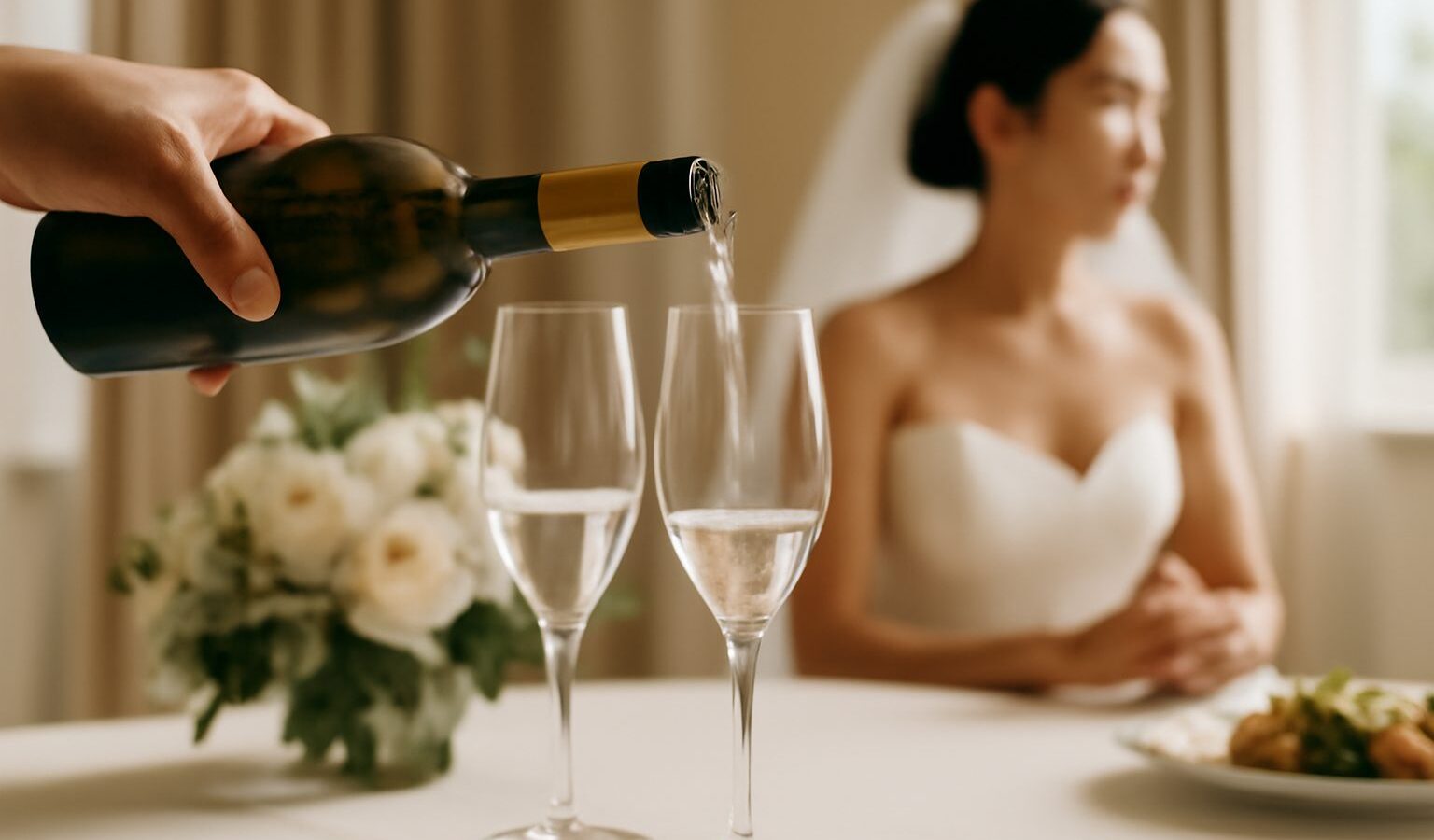
Most couples spend hours comparing banquet menus, then discover the drinks clauses only when the contract lands. Wedding corkage in Singapore is one of those quiet line items that can swing your final bill noticeably, especially if your families expect brandy at every table or your friends plan to toast with a few bottles of good wine. This guide explains what corkage actually is, how free-flow beer and liquor packages tend to be structured, and how to negotiate a bring-your-own (BYO) arrangement without awkwardness on the night.
If you are still at the venue-hunting stage, start with our overview of the wedding banquet explained and come back here once you have a shortlist.

What Corkage Means at a Singapore Wedding Banquet
Corkage is the fee a venue charges for opening and serving alcohol you bring in yourself, rather than alcohol you buy from them. The name comes from uncorking wine, but in practice it can apply to any bottle: wine, champagne, whisky, brandy, cognac or hard liquor.
The fee exists because the venue loses its drinks margin when you supply your own bottles, and it still provides glassware, chilling, ice, pouring staff and clean-up. At a banquet with dozens of tables, that service is real work.
Venues usually express corkage in one of these ways:
- Per bottle opened. You pay only for bottles the staff actually open. Unopened bottles go home with you.
- Per bottle brought in. Some venues count every bottle delivered, opened or not. Ask which rule applies.
- Per table or flat fee. A set amount covers a defined quantity, which is simpler to budget.
- Waived up to a limit. Many wedding packages include a number of bottles with corkage waived, often tied to the number of tables you book.
Hard liquor is often treated differently from wine. Some venues set a separate, higher corkage rate for spirits, while others waive corkage on a set number of liquor bottles as a package perk. Rates differ widely between venues and change over time, so always get the current figures in writing from your banquet coordinator.
Free-Flow Beer, Liquor Packages and BYO: Comparing Your Options
Singapore banquet packages commonly bundle some alcohol, most famously free-flow beer for a set number of hours. Before you decide how much to bring in, compare what each route really gives you.
| Option | What you usually get | What to check in the contract |
|---|---|---|
| Free-flow beer (package) | Unlimited house beer for a fixed duration, often the full dinner | Exact hours, whether it is draught or bottled, brand, and whether it can be swapped for soft drinks |
| Free-flow wine or liquor upgrade | House wine or selected spirits served freely for a set period | Which labels, top-up charges per head, and whether the upgrade applies to every guest |
| Venue-supplied bottles | You buy wine or liquor from the venue by the bottle | Price list, minimum orders, and whether unopened bottles are refunded |
| Bring your own with corkage | You supply bottles and pay a fee per bottle or per table | Waived quota, rate beyond the quota, spirits versus wine rules, delivery timing |
A common pattern is to rely on the free-flow beer for most guests, then bring in your own wine for toasting and a modest amount of liquor for the tables where the older relatives sit. That mix keeps costs predictable while giving everyone something they enjoy.
How to Negotiate Corkage Before You Sign
The time to negotiate is before the deposit, when you still have leverage. Once the contract is signed, most coordinators can only offer what is written in it.
Practical things to ask for:
- A waived corkage quota. Ask whether corkage can be waived for a set number of bottles, and whether that number grows with extra tables.
- Spirits included in the waiver. If your family drinks brandy or whisky, ask for the waiver to cover hard liquor as well as wine.
- Charge on opened bottles only. This protects you if guests drink less than expected.
- Free-flow duration covering the whole event. Make sure beer flows through the yam seng toasts and the final courses, not just the first two hours.
- Soft drinks and Chinese tea included. Non-drinkers and children should be well looked after without extra charges.
- Champagne for the toast. Some venues include a bottle or a pyramid pour; others charge for it or treat your own bottle as corkage.
Hotels and restaurants approach this differently. Hotels tend to have formal packages with fixed waivers, while restaurants may be more flexible but run with fewer staff. Our guide to hotel vs restaurant wedding banquets covers those trade-offs in more depth.
Get every agreed point written into the contract or a signed addendum. A friendly verbal promise from a sales manager may not survive a staff change before your wedding date.
Logistics of Bringing Your Own Alcohol on the Day
A BYO plan works best when it is boringly well organised. Problems on the night usually come from bottles arriving late, nobody tracking what was opened, or a tipsy relative carrying cartons to the car at midnight.
Before the wedding
- Confirm delivery arrangements. Ask when and where bottles can be dropped off, and who on the venue team will receive and count them.
- Label your cartons. Write your names and the wedding date on every box so they do not mix with another event.
- Prepare a simple inventory. List the brand and number of bottles, and have the venue sign it on receipt.
- Plan chilling time. White wine, sparkling wine and champagne need to be cold; check that the venue can chill your quantity in time.
On the night
- Appoint a drinks point person. A trusted friend or relative, not you, should liaise with the captain about bottle counts.
- Agree on release rules. Tell the staff whether to place bottles on each table at once or release them as tables finish.
- Do a final count. Before you leave, count opened and unopened bottles against the inventory, then sign the tally.
- Arrange collection. Decide who takes unopened bottles home, and make sure that person is not driving after drinking.
Responsible Drinking and Guests Who Do Not Drink
A wedding is a celebration, but it is worth planning for guests who drink little or nothing. Many Singapore banquets have relatives who avoid alcohol for health, religious or personal reasons, and a growing number of younger guests are simply cutting back.
- Make sure non-alcoholic options go beyond a single soft drink. Mocktails, juices and Chinese tea all help.
- Brief the emcee to keep drinking games light, and avoid pressuring anyone to finish a glass during yam seng. Our piece on wedding banquet games and entertainment has ideas that do not depend on alcohol.
- Arrange taxis or private-hire rides for guests who have been drinking, and remind people gently not to drive.
Singapore law also restricts the sale and consumption of alcohol in public places during certain hours. A banquet inside a licensed venue is generally covered by that venue’s licence, but if you are planning an outdoor after-party or a private space, check current rules with the relevant authorities and your venue before you plan drinks there.
Common Corkage Mistakes to Avoid
- Assuming “corkage waived” means unlimited. Most waivers have a bottle cap; anything beyond it is charged.
- Forgetting spirits are treated separately. A wine waiver may not cover whisky or brandy.
- Not checking the counting rule. “Per bottle brought in” can cost you for bottles that never left the carton.
Corkage is rarely the biggest number on your wedding invoice, but it is one of the easiest to control. Ask the right questions early, get the answers in writing, and you can toast your guests without a surprise on the final bill.
Explore more: The Wedding Banquet Explained in Singapore, Hotel vs Restaurant Wedding Banquet in Singapore, Sober-Curious and Alcohol-Free Bars