
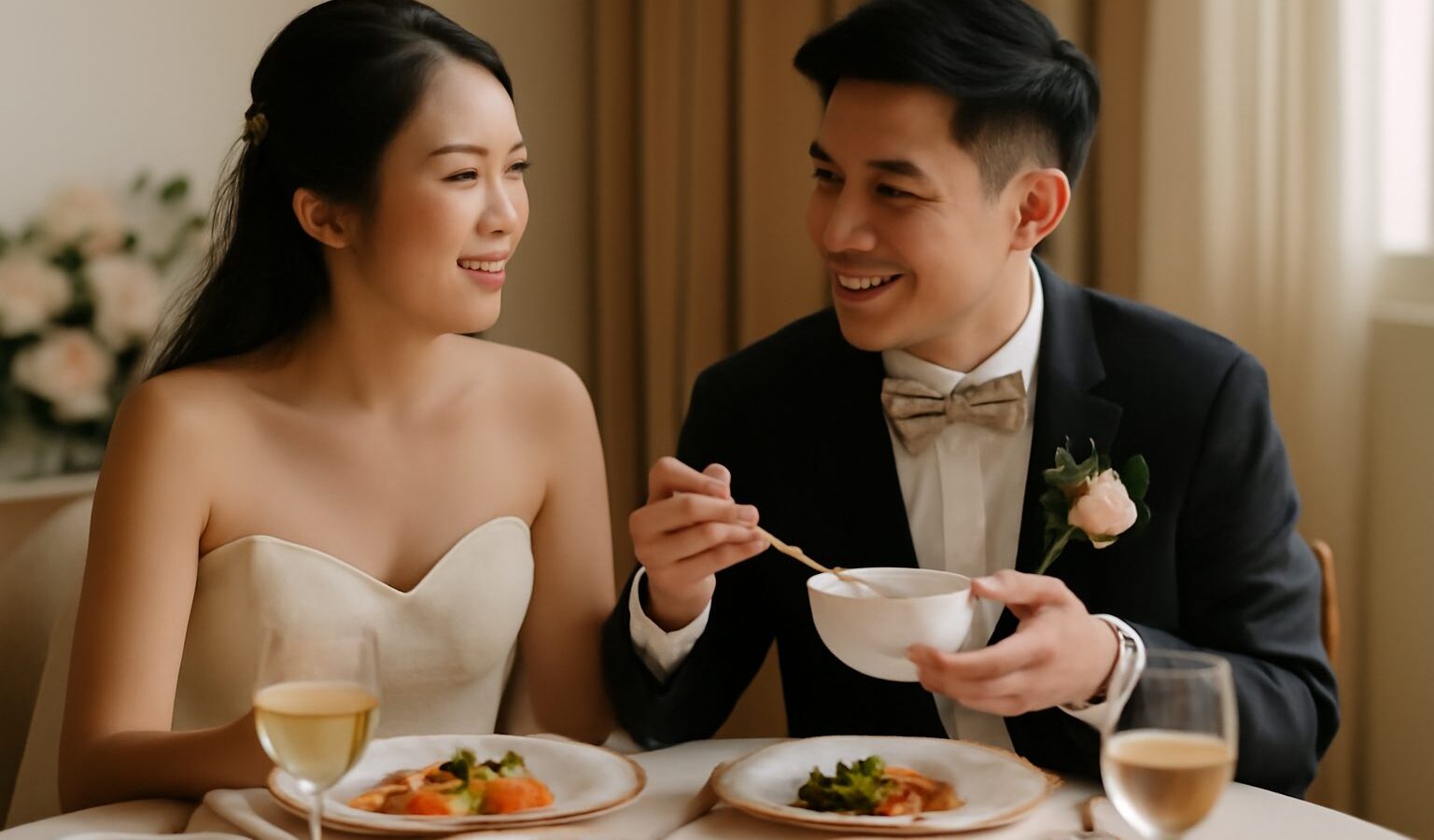
The wedding banquet is one of Singapore’s most enduring celebrations, a lively evening of food, family and heartfelt toasts that brings two sides together. If you are new to it, whether you are marrying into a family that holds one or simply attending as a guest, the customs can feel elaborate. This guide explains how a Singapore wedding banquet works from start to finish, including the tables, the march-ins, the yum seng, the much-discussed ang-bao system, seating logic, the programme and the etiquette that makes a host gracious. Practices vary by family, dialect group and level of observance, so treat these as common traditions rather than fixed rules.
The Guest List and the Tables
Banquets are counted in tables, usually seating ten guests each, which is why couples talk about “twenty tables” rather than a headcount. Your final table count drives your venue choice, your budget and your minimum spend, so build the guest list before you confirm anything. Expect it to involve negotiation, as parents often invite relatives, colleagues and old friends alongside the couple’s own circle.
A practical tip is to keep a live tracking sheet with confirmed guests, dietary notes and table assignments. Caterers and hotels usually ask for a guaranteed minimum number of tables, and you pay for that minimum even if a few guests drop out, so pad your estimate sensibly rather than optimistically.
The March-Ins and the Programme
A banquet has a recognisable flow, and a good emcee keeps it moving. The couple typically makes two grand entrances, called march-ins. The first, often after the first course, sees them walk in together to music and applause. The second, usually after an outfit change, may include the couple pouring a champagne tower or lighting a stage centrepiece. Between and around these moments sit speeches from parents or the couple, a photo or video montage of their story, and sometimes a live performance or a walk from table to table for toasts.
The emcee is the glue. A confident host, whether a hired professional or an eloquent friend, reads the room, paces the courses with the banquet manager, and cues the key moments. Brief your emcee thoroughly on names, pronunciations, the running order and any family sensitivities. A clear run sheet with timings prevents the awkward lulls that make an evening drag.
The Yum Seng
No banquet feels complete without the yum seng, the communal toast that is the emotional high point of the night. The couple, their families and often the bridal party gather on stage, everyone raises a glass, and the crowd draws out “yum seng” (roughly “drink to victory”) for as long as their breath holds. It is traditionally done in three rounds, each louder and longer than the last, and the volume is taken as a measure of the blessings and good fortune wished on the couple.
As a host, encourage guests to join in with gusto, and make sure non-drinkers have a glass of juice or soft drink so no one is left out. Time the yum seng with your emcee and kitchen so it lands at a natural break rather than mid-course.
The Ang-Bao System
The ang-bao, a red packet of money, is how guests in Singapore typically bless a newly married couple, and it plays a real practical role. Rather than bringing wrapped gifts, guests give cash, and the combined ang-baos usually help offset a meaningful part of the banquet cost. Many guests gauge their gift loosely against the estimated cost of their seat, giving more for a hotel dinner than a casual lunch, and more for close family than for acquaintances.
For couples, a few gentle norms help:
- Set up a clearly staffed reception table where guests hand over ang-baos and sign the guest book or a keepsake.
- Keep a discreet, secure box or bag, and assign a trusted family member to mind it.
- Track who gave what if you can, both to thank people and to reciprocate at their future celebrations, since ang-bao giving is reciprocal over a lifetime.
Never pressure guests on amounts, and welcome warmly those who give modestly or not at all. The etiquette of giving is covered fully in our companion guide on wedding ang-bao etiquette.
Seating and VIP Tables
Seating carries meaning at a banquet. The tables nearest the stage are the places of honour, reserved for the couple’s parents, grandparents and closest elders, sometimes called the VIP or main tables. Work outward from there, grouping guests by family branch, friendship circle or workplace so people have familiar faces beside them.
Handle sensitivities with care: separate estranged relatives, seat elderly guests where they can leave easily, and place friends who will keep the energy up near the front. Print a clear seating chart at the entrance, and give the reception team a copy so they can guide guests smoothly to their tables.
Etiquette and a Good Guest Experience
Being a gracious host is about anticipating your guests’ comfort. Small touches leave a lasting impression: a warm greeting, a smooth check-in, courses that arrive at a reasonable pace, and a genuine thank-you at the door as guests leave. The tea ceremony is usually a private family ritual held earlier in the day rather than during the banquet, so plan its timing separately and keep the evening focused on hosting your wider circle.
Look after the details that guests quietly notice: accessible seating for elderly relatives, high chairs for young children, clearly labelled dietary options, and an evening that does not run so long that people slip away before the yum seng. Treat every guest, from the VIP table to the back of the room, as someone who made the effort to celebrate with you.
Comparison: Banquet Element and What to Plan
| Banquet element | What to plan |
|---|---|
| Tables and guest list | Confirm table count and minimum before booking; keep a live tracking sheet |
| March-ins and programme | Agree a run sheet with the emcee and banquet manager; brief names and cues |
| Yum seng | Time it with the kitchen; include non-drinkers with juice or soft drinks |
| Ang-bao reception | Staff a reception table; secure the box; track givers for reciprocity |
| Seating and VIP tables | Honour elders near the stage; group by circle; manage sensitivities |
| Guest experience | Accessible seating, dietary labels, warm welcome and farewell |
Run through each element early, and the evening will feel effortless to your guests even though it took real planning behind the scenes.
Explore more
To handle the money side gracefully, read wedding ang-bao etiquette, and to design the food that anchors the whole evening, see our guide to wedding catering and menus. Together they cover the two things guests remember most: how they were treated and what they ate.