
Imagine a game where you spend your energy planning and positioning your team, then sit back and watch the fight happen on its own. No frantic clicking during combat, just the tense payoff of seeing whether your plan works. That is the appeal of the auto battler. For anyone in Singapore curious about auto battler games singapore players have flocked to in recent years, this guide explains how they work, what skills they reward, and how to get started.
The genre is sometimes called “auto chess”, after the mod that kicked off the craze. It sits at the crossroads of strategy and card-collecting, with a twist that sets it apart from most competitive games.
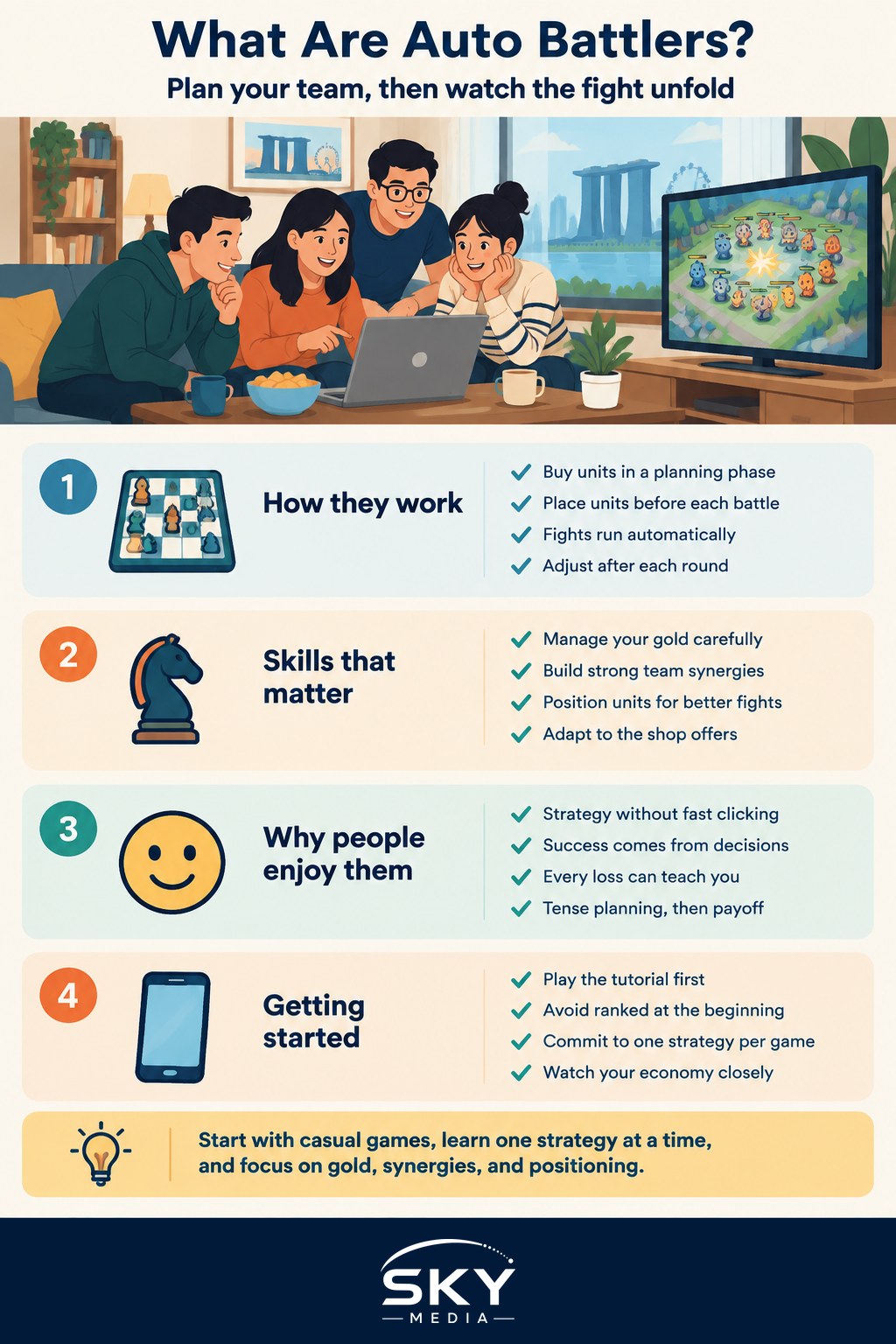
How Auto Battler Games Work
In a typical auto battler, you and several other players compete in the same match, but you do not directly control the fighting. Instead, each round has two phases.
First comes the planning phase. You use in-game gold to buy units from a shared or rotating shop, place them on your board, and arrange them in formations. Units of the same type can often combine to become stronger, and different units belong to classes or factions that give bonuses when you field enough of them.
Then comes the battle phase. Your team automatically fights an opponent’s team based on the units, upgrades, and positions you set. You cannot step in once it starts. You simply watch, learn what went wrong, and adjust for the next round.
Over many rounds you earn more gold, buy better units, and refine your team. Lose too many fights and you are knocked out. The last player standing wins. A few ideas sit at the core:
- Economy management. Deciding when to spend gold and when to save for interest is a real skill.
- Team synergies. Combining units that boost each other is often more powerful than just grabbing the strongest individuals.
- Positioning. Where you place your units on the board changes who they hit first and how the fight flows.
- Adapting to the shop. You work with the units you are offered, so flexibility beats a rigid plan.
Real, well-known examples include Teamfight Tactics, Dota Underlords, and the original Dota Auto Chess that started the trend. Many are free to play and available on both PC and mobile.
Why People Enjoy Them
Auto battlers are a great fit if you love strategy but do not enjoy the mechanical pressure of fast-paced games. Because the combat plays itself, your success comes from decisions rather than reflexes. That makes the genre welcoming to players of all ages and skill levels, and it draws a lot of fans who like strategy games in general.
They also reward learning. Every loss teaches you something about synergies or positioning, and climbing the ranks feels like getting genuinely smarter rather than just faster. The matches have a satisfying rhythm of tense planning followed by a hands-off payoff.
The flip side is that there is a learning curve. With so many units, classes, and synergies, your first few games can feel overwhelming. The mix of shared shop and randomness also means luck plays a part, which can frustrate players who want pure skill. Sticking with it past that early confusion is usually where the fun clicks into place.
Getting Started in Singapore
Because many auto battlers are free and run well on mobile, they are easy to try on a phone during a commute or on a modest laptop at home, which suits compact HDB setups. Here are a few tips for beginners:
- Play the tutorial and a few casual games first. Do not jump straight into ranked. Give yourself room to learn without pressure.
- Pick one strategy per game. Rather than chasing every shiny unit, commit to building around one or two synergies and learn how they play.
- Watch your economy. Learning when to save and when to spend is often the single biggest jump in skill.
- Study the meta gently. These games get regular balance updates, and reading the community’s take helps. Our guide on how to analyse the meta is a good primer.
Most auto battlers are free to download, though some offer optional cosmetics and battle passes. These do not affect the actual gameplay, so if you spend, treat it as buying looks, set a budget, and never feel you need to pay to compete.
If you enjoy this thoughtful, plan-then-watch style, you may also like the closely related tactics of tactical rpgs, which share the joy of clever unit placement.
The Bottom Line
Auto battler games hand you the role of a coach rather than a fighter. You draft units, build synergies, manage your economy, and position your team, then watch the battles resolve on their own. They reward brains over reflexes, welcome players of every speed, and are usually free to try. Start casual, focus on one plan at a time, learn from each loss, and enjoy the satisfying tension of watching a good strategy pay off.
Frequently Asked Questions
Do auto battlers depend more on luck or skill? Both play a part. Success comes from decisions such as economy, synergies and positioning rather than reflexes, but the shared shop and randomness add luck, which can frustrate players wanting pure skill. Over many games, good planning and adapting to the shop tends to win out.
What is a synergy in an auto battler? A synergy is a bonus you get when you field enough units of the same class or faction. Combining units that boost each other is often more powerful than grabbing the strongest individuals. Commit to one or two synergies per game and learn how they play.
Should I save gold or spend it every round? Learning when to save and when to spend is often the single biggest jump in skill. Some games reward saving gold with interest, while spending early can strengthen your board. Check how your game’s economy works, and experiment in casual matches before ranked.
Can I play auto battlers on my phone? Yes. Many auto battlers are free and run well on mobile, so you can play on a commute or on a modest laptop at home. Do check the game’s requirements, and try the tutorial and a few casual games before jumping into ranked.
Do I need to pay to compete in auto battlers? No. Most are free to download, and the optional cosmetics and battle passes do not affect gameplay. If you spend, treat it as buying looks, set a budget and never feel you need to pay to compete.