

The swimming pool, the gym, the function room, the tennis court, the barbecue pits by the pavilion. For many buyers, condo facilities singapore developments offer are a big part of the appeal of private living. But every facility comes at a cost, both in the price you pay upfront and in the monthly maintenance you will fund for as long as you own the home. This guide helps you think clearly about which facilities genuinely add to your life and which simply add to your bill.
Facilities are never really free
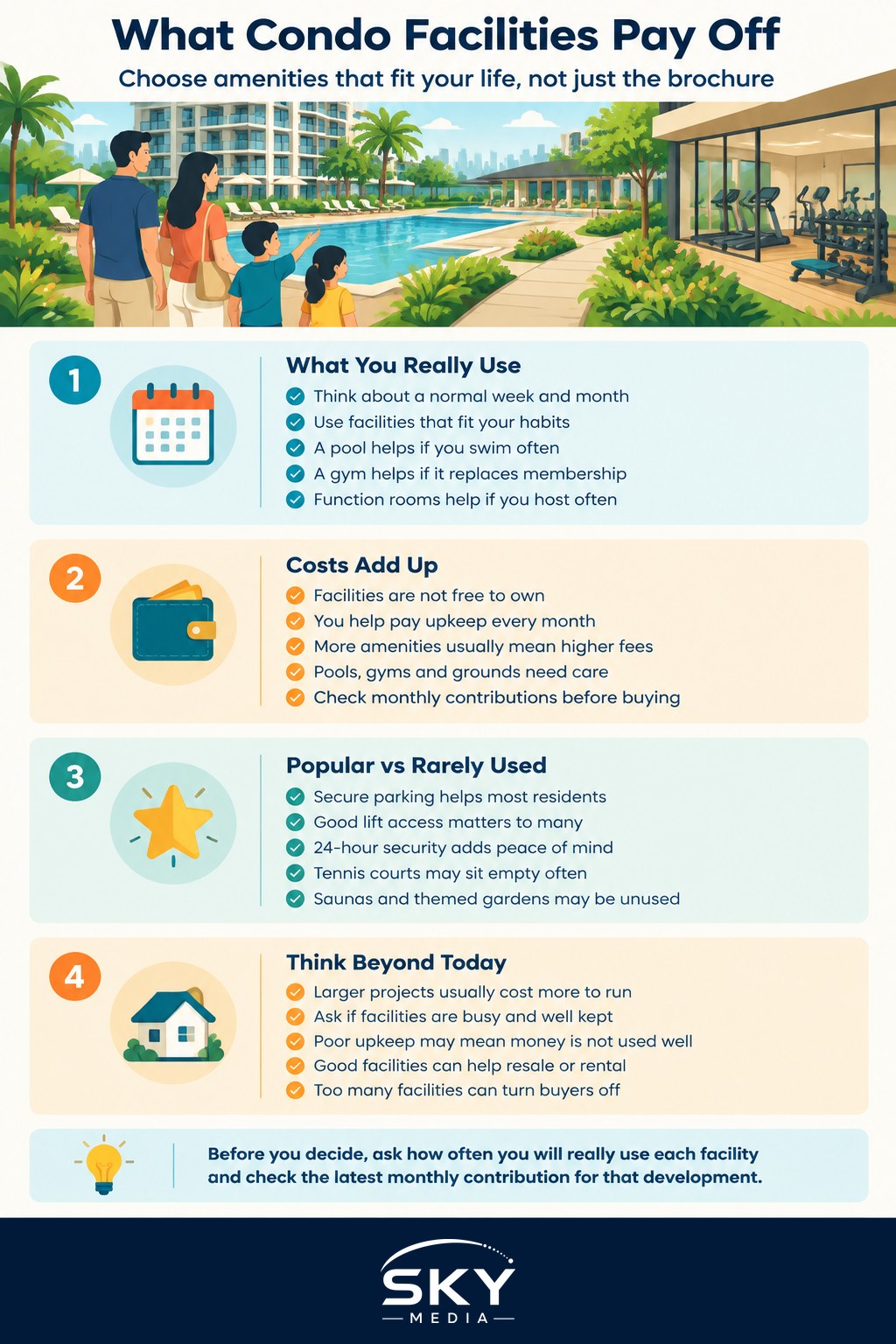
It is easy to be dazzled at a showflat by an infinity pool or a rooftop sky garden. What is less obvious is that you help pay to run and maintain every one of those features, month after month. Pools need cleaning and chemical treatment, gyms need equipment servicing, lifts and lighting need power, and landscaped grounds need constant care. All of it feeds into your monthly contribution.
A development packed with facilities generally costs more to maintain than a simpler one, and that flows through to what owners pay. Our guide on condo maintenance fees and sinking funds explains how these ongoing charges are worked out and why more amenities usually mean higher fees. So the real question is not whether a facility is nice to have, but whether you will use it enough to justify the share of the cost you carry.
Match facilities to how you actually live
The most useful exercise is an honest one. Picture a normal week and month in your household, then ask which facilities you would truly touch.
Some features earn their keep for most residents:
- A pool, if your family swims regularly or has young children who will use it often.
- A gym, if it genuinely replaces a paid membership you would otherwise hold.
- Secure parking and good lift access, which matter to almost everyone.
- Twenty-four hour security and a manned guardhouse, which add real day-to-day peace of mind.
- A function room, if you host gatherings and would value the space.
Other facilities sound impressive but see little use in practice. Tennis courts, saunas, reading rooms, and elaborate themed gardens can look wonderful in the brochure yet sit empty most of the time. If you would rarely visit them, you are effectively subsidising a feature you do not need.
There is no single right answer here, because it depends entirely on your household. A young, active family may treasure the very facilities a retired couple would happily do without. What matters is being clear-eyed about your own habits rather than buying into a lifestyle you imagine but will not live.
Bigger developments, more to maintain
As a rough guide, the more extensive and elaborate the facilities, the higher the running cost spread across owners. A large development with multiple pools, several pavilions, and sprawling grounds carries a heavier maintenance load than a compact one with a modest set of shared spaces. Neither is automatically better; it is about the balance between what you enjoy and what you are willing to pay to keep it going.
When you visit a property, look beyond the glossy first impression. Ask how well the facilities are maintained, whether they are actually busy at typical times, and what the current monthly contribution is. A run-down pool or a gym full of broken machines tells you the development may not be spending its money wisely. Our checklist on what to check when viewing a condo covers what to look for on a visit, and questions to ask at a property viewing gives you a starting script.
Consider resale appeal as well
Facilities do not only affect your own enjoyment; they can shape how easy a home is to sell or rent later. Popular, well-kept amenities can widen the pool of future buyers and tenants, especially families. That said, an over-facilitated development with steep monthly fees can also put some buyers off. As with much in property, the sweet spot is a sensible set of facilities that suit the location and the type of buyer the home naturally attracts.
If you are still deciding between private and public housing, weighing facilities against cost is part of the wider picture set out in HDB vs condo, which is right for you.
Making a decision you will be happy with
There is no facility that is worth paying for in the abstract. A pool you swim in three times a week is priceless; a pool you glance at from your balcony is money spent for a view. Start from how you and your household actually live, weigh the facilities you would genuinely use against the monthly cost of running the whole development, and be wary of paying a premium for amenities that will mostly gather dust.
For the exact monthly contribution and what it covers, always ask the managing agent or check the latest figures for that specific development, since these are set by the MCST and vary from project to project. A little honesty about your own habits will save you far more than any showflat wish list.
Frequently Asked Questions
Which condo facilities are worth the cost for a family with young children? A pool and secure parking often earn their keep, along with good security and lift access. A gym can replace a paid membership. Judge by what your household will use weekly, not what looks impressive at a showflat.
How do I check whether a condo’s facilities are well maintained? Visit at typical times and look at the pool, gym and grounds. Broken machines or a run-down pool suggest money is not being spent wisely. Ask how busy the facilities get and what the current monthly contribution is.
Do more facilities mean a higher resale price? Not automatically. Popular, well-kept amenities can widen the pool of buyers and tenants, but steep monthly fees put some buyers off. A sensible set suited to the location and the type of buyer works best.
Can I choose a condo with fewer facilities to pay less? Yes, a compact development with a modest set of shared spaces generally costs less to maintain, and that flows through to owners’ contributions. Compare the monthly fee with the facilities you would actually use before deciding.
Are facilities I never use still included in my monthly fee? Yes, you help fund every facility in the development whether you use it or not. This is why it helps to be clear about your habits. Ask the managing agent for the current contribution and what it covers.