
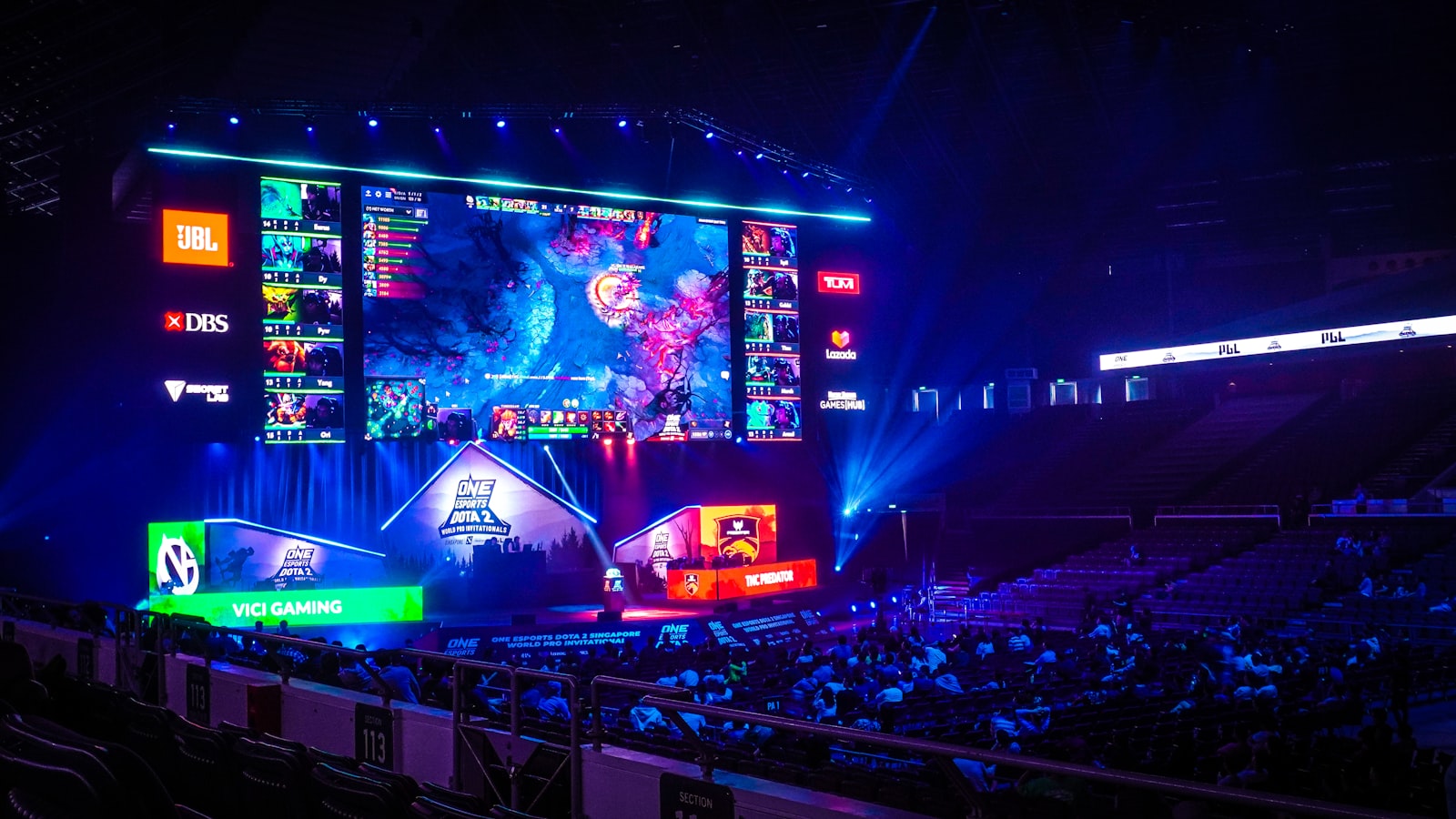
If you have heard younger family members talk about a match, a team or a big final, but the game was played on a screen rather than a field, you have brushed up against esports. So what is esports, exactly? In plain terms, esports is organised, competitive video gaming, where skilled players or teams face off in a video game the way athletes compete in a sport. There are rules, referees, seasons, fans and, at the top level, packed arenas and online audiences.
This guide is written for complete newcomers and for parents trying to understand what their children are so excited about. You do not need to play a single game to follow along. By the end you will know what esports is, how it works, and how to watch and follow it comfortably here in Singapore.
What Esports Actually Means
The word esports is short for electronic sports. It describes competitive gaming that is organised into matches and tournaments, rather than casual play at home for fun. The key idea is competition with structure: agreed rules, a scoring system, and a winner decided on skill.
A few plain definitions will help as you read on. A “title” is simply a specific game, the way football and basketball are different sports. A “match” is a single contest between two sides. A “tournament” is a larger event with many matches, ending in a final. “PvP” means player versus player, so people compete directly against other people rather than against the computer.
It helps to separate three things that often get mixed up. Playing a game at home is gaming. Watching someone play online is spectating. Esports is the organised, competitive layer on top, with teams, leagues and prizes. All three overlap, but esports specifically refers to the structured competition.
How Esports Is Organised
At its heart, esports mirrors traditional sport more closely than you might expect. Professional players usually belong to a team or organisation. They train, practise set plays, study opponents and work with coaches and analysts. Many live and train together so they can build teamwork, much like a football squad at a training camp.
Competitions are run by publishers (the companies that make the games) or by independent tournament organisers. A typical season includes qualifiers, a regular league phase and then playoffs that end in a grand final. Some events are online, while the biggest finals are held in arenas with a live crowd, stage lighting and commentators, called casters, who explain the action.
Different games suit different formats. Some are five versus five team battles, some are one versus one duels, and others are last-player-standing survival contests among many competitors. The common thread is that outcomes are decided by skill, reflexes, strategy and teamwork, not by chance.
The Kinds Of Games Played
Esports is not a single game but a family of very different ones. You do not need to master any of them to enjoy watching, but it helps to know the broad categories.
- Team strategy games: Two teams try to destroy each other’s base while defending their own. These reward planning, map awareness and coordination.
- Shooters: Fast, aim-focused games where teams complete objectives or eliminate opponents. Matches are quick and tense.
- Fighting games: One-on-one duels with special moves, popular at gaming cafes and community meetups.
- Sports and racing games: Digital versions of football, basketball or motor racing, easy to follow because you already know the real-world rules.
- Battle royale: Many players drop into a shrinking map and the last one standing wins, blending survival with quick thinking.
New games rise and older ones fade, so the exact popular titles change over time. Rather than memorise names, focus on the type of game, which tells you what the players are trying to do.
Watching And Following Esports
The easiest way to understand esports is to watch a little of it. Most matches are streamed free online, with commentators guiding you through what is happening. You can watch on a phone during an MRT ride, cast it to a television at home in your HDB flat, or catch highlights if a full match feels too long.
Here is a simple comparison to help you choose how to start.
| If you are… | Best way to begin | What to expect |
|---|---|---|
| Completely new | Watch a highlights reel | Short, exciting moments with easy context |
| A curious parent | Watch a full match with your child | They explain, you learn together |
| Short on time | Follow a team’s social pages | Scores and clips without a big time commitment |
| Ready to go deeper | Watch a live final with casters | Full drama, crowd energy, expert commentary |
A few tips make watching friendlier. Pick one game and stick with it at first, so the rules become familiar. Listen to the casters, who explain tactics as they happen. Follow one team, because having someone to cheer for makes matches far more engaging. Do not worry about understanding every detail early on, as even lifelong fans keep learning.
Why Esports Has Grown So Popular
Esports has grown because it combines things people already love: competition, community and easy access. Anyone with an internet connection can watch, and increasingly anyone can try the games themselves at little or no cost. That openness has built large, passionate communities online and in person.
For younger Singaporeans, esports is also social. Friends watch together, discuss tactics and follow their favourite players much as older generations followed football clubs. Local interest has grown alongside community tournaments, tertiary and co-curricular activity (CCA) teams, and gaming events, giving newcomers plenty of ways to get involved beyond simply watching.
There is a healthy side worth remembering. Whether you play or watch, balance matters. Take regular breaks, protect your sleep, and keep gaming as one hobby among several. For parents, the same guidance that applies to any screen time applies here: agree on limits, check age classifications, which in Singapore follow IMDA guidance, and stay curious rather than fearful.
Bringing It All Together
So, what is esports? It is organised, competitive video gaming with teams, tournaments, fans and finals, sitting on top of the games people already play for fun. You do not need to be a gamer to appreciate it. Start by watching a few highlights, pick one game and one team to follow, and let your understanding grow naturally. Whether you are a newcomer or a parent making sense of a child’s passion, esports is far easier to enjoy once you know what you are looking at.