
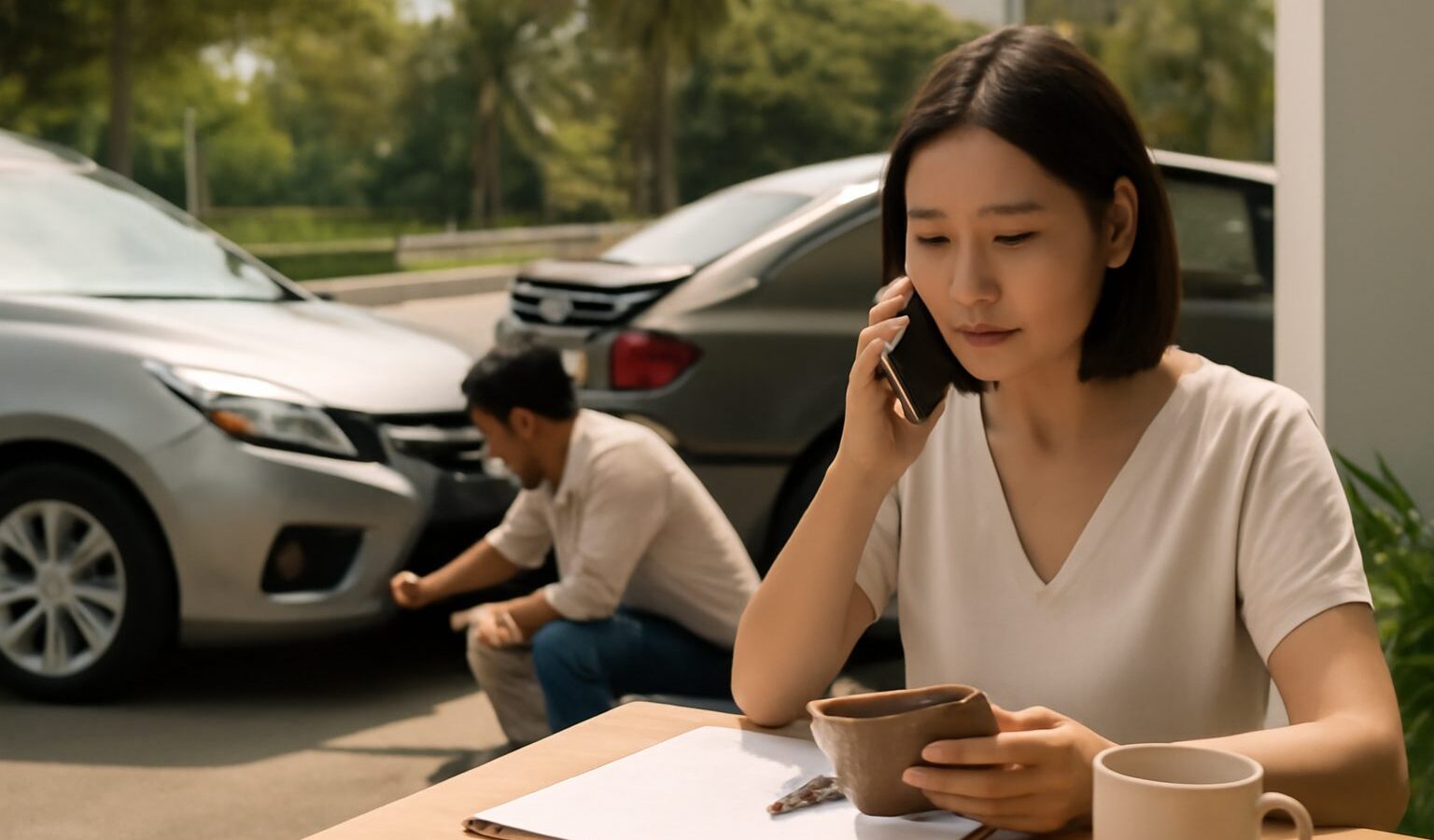
A knock on the road is stressful anywhere, and more so when you are still new to the country, the language of the forms, and who exactly to call. Knowing what to do after a car accident in Singapore before it happens lets you act calmly instead of freezing. This guide walks you through the sensible order of steps, from the first seconds at the scene to the follow-up with your insurer. It is general guidance to help you navigate the system, not legal advice, so treat it as a calm checklist rather than a ruling on your specific case.
The single most important idea is simple: people first, property second, paperwork third. Everything below follows that order.
The First Minutes At The Scene
Your first job is safety, not blame. Take a breath and check yourself and your passengers for injuries, then look to the other vehicle and any pedestrians.
- If anyone is hurt, call 995 for an ambulance and the Singapore Civil Defence Force. If it is a serious emergency involving injuries or danger, that call comes before anything else.
- If the vehicles are drivable and blocking traffic, and it is safe to do so, move them to the side so you do not cause a second collision. If they cannot be moved safely, switch on your hazard lights and keep everyone away from moving traffic.
- Stay calm and stay polite. Do not argue about fault at the roadside. Fault is decided later through the insurers and, where required, the authorities, not by whoever speaks loudest at the scene.
For a newcomer, the instinct from home may be to settle things privately on the spot with cash. Resist that. A private settlement with a stranger often unravels, and it can complicate any later insurance claim. Follow the proper process instead.
Gathering The Right Information
Once everyone is safe, calmly collect what you will need. Your phone is your best tool here, so use it methodically before vehicles are moved if that is safe.
- Photograph the scene from a few angles: the positions of both cars, the damage on each, the road markings, and any relevant signs or traffic lights.
- Exchange details with the other driver: name, contact number, vehicle number plate, and insurer if they will share it.
- Note the date, time, exact location, and weather or road conditions.
- If there are independent witnesses willing to help, politely ask for a contact number.
Keep the tone civil throughout. You are documenting, not accusing. Good photos and clear notes protect you far more than a heated conversation, and they make the insurer’s job much easier when you get home.
Reporting: Insurer And Traffic Police
Two separate follow-ups may apply, and newcomers often confuse them. One is reporting to your own motor insurer. The other is reporting to the Traffic Police where the situation requires it, for example where there are injuries or certain other circumstances.
Most motor insurers require you to report an accident to them within a short window, often the next working day, and many ask you to send the vehicle to an authorised reporting centre or workshop even if you do not intend to claim. Reporting protects you if the other party makes a claim later, so do it promptly rather than hoping the matter simply goes away.
Because the exact reporting duties, deadlines, and situations that require a Traffic Police report can change, confirm the current requirements with your insurer and with the Singapore Police Force rather than relying on what a friend did years ago. When in doubt, report to your insurer, and ask them whether a police report is also needed for your situation.
Comparing Common Accident Scenarios
Not every incident is treated the same way. This simplified comparison shows how your priorities usually shift by scenario. Always confirm the specifics with your insurer.
| Scenario | Call 995? | Report to insurer? | Typical first move |
|---|---|---|---|
| Minor scrape, no injuries | No | Yes | Photos and exchange details |
| Injuries to anyone | Yes | Yes | Call 995, then document |
| Hit-and-run or unknown party | If injuries | Yes | Note plate, gather witnesses |
| Damage to a parked car, owner absent | No | Yes | Leave a note, photograph, report |
The table is a general guide, not a rulebook for your case. When someone is injured or you are unsure, treat the situation as more serious rather than less, and let the professionals advise you.
After You Get Home
The hours after an accident are for careful, unhurried follow-up. Save all your photos and notes in one place. Contact your insurer within their required window and follow their instructions on where to bring the vehicle for a damage report. Keep copies of everything you submit.
A few extra pointers help newcomers avoid common traps:
- Do not admit or assign fault in writing to the other party before your insurer has assessed things. State facts, not conclusions.
- Watch for any deadline your insurer gives you, and diarise it.
- If you feel unwell later, even a day or two on, see a doctor. Some injuries surface slowly, and your health matters more than the paperwork.
- Keep the other driver’s details safe until the matter is fully closed.
If English is not your strongest language, ask a bilingual friend or a colleague to help you read the insurer’s forms carefully. Getting the report right the first time saves a great deal of back-and-forth.
Staying Calm Is Half The Battle
Accidents feel enormous in the moment and much smaller a week later. Almost every driver here has a minor bump story, and the system is designed to handle exactly these situations without drama. Protect people first, document the scene, report to the right parties, and let the insurers do what they do. Because rules and reporting duties are updated from time to time, always verify current requirements with your own insurer and the Singapore Police Force, and if the matter becomes complex or disputed, consider speaking to a qualified professional. This article is general information to help you navigate the process, not legal or insurance advice.
Explore More
Confident driving is a set of small habits. Brush up on paying for the road with our guide to using ERP and parking apps in Singapore, and if you ever need to report a theft or a lost item connected to your car, see how to file a police report in Singapore. Both sit naturally alongside handling the unexpected on the road.