

Most of what Singapore calls “Chinese food” grew from southern roots: Cantonese, Hokkien, Teochew and Hainanese cooking brought by earlier migrants. So if you have just arrived from Beijing, Shandong, Shanxi or the northeast, the local zi char stall can feel a little foreign, sweeter and lighter than the wheat-based, garlicky, vinegar-bright plates you grew up with. The good news is that northern Chinese food in Singapore is more available than it first appears. You just have to know the dishes to ask for, the neighbourhoods where mainland eateries cluster, and the words on the signboard that tell you the cook is from your part of the country. This guide walks you through all three.
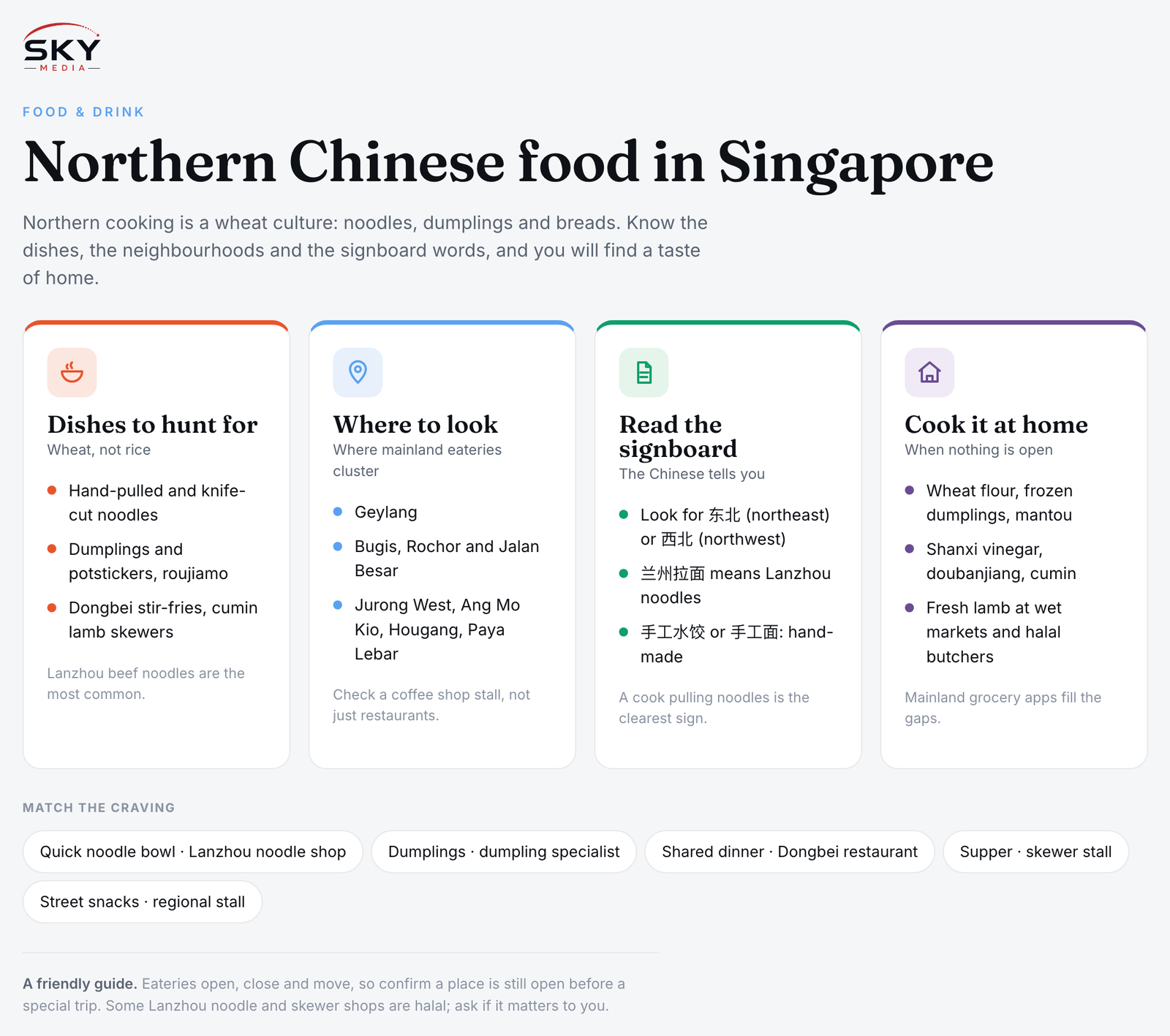
The Northern Dishes to Hunt For
Northern Chinese cooking is a wheat culture rather than a rice culture, so start by looking for noodles, dumplings and breads. A few anchors worth knowing by name when you scan a menu or a shopfront:
- Hand-pulled noodles (lamian) and knife-cut noodles (dao xiao mian): springy wheat noodles in clear or spiced broth. Lanzhou beef noodles, with their thin slices of beef, white radish and chilli oil, are the most common version you will find here.
- Dumplings and potstickers (jiaozi and guotie): boiled, steamed or pan-fried, often filled with pork and Chinese chives or with lamb. Many shops sell them frozen by the bag as well.
- Roujiamo: the Shaanxi “Chinese burger” of braised meat stuffed into a griddled flatbread, sometimes labelled as such in English.
- Dongbei stir-fries: hearty northeastern plates such as guo bao rou (sweet-and-sour crispy pork), di san xian (potato, aubergine and pepper) and pork with pickled cabbage. Portions run large and are made for sharing.
- Grilled lamb skewers (yang rou chuan): cumin-and-chilli mutton skewers, a northern and northwestern favourite that has become a supper staple.
- Breakfast and street breads: mantou, baozi, scallion pancakes (cong you bing) and savoury pancakes, plus zhajiangmian for a Beijing fix.
If you crave the flavours of home in the morning specifically, we cover those separately in our guide to mainland-style Chinese breakfast in Singapore.
Neighbourhoods Where Mainland Eateries Cluster
Northern food follows the mainland community, so certain districts have far more of it than others. Rents and foot traffic move eateries around, so treat these as starting points rather than fixed addresses, and confirm a place is still open before you make a special trip.
- Geylang: the densest strip of mainland Chinese eateries on the island, strong on northeastern and Sichuan cooking, hotpot, skewers and late-night dumplings.
- Rochor, Bugis and the Jalan Besar side: a mix of noodle houses and dumpling shops, handy if you live or work in the city.
- Jurong and the west (around Boon Lay and Pioneer): a large mainland and student population supports many home-style northern and northwestern shops.
- Ang Mo Kio, Hougang and the northeast heartlands: neighbourhood shophouses and coffee-shop units where a single stall may specialise in Lanzhou noodles or hand-made jiaozi.
- City Plaza and the Paya Lebar area: a long-standing spot for regional Chinese food courts and small eateries.
Coffee shops (kopitiam) and food courts are worth a second look, not just standalone restaurants. Many northern cooks rent a single stall inside a larger coffee shop, so a plain-looking unit can turn out the best knife-cut noodles in the area.
Reading the Signboard Like a Local
Because these are often small, family-run places, the surest signal of authenticity is the Chinese on the shopfront, not the English name. Watch for regional markers such as 东北 (dongbei, northeast), 西北 (northwest), 兰州拉面 (Lanzhou lamian), 山东 (Shandong), 手工水饺 (hand-made dumplings) and 手工面 (hand-made noodles). A cook pulling or shaving noodles in the window is the clearest sign of all.
You will also notice a split worth understanding. Some Lanzhou noodle and lamb-skewer shops are halal and run by Hui or Uyghur cooks, which shapes the menu and the ingredients. If halal status matters to you, or you specifically want cumin lamb and big-plate chicken, see our guide to Xinjiang and halal Chinese food in Singapore. Prices at all these places vary by dish, portion and location, so check the menu or ask at the counter rather than assuming; we have deliberately avoided quoting figures because they change.
Choosing the Right Place for Your Craving
Not every northern craving is best answered the same way. The table below maps common wants to the kind of place most likely to satisfy them, so you can decide where to head.
| What you are craving | Where to look | What to ask for | Good to know |
|---|---|---|---|
| A quick, comforting noodle bowl | Lanzhou noodle shop or coffee-shop stall | Beef lamian, thickness of your choice | Broth-based, ready fast, easy solo meal |
| Dumplings to eat in or take home | Dumpling and mian specialist | Boiled or pan-fried jiaozi; frozen bags to go | Chive-and-pork and lamb are classics |
| A hearty shared dinner | Dongbei or home-style restaurant | Guo bao rou, di san xian, pickled-cabbage stew | Order for the table; portions are large |
| Skewers and beer at supper | Skewer stall or mainland barbecue spot | Cumin lamb skewers, grilled bread | Many run late; some are halal |
| Beijing or Shaanxi street snacks | Regional snack stall or food court | Zhajiangmian, roujiamo, scallion pancake | Signboards often name the region |
Use it as a rough guide, then let the smell of cumin and hot oil do the rest of the navigating.
Cooking Northern Food at Home
When the craving hits and nothing nearby is open, Singapore makes it easy to cook your own. Mainland supermarkets and the larger chains stock wheat flour, hand-made and frozen dumplings, Shanxi mature vinegar (chencu), dark and light soy, doubanjiang, dried chillies, whole cumin and Sichuan peppercorns. Frozen mantou and baozi are widely sold, and fresh lamb is available at wet markets and halal butchers. If a specific brand from home is missing on local shelves, cross-border shopping platforms and mainland grocery apps that ship to Singapore can fill the gaps, though you should check delivery times and any customs limits before ordering.
A small note on drinks to round out the meal: a northern spread often calls for a warming baijiu. Where to buy it, and how Singapore’s rules on alcohol work, is covered in our guide to buying baijiu and Chinese liquor in Singapore.
Finding northern Chinese food here is really about retraining your eye. Once you learn to spot the regional characters on a signboard, notice the cook shaving noodles in the window and drift towards the districts where the mainland community eats, you will realise the flavours of home were never as far away as that first homesick week suggested.
Explore more
Homesick eating is a whole map of its own. Start your mornings with mainland-style Chinese breakfast in Singapore, chase cumin lamb and hand-pulled noodles in our guide to Xinjiang and halal Chinese food in Singapore, and set the table properly with buying baijiu and Chinese liquor in Singapore.
Frequently Asked Questions
Are there northern Chinese dishes that suit vegetarians? Yes, several, such as scallion pancakes, mantou, and vegetable dumplings or stir-fries like di san xian, which is made of potato, aubergine and pepper. Ask whether the broth or filling contains meat or lard, since northern cooking often uses pork. Staff can usually tell you what is vegetarian.
How do I find out if a Lanzhou noodle shop is halal? Look for halal certification on display and ask the staff, as some Lanzhou noodle and lamb-skewer shops are run by Hui or Uyghur cooks and are halal while others are not. If halal status matters to you, confirm before ordering rather than assuming from the dishes.
What northern dishes work well for a group dinner? Dongbei plates such as guo bao rou, di san xian and pickled-cabbage stew are made for sharing, with large portions. Add dumplings and a noodle dish for the table. Order for the group rather than one dish each, and ask staff how many dishes suit your numbers.
Can I buy ingredients to make northern Chinese food at home? Yes. Mainland supermarkets and larger chains stock wheat flour, frozen dumplings, vinegar, soy sauce, dried chillies, cumin and Sichuan peppercorns, while fresh lamb is sold at wet markets and halal butchers. For missing brands, check delivery times and any customs limits before ordering online.
Is it worth visiting a coffee shop stall rather than a restaurant for northern food? Often yes. Many northern cooks rent a single stall inside a coffee shop, so a plain-looking unit can serve excellent knife-cut noodles. Look for regional Chinese characters on the signboard and a cook pulling or shaving noodles in view, then check the menu for prices.
Further reading: Where to Find Beijing Food and Roast Duck in Singapore · Where to Find Shaanxi and Northwestern Food · Where to Find Chinese Barbecue (Shaokao)