
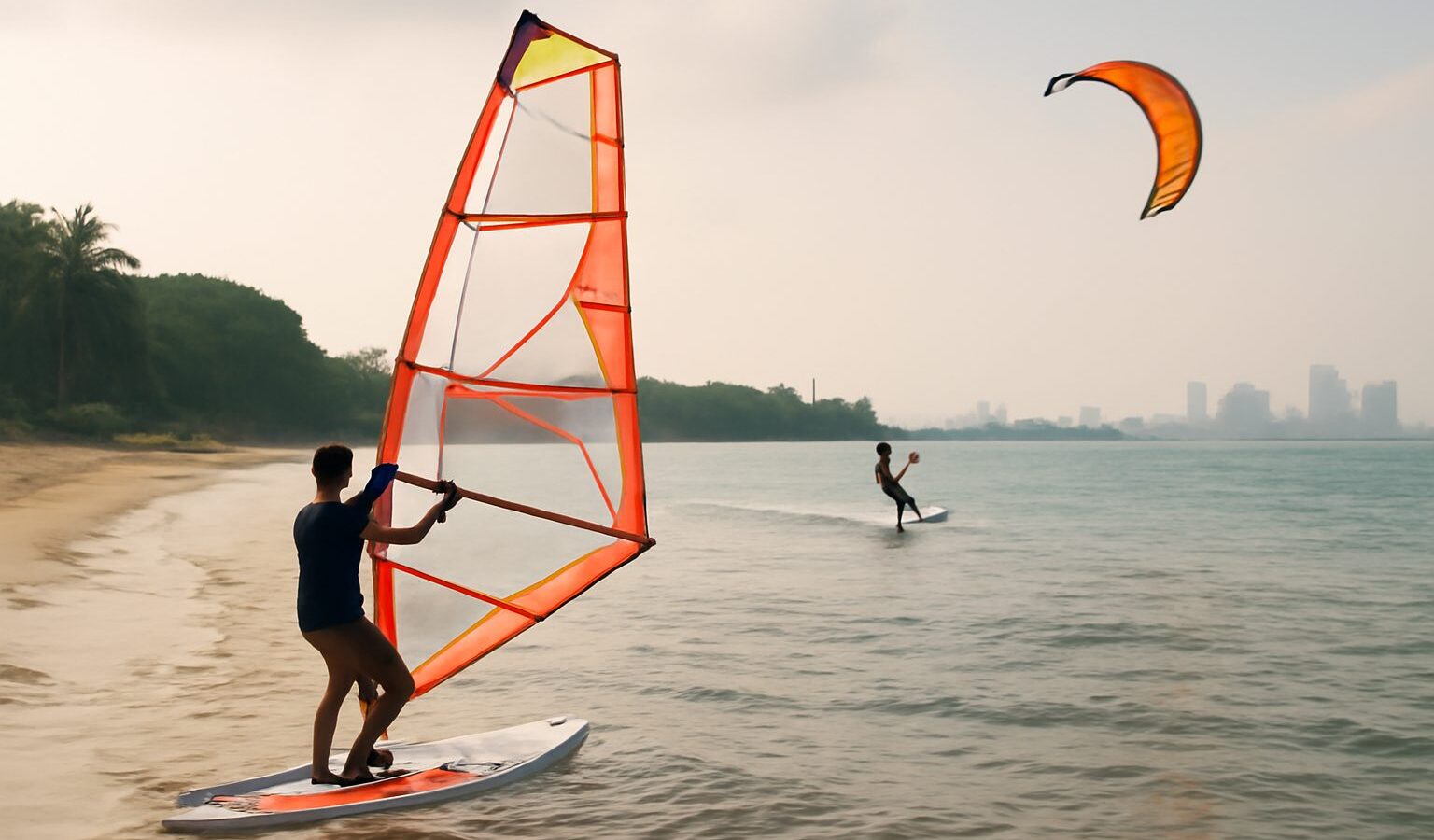
Windsurfing and kitesurfing are two of the most exciting wind-powered water sports you can try, and Singapore’s warm sea and steady breezes make them a natural fit for beginners and enthusiasts alike. Both sports let you harness the wind to glide across the water, but they use very different equipment. If you have watched sails and colourful kites out on the water and wondered how to join in, this guide to windsurfing Singapore style, along with its close cousin kitesurfing, will help you get started safely.
Windsurfing uses a board with a sail attached to it by a flexible joint, and you hold and steer the sail directly with your hands. Kitesurfing, sometimes called kiteboarding, uses a large controllable kite connected to you by lines and a harness, while you ride a smaller board on the water. Both are brilliant full-body activities that build balance, core strength, and confidence, and both reward patience as you learn to read the wind.
What the Sports Are and How to Start
In windsurfing, you stand on a wide, stable board and pull the sail upright out of the water using a rope called the uphaul. Once the sail is up, you catch the wind, lean back gently, and steer by tilting the sail forwards or backwards. Beginner boards are large and buoyant, which makes them forgiving and easy to balance on, so most people can stand and move within their first lesson or two.
Kitesurfing works differently. You first learn to fly and control the kite on land, understanding how it pulls and how to steer it through the sky. Only once you are comfortable with the kite do you add the board and the water. Because the kite generates a lot of power, learning proper control is essential before you ever ride, which is why the sport always starts on dry land with an instructor.
The single most important thing to understand about both sports is this: you must learn with lessons. These are not activities to teach yourself from a video. Wind is powerful and unpredictable, and both a sail and a kite can pull you unexpectedly. Sign up with a licensed and reputable school that uses certified instructors, and treat your first lessons as the foundation for everything that follows. Beginners must take proper lessons before heading out on their own.
If you are drawn to the water in general, you might also enjoy calmer options first, such as stand-up paddling in Singapore or kayaking and water sports in Singapore, which build water confidence before you add wind.
Where to Sail, Gear and Lessons
Wind-powered water sports in Singapore are generally practised at coastal areas and beaches with open water and reliable breeze, often on the eastern side of the island where conditions suit sailing. Rather than name specific spots or operators, which change over time, the best approach is to book through a recognised water sports school. They operate from approved locations, know the local wind and tide patterns, and provide the right equipment for your level. Search for current licensed providers and check their beginner course schedules before you commit.
The gear differs between the two sports. For windsurfing you need a board, a sail and mast, and a boom, the horizontal bar you hold. For kitesurfing you need a kite, a control bar and lines, a harness, and a board. In both cases, beginners should always wear the correct safety gear, which includes a buoyancy aid or life jacket and, where relevant, a helmet. A leash keeps you connected to your board so it does not drift away, and kitesurfers also use a safety release system that lets you depower the kite quickly in an emergency. When you learn through a school, all of this equipment is provided and fitted for you, so you do not need to buy anything upfront.
Lessons are the heart of both sports. A good beginner windsurfing course covers balancing, raising the sail, steering, and turning. A beginner kitesurfing course spends significant time on kite control, safety systems, and self-rescue before you touch a board. Certified instructors will also teach you how to fall safely and how to get yourself back to shore. If you enjoy being on the water and want to explore the wider scene, our guide to sailing and yachting in Singapore is a good next read.
Staying Safe on the Water
Safety in wind sports comes down to preparation and respect for conditions. Always check the wind strength, the weather forecast, and the tide before you go out, and never sail in a storm or when strong gusts are expected. Wear your safety gear every time, including a buoyancy aid and a leash, and follow all water-activity safety rules set by your school and the local authorities.
Stay within the areas your instructor recommends, keep clear of swimmers, boats, and other craft, and let someone know your plans if you are heading out. If you feel tired or the wind picks up beyond your comfort level, come in and rest. Both windsurfing and kitesurfing are wonderfully rewarding when you learn properly, wear the right gear, and treat the sea with care. Start with lessons, build your skills step by step, and you will soon be gliding across the water with confidence.