
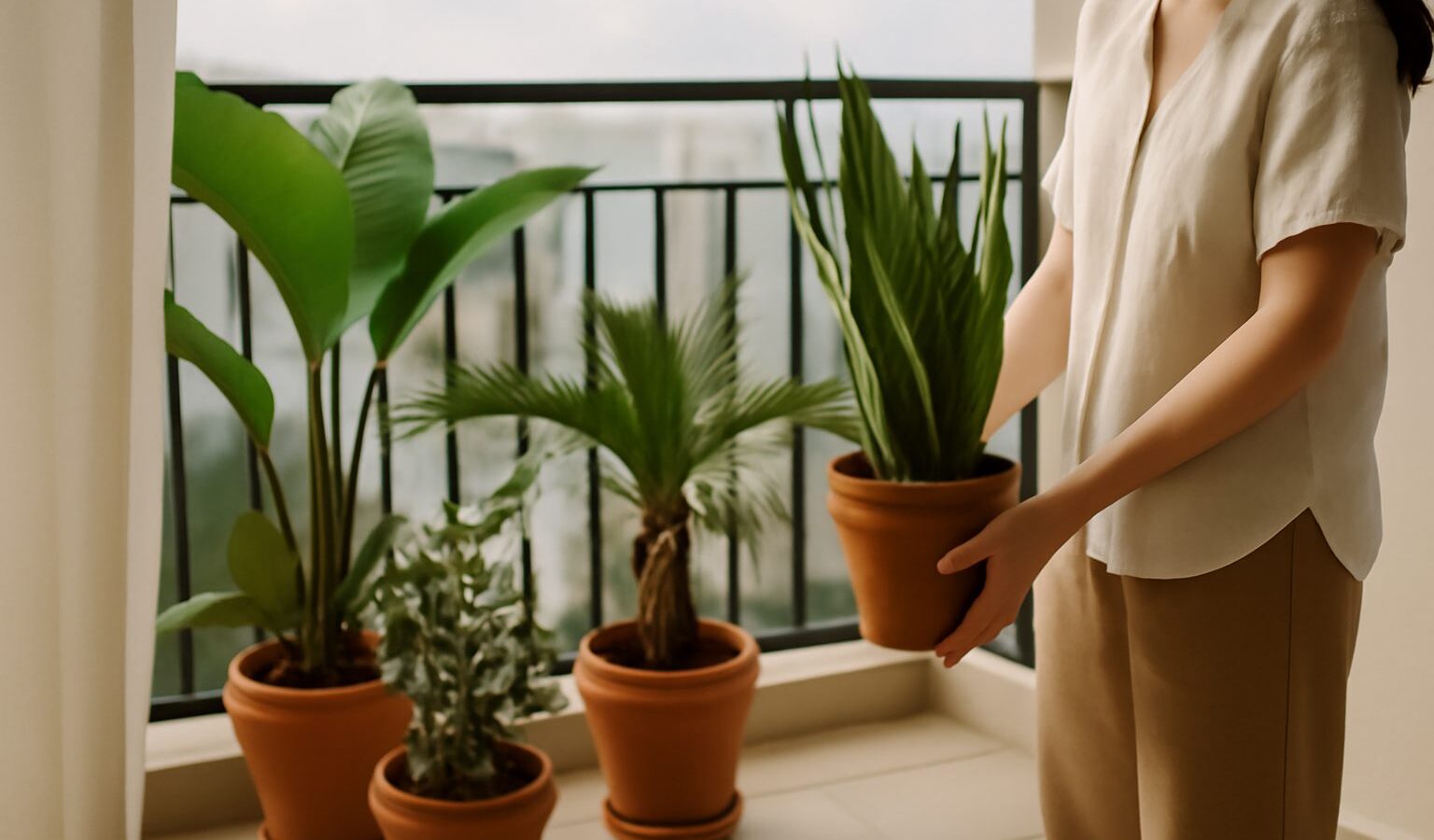
Living on a high floor brings breezes, views and fewer mosquitoes, but it can be hard on plants. If you have watched leaves shred, pots tip over or soil dry out within a day, you already know that windy balcony plants Singapore gardeners choose need to be tougher than the average houseplant. Wind is a different problem from too much sun or too much shade, and it needs its own approach.
This guide focuses only on that challenge: what wind does to plants, which types cope best, how to set up containers so they stay put, and how to keep your balcony safe for the people below.
Why Wind Is So Hard on Balcony Plants
On upper floors, wind speeds are often noticeably stronger than at ground level, and gusts can funnel between blocks. If you are still deciding on a home, our guide to choosing a high or low floor covers the trade-offs, and wind exposure for plants is one of them.
Wind harms plants in a few ways:
- Faster drying. Moving air pulls moisture from leaves and soil, so a pot that would last two days in a sheltered spot can dry out by evening.
- Physical damage. Large, thin leaves tear, stems snap and flowers get stripped.
- Root rocking. Constant movement loosens roots in the pot, which slows growth and can stress the plant.
- Salt and grit. Homes facing the sea may get salty air, which can scorch sensitive leaves.
Signs that wind is your main problem include brown, crispy leaf edges, torn foliage, plants leaning one way, and soil that is dry on top even after morning watering.
Plant Types That Tend to Cope With Wind
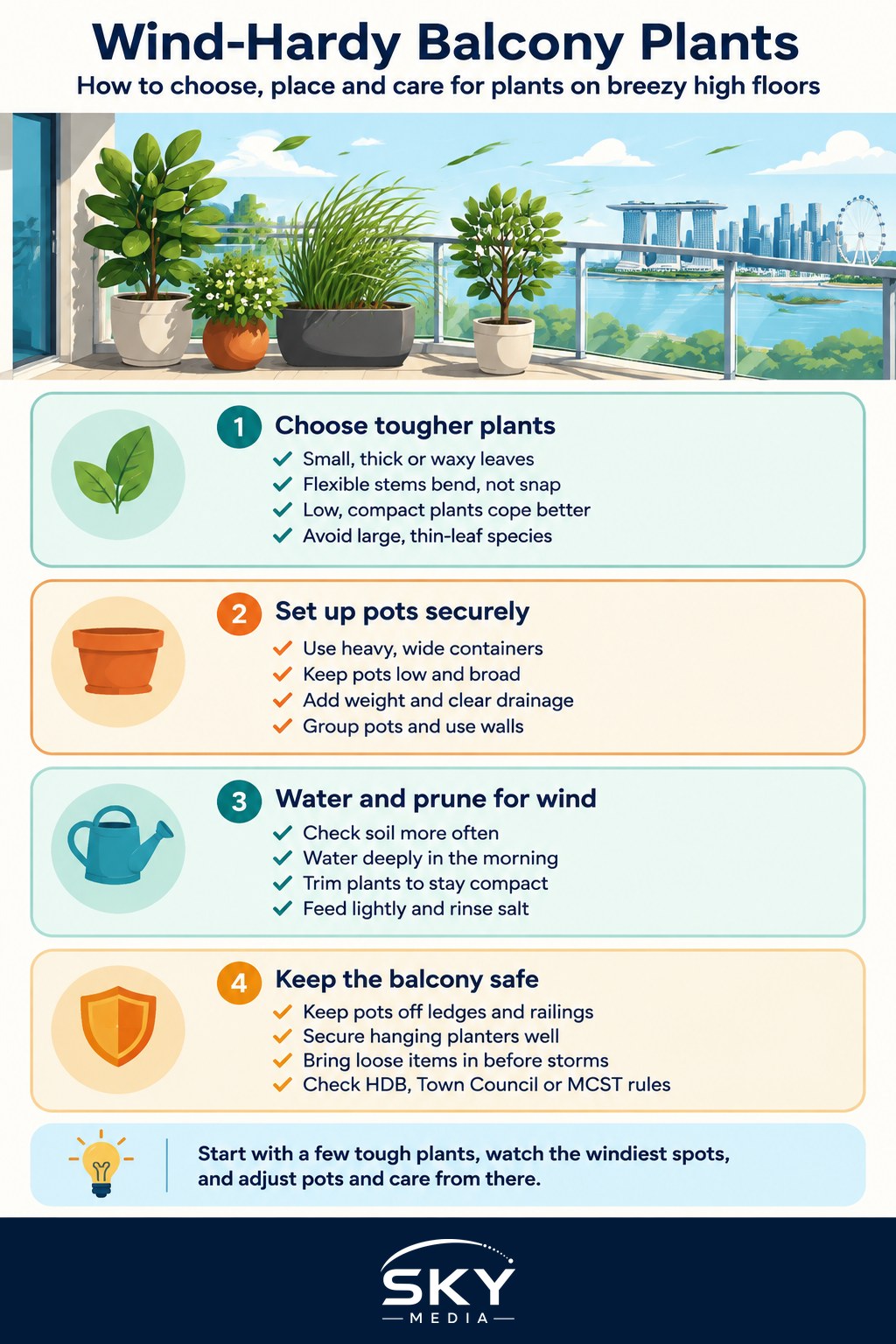
Plants with small, thick, waxy or narrow leaves usually handle wind better than those with large, papery leaves. Flexible stems that bend instead of snapping also help. Many coastal and dry-climate plants already grow in breezy places, so they are a natural fit.
Good candidates commonly grown in Singapore include:
- Snake plant (Sansevieria, now often classed as Dracaena). Stiff, upright leaves, very forgiving of missed watering.
- Bougainvillea. Tough, flowers well in sun, and copes with drying conditions once established. Prune regularly so it does not become top-heavy.
- Crown of thorns (Euphorbia milii). Small leaves and succulent stems. Wear gloves, as the sap can irritate skin.
- Dwarf Ixora. Compact, dense and flowers often. Keep it trimmed into a low shape.
- Portulaca and other succulents. Fleshy leaves store water, which helps when wind dries the soil fast.
- Lemongrass. Grassy leaves bend rather than break, and you can cook with it.
- Oyster plant (Tradescantia spathacea). Thick leaves and a low, clumping form.
- Ornamental grasses and Pandanus. Long, flexible leaves that move with the wind. Pandanus also gives you fragrant leaves for cooking.
- Frangipani (Plumeria). Thick branches and leathery leaves, though it needs a large, heavy pot as it grows.
Plants that usually struggle on exposed balconies include large-leaf species such as banana, Monstera and Calathea, delicate ferns, and tall plants on thin stems. If you love them, keep them in the most sheltered corner, or indoors near a window.
Light still matters. A windy balcony may also be fully sunny or mostly shaded, so cross-check with our guides to plants for a sunny balcony and gardening on a shady balcony before you buy.
Quick Comparison: Wind-Hardy vs Wind-Sensitive Choices
| Feature | Copes well with wind | Struggles in wind |
|---|---|---|
| Leaf shape | Small, thick, waxy or narrow | Large, thin or papery |
| Stems | Flexible or woody | Tall, thin, brittle |
| Water storage | Succulent leaves or stems | Needs constantly moist soil |
| Growth habit | Low, compact, clumping | Top-heavy, sprawling |
| Examples | Snake plant, Portulaca, dwarf Ixora, lemongrass | Banana, Calathea, delicate ferns |
Use the table as a rule of thumb when you shop. If a plant at the nursery has big, soft leaves and a tall stem, it probably will not enjoy the 20th floor.
Setting Up Pots and Soil for a Windy Balcony
The right container setup often matters as much as the plant itself.
- Choose heavy, wide pots. Glazed ceramic, concrete or thick terracotta resists tipping better than light plastic. A wide base is more stable than a tall, narrow one.
- Go low. Shorter plants in low, broad pots catch less wind. Avoid tall pots on stands.
- Add weight at the bottom. A layer of gravel or stones at the base lowers the centre of gravity. Make sure drainage holes stay clear.
- Use water-holding mix. A potting mix with some compost or coconut coir holds moisture longer. A top layer of mulch or pebbles reduces evaporation and stops soil blowing away.
- Group plants together. Pots placed close together shelter each other and create a slightly calmer, more humid pocket.
- Use the walls. Place the tallest, toughest plants on the windward side so they shield the more delicate ones behind them.
- Consider a windbreak. A sturdy, well-secured trellis, a screen of tough plants, or a plant-friendly mesh can soften gusts. Check with your Town Council or condo management (MCST, the management corporation) before installing anything fixed, as rules on balcony fixtures vary.
Our wider balcony gardening guide covers general potting and drainage basics if you are starting from scratch.
Watering and Care in Strong Breezes
Wind changes your routine. Check soil with a finger rather than watering on a fixed schedule. On very breezy days, you may need to water more often, ideally in the early morning so plants start the day hydrated.
- Water deeply until it drains, rather than giving small sips that only wet the surface.
- Use saucers carefully. They catch run-off, but empty standing water within a day or so to avoid mosquito breeding, which NEA (the National Environment Agency) asks every household to prevent.
- Prune for shape. Trim plants to keep them compact. Dense, low growth handles wind better than long, leggy shoots.
- Stake young plants. A soft tie to a short stake helps new plants root firmly. Remove it once the plant is steady.
- Feed lightly. Over-fertilising pushes soft, fast growth that tears easily. A gentle, slow-release feed is usually enough.
- Rinse salt off. If you face the sea, an occasional gentle rinse of the leaves can help.
Keeping Your Balcony Safe for Everyone
On high floors, safety comes first. A pot that falls from height can seriously injure someone below, and objects falling from homes are treated as a serious matter in Singapore under killer litter rules.
- Never place pots on ledges, railings or parapets. Keep every container on the balcony floor or on a sturdy, secured shelf well inside the railing.
- Secure hanging planters. Use strong hooks and brackets, and check them regularly for rust or loosening. Many gardeners avoid hanging pots entirely on very windy floors.
- Watch for loose items. Light plastic pots, trays, plant labels and dried leaves can all blow away.
- Bring vulnerable items in before storms. When strong winds or thunderstorms are forecast, move light pots indoors or into a corner.
- Check rules. HDB, Town Councils and condo MCSTs may have specific rules about what you can place on balconies, corridors and ledges. Confirm the current rules with them directly.
If you are also choosing tables or chairs for the space, pick heavier pieces that will not shift in a gust. Look for materials that are rated for outdoor use and will not crack or fade quickly in sun and rain.
Starting Small and Learning Your Balcony
Every high-floor balcony behaves differently depending on its height, direction and the buildings around it. Start with two or three tough plants, watch how they respond for a few weeks, and then expand. Note which corners stay calmer and which get the strongest gusts, and arrange your pots to match.
With heavy, low pots, wind-hardy plants and a few smart habits, even an exposed balcony high above the street can become a green, lived-in space that holds up through monsoon gusts and dry, breezy afternoons alike.
Frequently Asked Questions
Can I install a windbreak or screen on my HDB or condo balcony? Not without checking first. Rules on balcony fixtures vary between HDB, Town Councils and condo management corporations. Ask them before putting up anything fixed, and make sure any trellis or screen is securely fastened.
Why are my balcony plant leaves turning brown and crispy at the edges? On a windy high floor this is often wind drying out the leaves and soil. Check the soil with a finger and water more often on breezy days, ideally in the morning. Seaside homes may also have salt scorch, so a gentle rinse helps.
Is it safe to hang plant pots from my high-floor balcony? It is risky. Falling objects can seriously injure people below and are taken seriously under killer litter rules. Many gardeners avoid hanging pots on windy floors, and if you do use them, check hooks and brackets often for rust or loosening.
What should I do with my balcony plants before a thunderstorm? Move light pots indoors or into a sheltered corner, and secure or bring in small items like trays, labels and plastic pots that could blow away. Keep every container on the floor, never on ledges or railings.
How can I grow herbs or edible plants on a windy balcony? Lemongrass and pandanus suit windy spots because their long leaves bend rather than break. Plant them in heavy, wide pots, group pots together for shelter and feed lightly, as heavy fertilising pushes soft growth that tears easily.