
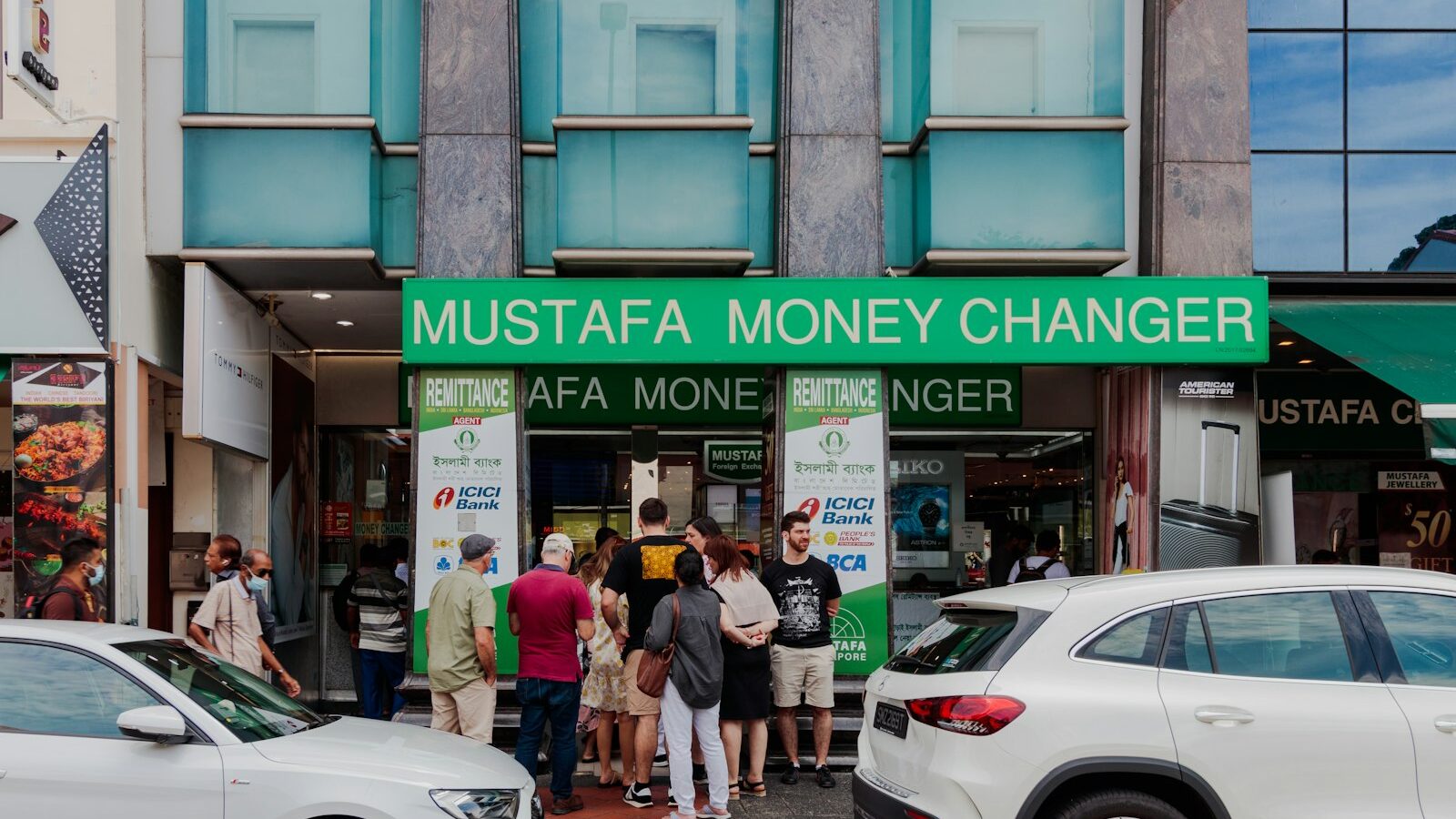
Even in a cashless age, most travellers still need some local cash for taxis, street food, small shops or tips. The question is how to get it without losing a chunk to fees. Every overseas ATM withdrawal fee is really a stack of several different charges, some obvious and some buried in the exchange rate. Once you know what they are, choosing the cheapest way to withdraw cash becomes much easier.
This guide focuses on ATM cash withdrawals with a Singapore card. If you mainly want to understand charges when paying by card in shops and online, read Understanding Foreign Transaction Fees instead. This article is general information, not financial advice, and fees change often, so always check the latest terms with your bank or card provider.

The Four Layers of Cost in an Overseas ATM Withdrawal
When you withdraw cash abroad, you may pay some or all of these:
- Your bank’s overseas withdrawal fee. Many Singapore banks charge a flat fee per overseas ATM withdrawal on debit or ATM cards. Some accounts waive it, others do not.
- The foreign exchange (FX) spread or fee. Your foreign withdrawal is converted into Singapore dollars. The rate you get may include a markup over the wholesale rate, plus a separate foreign currency fee charged by the bank or card network.
- The ATM operator’s surcharge. In some countries the bank that owns the ATM adds its own fee for using a foreign card. This is usually shown on screen before you confirm.
- Dynamic currency conversion (DCC). Some ATMs offer to convert the amount into Singapore dollars for you on the spot. This often comes with a poor exchange rate.
The cheapest method is the one that cuts the most layers for the amount you need.
Comparing Your Main Options
| Option | Typical fees to expect | Best for |
|---|---|---|
| Regular SG debit or ATM card | Bank’s overseas withdrawal fee plus FX markup and any ATM surcharge | Occasional withdrawals if your bank’s fees are low |
| Multi-currency card or account | Often low or no FX markup, and some free withdrawals up to a limit | Frequent travellers who withdraw cash regularly |
| Credit card cash advance | Cash advance fee, interest from day one and FX charges | Emergencies only |
| Changing cash at a money changer before you fly | Spread built into the rate, no ATM fees | Travellers who know roughly how much cash they need |
Exact fees and limits differ between banks and products, so compare the current fee schedules on each provider’s website before you travel.
Why Multi-Currency Cards Often Win
Multi-currency accounts and cards, offered by some Singapore banks and licensed payment providers, let you hold balances in several currencies. You can usually convert Singapore dollars to the foreign currency in an app before or during your trip, often at a rate close to the wholesale rate, then withdraw from the foreign balance.
Things to check before relying on one:
- Free withdrawal limits. Many providers offer a certain number or value of free overseas ATM withdrawals per month, then charge a fee or percentage after that.
- Weekend markups. Some providers add a small markup when converting on weekends, when currency markets are closed. Converting on a weekday before you leave can help.
- Supported currencies. If the currency is not supported for holding, the card may convert at the point of withdrawal with a fee.
- Regulation and protection. Check whether the provider is a bank or a licensed payment institution regulated by the Monetary Authority of Singapore (MAS), and understand how your funds are safeguarded.
- Local ATM surcharges still apply. A multi-currency card cannot stop a foreign ATM operator from charging its own fee.
Avoid Dynamic Currency Conversion
One of the easiest ways to lose money is to accept DCC. When an overseas ATM asks whether you want to be charged in Singapore dollars or the local currency, choose the local currency. Accepting Singapore dollars lets the ATM operator set the exchange rate, which is often less favourable than your own bank or card network.
The screen wording can be confusing. Look for options such as “without conversion”, “decline conversion” or simply the local currency code. If you are unsure, cancel and try another ATM.
Why Credit Card Cash Advances Are Usually the Worst Choice
Using a credit card at an ATM counts as a cash advance. You typically pay a cash advance fee, interest starts accruing immediately with no interest-free period, and foreign currency charges may apply on top. It can also add up quickly if you do it several times on a trip. Keep this for genuine emergencies. Our guide to credit card cash advances in Singapore explains the costs in more detail.
Practical Tips to Keep ATM Costs Down
- Withdraw larger amounts less often. If your bank charges a flat fee per withdrawal, fewer, larger withdrawals cost less in total. Balance this against the risk of carrying a lot of cash.
- Use bank-owned ATMs. ATMs inside or attached to bank branches are often more reliable and less likely to have high surcharges than standalone machines in tourist areas.
- Read the screen before confirming. Look for any surcharge notice and decline DCC.
- Enable overseas use before you fly. Many Singapore banks let you control overseas ATM access and withdrawal limits in their app as an anti-fraud measure. Turn it on before your trip, and consider switching it off when you return.
- Tell your bank about travel if required. Some banks may flag unusual overseas activity. Check your banking app’s settings.
- Carry a backup card. Keep a second card from a different bank or provider in case one is blocked, lost or swallowed by an ATM.
- Keep a small amount of cash from home. Changing a modest amount at a Singapore money changer before you fly can cover your first taxi or meal.
- Check your statement afterwards. Compare what you withdrew with what was charged, so you learn which method actually worked out cheapest.
Choosing the Right Setup for Your Trip
For a short holiday where you only need a little cash, changing money before you go or making one withdrawal with your usual debit card may be enough. For longer trips, frequent travel or destinations where cash is still widely used, a multi-currency card with free withdrawal limits is often the cheapest way. Whatever you choose, always decline DCC and avoid credit card cash advances.
Fee structures, free limits and FX markups change regularly, so review your bank’s or provider’s latest fee schedule before each trip. If you are unsure which product suits you, ask your bank directly and compare the total cost for the amount you expect to withdraw.
Further reading: Telegraphic Transfers and SWIFT Fees Explained