
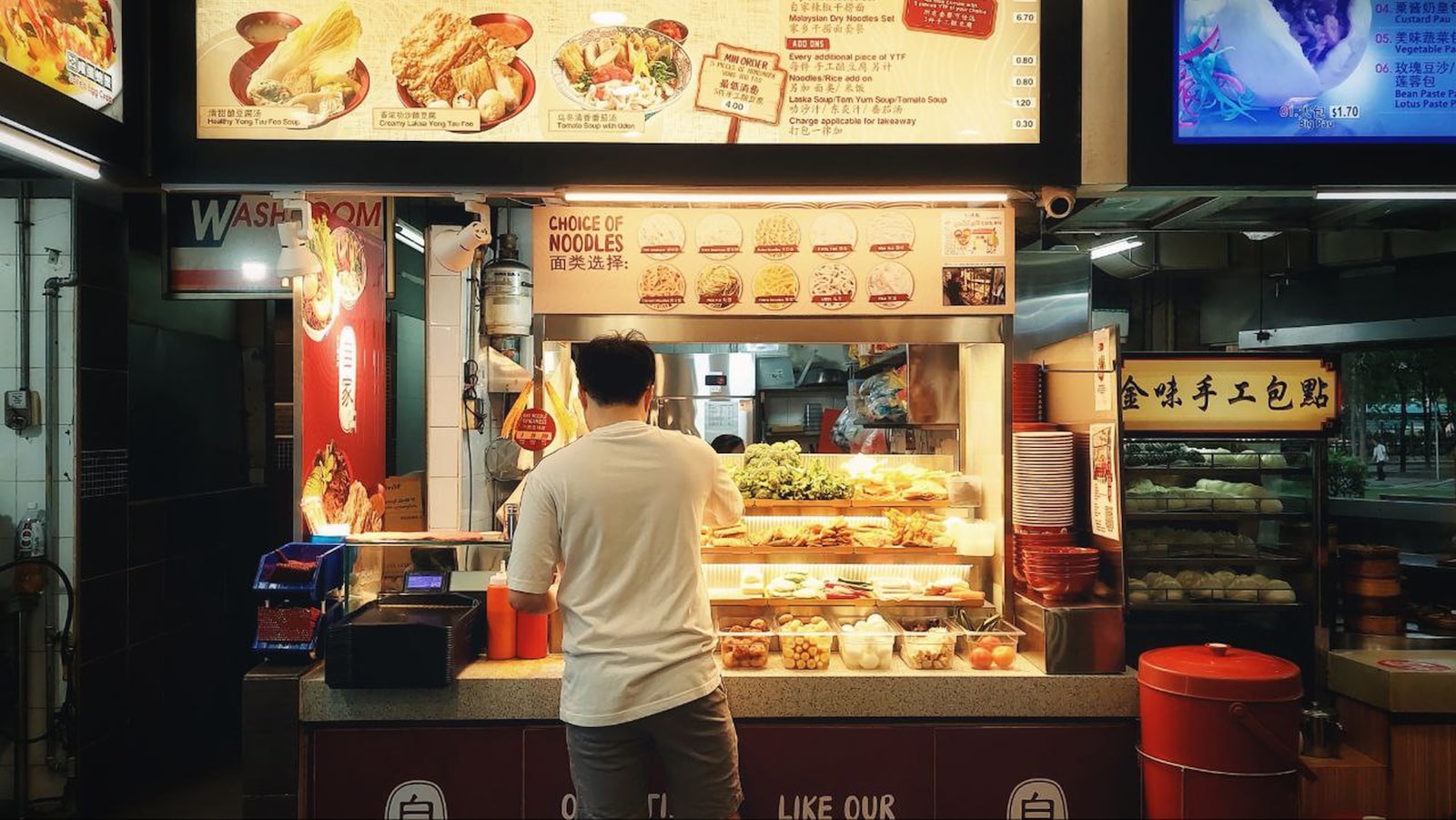
If you have ever stood in front of a glass display of tofu, stuffed vegetables and fishballs, tongs in hand, wondering what happens next, this guide is for you. Yong tau foo is one of the most flexible dishes at any Singapore hawker centre or food court: you choose exactly what goes in your bowl, decide how it is served, and pay by the piece. It is filling, endlessly customisable and, if you play your cards right, one of the healthier options around. Here is how it all works, from what the dish actually is to how to order it with confidence.
What is yong tau foo?
At its heart, yong tau foo is a Hakka dish. The Hakka people, one of the Chinese dialect groups that settled across Southeast Asia, are widely credited with the original idea: taking tofu and vegetables and stuffing them with a savoury fish or meat paste. The name loosely translates as “stuffed tofu,” and the classic version really is exactly that, a block of soft tofu with a pocket of seasoned fish paste tucked inside.
Over the decades, the dish grew far beyond its Hakka roots. In Singapore and Malaysia it evolved into the sprawling, self-serve format you see today, where the paste is no longer limited to tofu. It gets pressed into chillies, bittergourd, ladies’ fingers (okra), brinjal (eggplant) and more, and the display expands to include fishballs, meatballs, fish cake, tofu puffs, beancurd skin and a rack of leafy greens and mushrooms. So while the traditional fishball stuffed tofu is still the soul of the dish, modern ytf in Singapore is really a whole category of ingredients you assemble yourself.
That mix of humble origins and total flexibility is exactly why it has stayed popular. It suits a quick solo lunch, a light dinner, or a shared spread, and it bends easily to whatever you happen to be in the mood for.
How to order yong tau foo, step by step
The ordering process trips up a lot of first-timers, but it follows the same rhythm at nearly every stall. Once you know the pattern, it feels natural.
- Take a bowl and tongs. Most stalls set out empty bowls (sometimes small metal ones) and a pair of tongs at the display counter. Grab both.
- Pick your ingredients. Walk along the display and place whatever you want into your bowl. You are usually charged per piece, so a handful of items is normal for a light meal and a fuller bowl for a bigger appetite. There is no wrong combination.
- Choose how it is served. Hand your bowl over and tell the stallholder your preferences: soup or dry, which gravy or broth, and your carbohydrate of choice. More on those options below.
- Pay and wait. The staff count your pieces, tell you the total, and either call a number or bring the bowl to your table once it is cooked.
The pieces are typically blanched or simmered to order, so everything arrives hot. If you are unsure about anything, it is perfectly fine to ask; stall staff do this hundreds of times a day and are used to guiding newcomers.
Soup, dry, laksa or mala
This is the decision that most changes the character of your bowl, so it is worth understanding your options:
- Soup: Your ingredients arrive in a clear, comforting broth, often with a mild soya bean or ikan bilis (anchovy) base. This is the lightest, most classic way to eat yong tau foo.
- Dry: The pieces are served without the broth in the bowl, tossed or topped with a savoury sauce (commonly a sweet-and-dark or a mild chilli-based dressing). The soup usually comes on the side in a separate bowl so you get the best of both.
- Laksa: Your bowl is drowned in rich, coconut-and-spice laksa gravy. Choosing laksa or soup is the single biggest fork in the road, and laksa turns a light meal into something far more indulgent.
- Mala: Many stalls now offer a numbing, spicy mala gravy for those who like heat. It is a newer addition but increasingly common.
If you cannot decide between laksa or soup on your first visit, soup is the safest starting point. It lets the ingredients speak for themselves, and you can always go bolder next time.
Noodles or rice
Once the broth or gravy is settled, you choose your carbohydrate, or skip it entirely:
- Noodles: Options usually include thick yellow noodles, thin bee hoon (rice vermicelli), kway teow (flat rice noodles), mee tai mak (short “silver needle” noodles) and sometimes instant-style mee. Some stalls let you mix two types.
- Rice: A bowl of plain white rice on the side is a common choice, especially with the dry version.
- Neither: You can absolutely have your yong tau foo on its own, just the ingredients and broth. This is where the dish earns its reputation as a lighter meal.
The healthier, customisable appeal
One of the big reasons yong tau foo has such a loyal following is control. Because you build the bowl yourself, you decide the balance of protein, vegetables and carbohydrates, and you can steer it in a healthier direction with a few easy choices:
- Load up on leafy greens, mushrooms and tofu, and go easier on the fried items.
- Pick the soup version rather than laksa or a heavy sauce to keep it light.
- Choose bee hoon over fried noodles, or skip the carbohydrate altogether.
- Ask for less or no sauce if you are watching sodium.
That flexibility makes it a go-to for anyone eating mindfully, from office workers wanting a light lunch to families feeding a mix of tastes. It is one of the rare hawker dishes where a genuinely healthy option and a comforting, indulgent one sit side by side on the same counter.
A simple rule of thumb: the more colours from the vegetable rack and the clearer your broth, the lighter your bowl. The more fried, stuffed and gravy-soaked it gets, the more of a treat it becomes.
Common items you will see
The display varies from stall to stall, but you will recognise most of these staples:
- Tofu and tofu puffs: Soft white tofu (often the fishball stuffed tofu), plus airy fried tofu puffs that soak up broth beautifully.
- Stuffed vegetables: Chillies, bittergourd, ladies’ fingers and brinjal, each with a pocket of fish or meat paste.
- Fishballs and meatballs: Bouncy, savoury and always popular.
- Fish cake and beancurd skin: Sliced fish cake and folded or rolled beancurd skin (foo pei) for texture.
- Leafy greens and mushrooms: Xiao bai cai, spinach, seaweed and various mushrooms to round out the bowl.
- Sausages and crab sticks: Modern additions you will find at many stalls.
Do not feel you need one of everything. A satisfying bowl might be as simple as tofu, two stuffed vegetables, a couple of fishballs and a handful of greens.
Quick tips for first-timers
- Start small. Since you pay per piece, five to eight items is plenty for a first bowl. You can always go back.
- Balance the bowl. Aim for a mix: some protein, some vegetables, maybe one fried item for texture.
- Say your order in one breath. For example: “Soup, bee hoon, chilli on the side.” Clear and quick.
- Ask about the chilli and sauces. The dipping sauce (often a sweet reddish chilli or a garlic-based one) is part of the experience; ask which they have.
- Watch the queue for cues. If you are unsure of the rhythm, hang back and observe one or two people ahead of you.
- Go early for freshness. Popular stalls restock through the day, but the fullest displays are usually earlier in the meal service.
Yong tau foo rewards curiosity. Once you have ordered it a few times, you will settle into a favourite combination, whether that is a clean soup bowl with plenty of greens or an indulgent laksa version stacked with tofu puffs. Either way, the best part is that no two bowls have to be the same.
Explore more: Must-try hawker food in Singapore and Cai png (economy rice) guide