
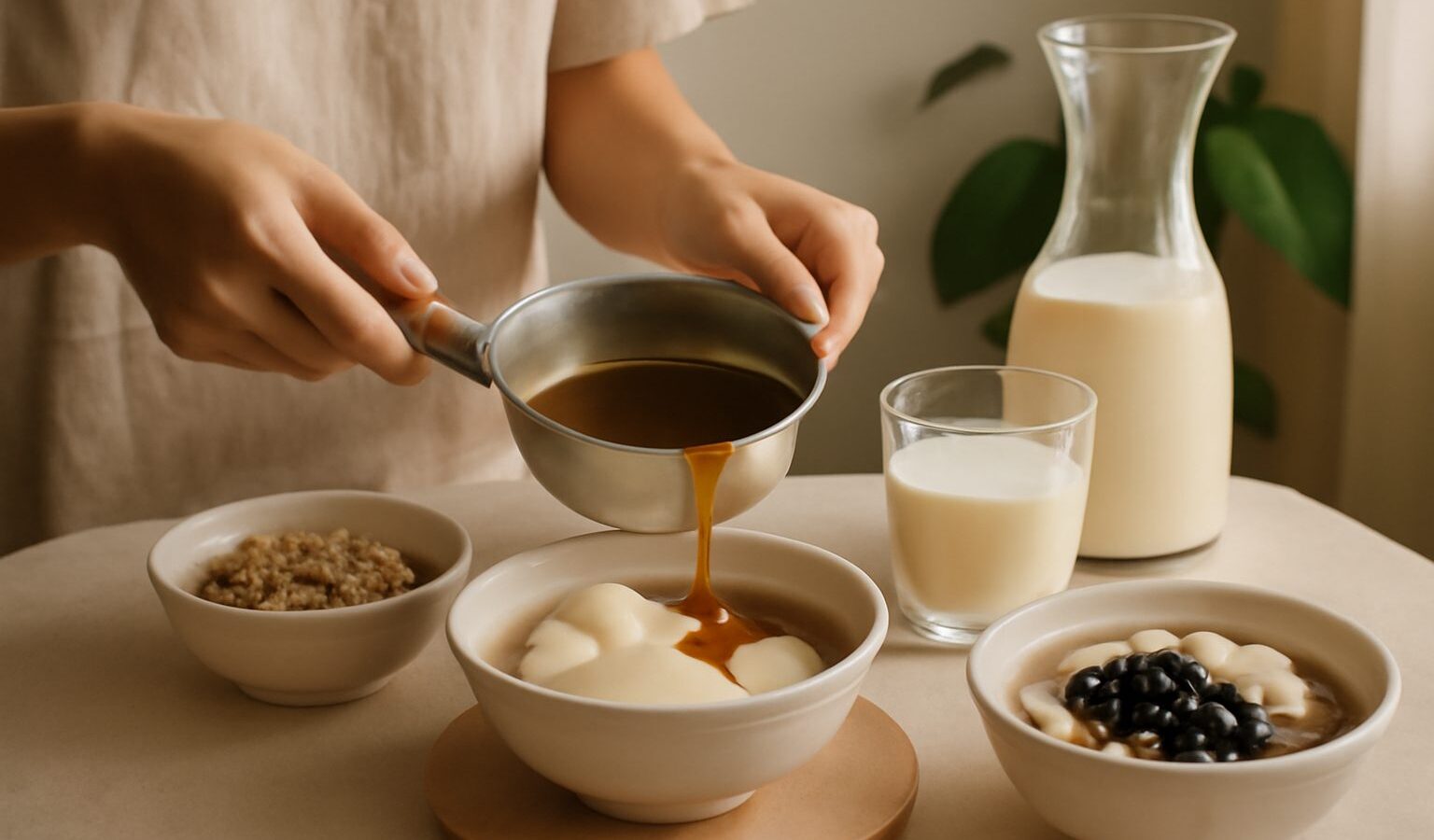
Few desserts feel as comforting as a warm bowl of tau huay, the silky soya beancurd we queue for at dessert stalls and hawker centres. The wonderful surprise is that homemade tau huay in Singapore is very doable, and it comes from just soya beans, water, and a setting agent. Once you can make the soya milk, a whole family of soya desserts opens up, from smooth beancurd to chilled soya jelly and sweet tau huay water.
This guide covers how to make the soya milk base, the two common ways to set it, how to serve it, and how to fix a batch that does not turn out silky. It is patient, forgiving cooking that suits a small kitchen well.
Starting With Good Soya Milk
Everything begins with the soya milk, and the smoother your milk, the silkier your beancurd. You can start from dried soya beans for the best flavour, or take a shortcut with unsweetened soya milk from the supermarket if you just want to practise the setting step.
The traditional route is straightforward. Soak dried soya beans overnight until they swell and split easily, which happens quickly in our warm weather, so keep them in the fridge while soaking to be safe. Blend the soaked beans with fresh water, then strain through a fine cloth or nut milk bag to separate the smooth milk from the pulp, which is called okara and can be used in other cooking. Gently heat the milk, skimming off foam and stirring so it does not catch on the bottom, and let it simmer briefly to cook out the raw bean taste. Keep the heat moderate, because boiled over soya milk is a classic kitchen mess.
Dried soya beans are cheap and easy to find at wet markets and supermarkets, usually near the other dried goods. A fine straining cloth or bag from a kitchenware shop makes the job much tidier.
Two Ways to Set Your Beancurd
The silky texture comes from setting the warm soya milk. There are two common approaches, and they give slightly different results.
- Gypsum powder, also sold as food grade calcium sulphate, is the traditional setting agent for classic soft tau huay. You dissolve a small amount in water in the serving bowl, pour the hot soya milk in from a height in one confident motion, then leave it undisturbed to set into that trembling, spoonable texture.
- Agar agar or a similar plant based setting powder gives a firmer, more jelly like beancurd that holds its shape when cut. This version is sturdier, keeps its shape in the heat, and is popular for chilled soya desserts.
Gypsum and agar agar are both stocked at supermarkets and dry goods stalls. Use them sparingly, because a little goes a long way, and follow the pack guidance for rough amounts rather than guessing wildly.
Serving Warm or Cold, and the Sweet Syrup
Tau huay is lovely both ways. Serve it warm on a cool evening or after a light meal, or chill it for a refreshing treat on a hot afternoon. The finishing touch is the syrup, traditionally a light sugar syrup, sometimes scented with pandan leaves or a little ginger for warmth. Keep it on the lighter side so the gentle soya flavour still comes through.
From this same base you can branch out. Pour the sweetened soya milk into cups with a plant based setting agent for soya pudding, layer it with grass jelly, or simply enjoy a warm glass of fresh soya milk, which is a whole dessert in itself. A spoon of soft beancurd over a bowl of soya milk, sometimes called beancurd with soya, is a classic combination worth trying.
Fixing a Batch That Will Not Cooperate
First attempts at beancurd rarely come out perfect, and that is completely normal. The two big variables are temperature and timing, so here is a quick troubleshooting guide.
| Problem | Likely cause | How to fix it |
|---|---|---|
| Beancurd will not set | Milk too cool when poured, or too little setting agent | Pour the milk hot; adjust the gypsum or agar slightly next time |
| Watery, separated texture | Disturbed while setting, or too much water | Leave it completely still to set; strain the milk a touch thicker |
| Grainy or lumpy | Uneven setting agent, or milk boiled too hard | Dissolve the agent fully first; heat the milk more gently |
| Raw bean taste | Milk not simmered long enough | Simmer a little longer to cook out the beany flavour |
| Sour smell | Spoiled in the heat | Discard it; keep soya milk chilled and use judgement |
If your first bowl sets a little unevenly but tastes good, eat it happily and adjust next time. Beancurd rewards repetition more than any single trick.
Keeping Soya Desserts Safe in the Heat
Soya milk is a fresh dairy free product, and it spoils quickly in our climate, so treat it with the same care you would fresh milk. Chill any beancurd and soya milk you are not eating straight away, and do not leave a batch sitting out on the counter in the heat. Home made soya milk without preservatives is best enjoyed within a day or two, but let your nose be the final judge, and when in doubt, throw it out.
Because you control the sugar at home, you can keep the syrup light, which is a gentle nod to eating a little less sugar without losing the treat. Make a modest batch, share it warm with family, and enjoy the quiet satisfaction of a dessert you queued for now made in your own kitchen.
Explore more
If you enjoyed working with soya and setting agents, try our guide to no bake desserts you can make at home, which uses many of the same chill and set skills. For more local sweetness, learn how to make traditional kueh at home, or bring those flavours to the oven with baking with pandan and gula melaka.