
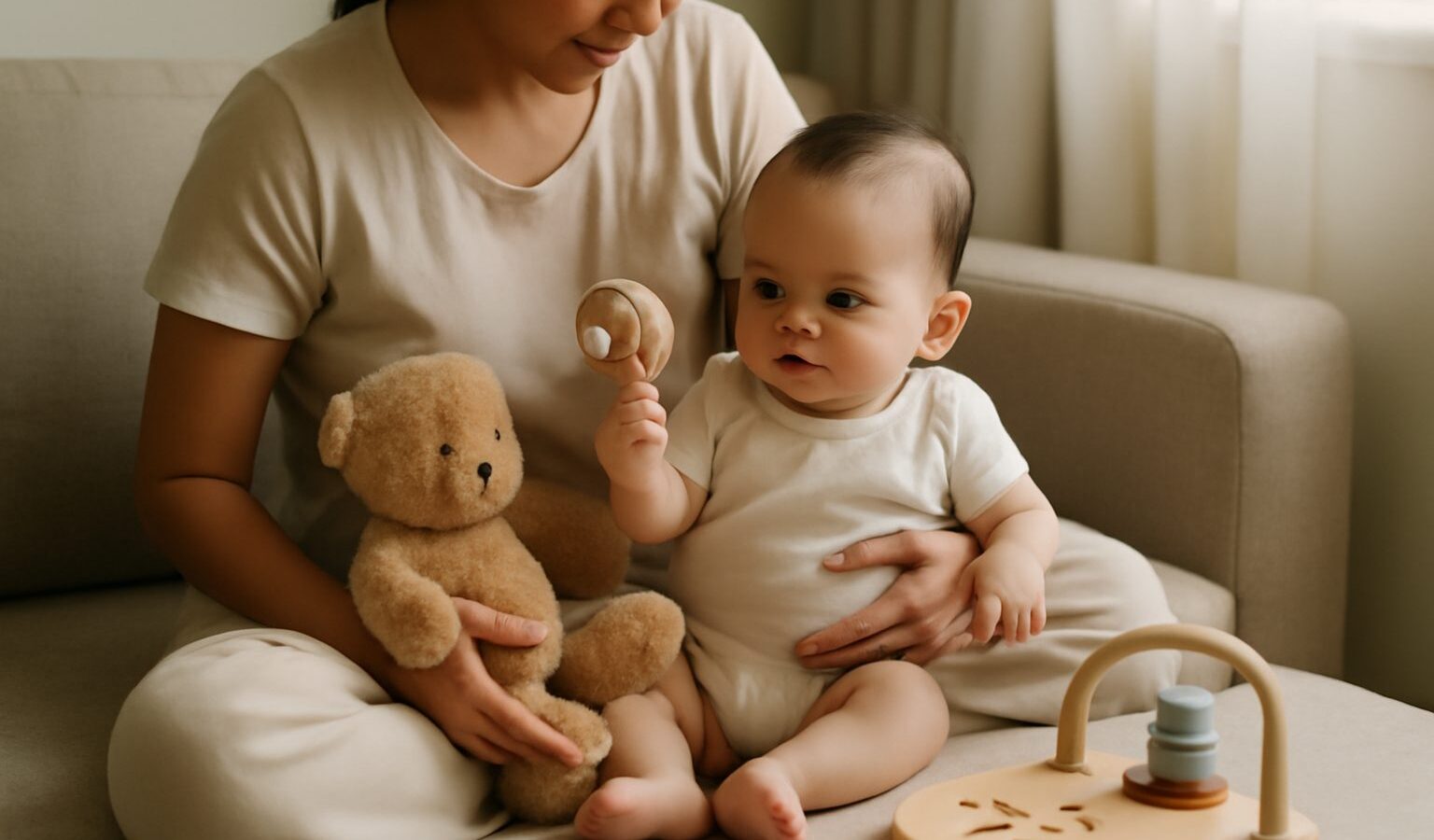
From the very first days of life, your baby is busy taking in the world through their eyes and ears. Watching these senses sharpen over the first year is one of the quiet delights of parenthood, from that first locked gaze to the moment your little one turns towards your voice. This article walks gently through baby vision development singapore parents can look forward to, along with hearing milestones, what routine screening involves, and when to check in with a doctor. It offers general reassurance rather than medical advice, so your paediatrician is always the right person for specific concerns.
Every baby develops at their own pace, so the timings below are a rough guide, not a strict schedule. Some babies do things a little earlier and some a little later, and both can be perfectly normal. What matters is a general sense of steady progress over time.
How Vision Develops in the First Year
Newborns are quite short sighted at first and see best at close range, roughly the distance to your face during a cuddle or feed. In the early weeks your baby is drawn to high contrast patterns, light and dark edges, and most of all human faces. They may hold your gaze for short moments and slowly begin to follow a face or object as it moves.
Over the next couple of months, colour vision develops and your baby becomes more interested in the world around them. They start to track moving objects more smoothly and may begin reaching towards things they see. By the middle of the first year, many babies are picking up small objects, watching them fall, and enjoying games like peekaboo, which show that both sight and memory are growing. Towards the end of the first year, depth perception and hand and eye coordination continue to sharpen as your baby explores through crawling and grasping.
You can gently support vision by offering plenty of face to face time, talking and making expressions, providing safe objects and books with bold patterns and colours, and giving your baby varied things to look at. Newborn eye checks are part of routine care, and it is normal for a young baby’s eyes to occasionally look a little crossed in the early weeks. However, if you notice a persistent squint or turned eye, eyes that do not seem to follow objects, unusual eye movements, cloudiness, or excessive tearing or sensitivity, do speak to your doctor.
Hearing Milestones and Newborn Screening
Hearing begins even before birth, which is why your baby may already find your voice soothing and familiar. In Singapore, newborn hearing screening is a routine part of early care, usually offered soon after birth. This simple, gentle check helps identify any hearing concerns early, when support is most effective. If your baby needs a repeat test, try not to worry, as this is fairly common and does not necessarily mean there is a problem.
In the early weeks, your baby may startle at sudden loud sounds, calm to a familiar voice, or pause to listen. Over the following months, many babies turn their head towards sounds, enjoy music and rattles, and begin to babble and coo. As the first year goes on, babbling often becomes more varied, and your baby may respond to their own name and simple familiar words. These emerging sounds are closely tied to reaching wider baby development and milestones, since hearing lays the groundwork for speech and language.
Talk, sing, read, and describe everyday moments to your baby throughout the day. This rich stream of everyday language is wonderful for both hearing and future speech. At the same time, keep an eye out for signs worth checking. Speak to a doctor if your baby does not startle or respond to loud sounds, does not turn towards familiar voices as they grow, is not babbling by around the expected time, or seems to stop making sounds they once made.
If you ever feel unsure about your baby’s sight or hearing, please do not wait and worry alone. Early advice is always worthwhile, and it often brings reassurance. Our guide to choosing a paediatrician in Singapore can help you find someone to talk to, and staying on track with the childhood immunisation schedule and routine check ups gives regular opportunities for your baby’s development to be gently reviewed. Trust your instincts, celebrate the small milestones, and enjoy watching your baby discover the world.