
Walk down the oils aisle of any supermarket here and the choice can be dizzying, from big bottles of everyday vegetable oil to dark sesame oil, cold-pressed coconut oil and the odd tin of ghee. This cooking oils guide cuts through the noise and explains what actually matters in a home kitchen: which oil to reach for when, why smoke point is the number to know, and how to store your bottles so they stay fresh. The aim is practical confidence at the stove, not a lecture, so you can stir-fry, deep-fry, roast and dress a salad using the right fat for the job.
We cook across so many cuisines in one week here, a wok-fried dish one night and a roast or a salad the next, that a little know-how about oils goes a long way. Get it right and food tastes cleaner, splatters less, and does not carry that acrid, over-heated note that comes from using the wrong fat too hot.
Smoke Point: The One Number to Know
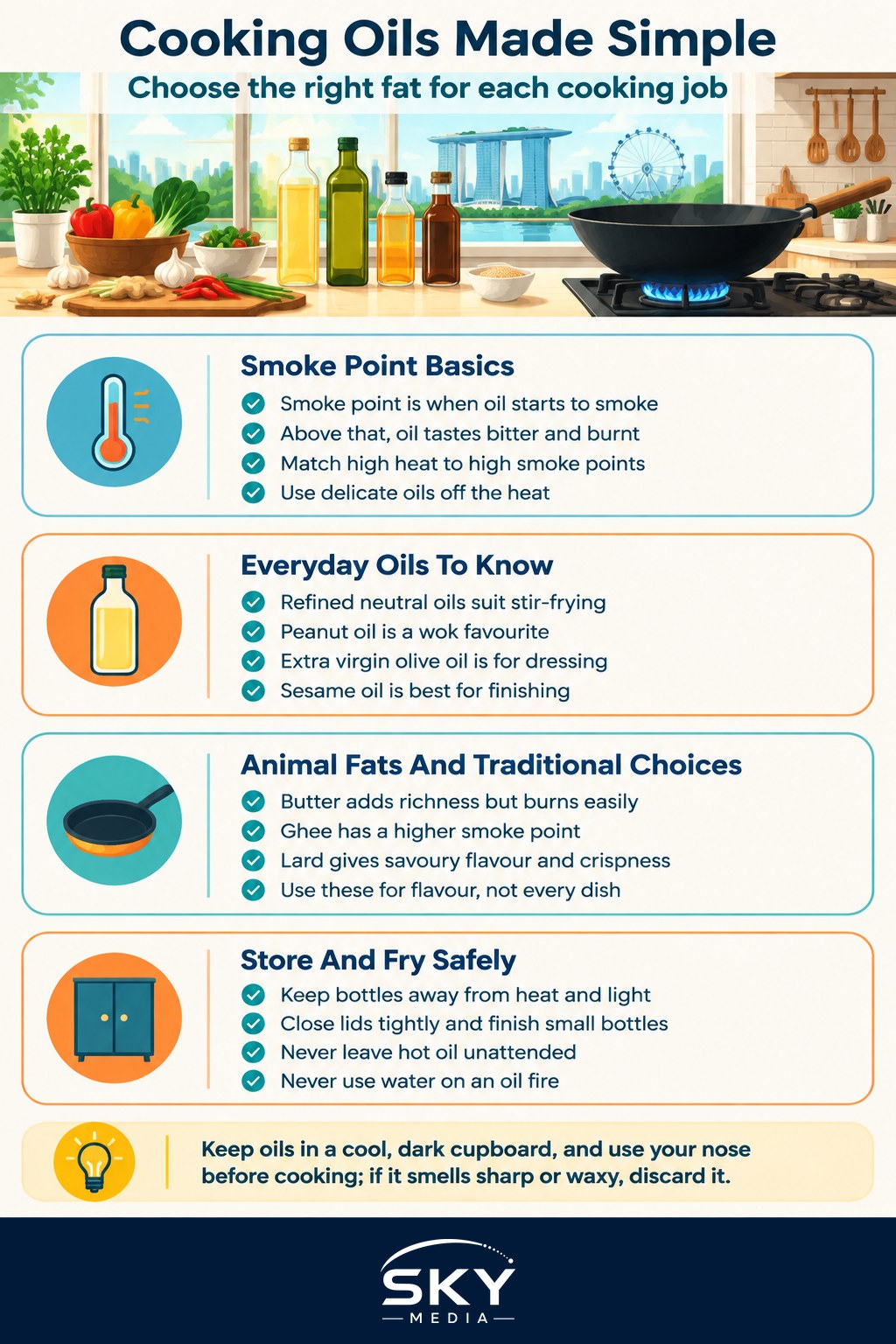
The smoke point is the temperature at which an oil starts to break down and literally smoke. Past that point the oil degrades, tastes bitter and burnt, and fills the kitchen with haze. As a rule of thumb, match a high-heat cooking method to a high smoke point oil, and save the delicate, low smoke point oils for gentle heat or for finishing a dish off the heat.
A simple way to think about it:
- High heat such as deep-frying, searing and wok hei stir-frying needs an oil that stays stable when very hot.
- Medium heat such as everyday pan-frying, sauteing and roasting is comfortable for a wide range of oils.
- Low or no heat such as drizzling, dressing and dipping is where flavourful, fragile oils shine.
Refined oils generally have higher smoke points than unrefined ones, because the compounds that burn easily have been filtered out. That is why a refined neutral oil handles a screaming-hot wok well, while an unrefined, cold-pressed oil is happier as a finishing touch. When an oil does start to smoke, do not push on; take the pan off the heat, let it cool a little, and start again rather than cooking in fumes.
The Everyday Oils Worth Knowing
You do not need a cupboard full of speciality bottles. A small, well-chosen line-up covers almost everything a home cook does.
- Neutral high-heat oils such as refined vegetable, canola, sunflower, peanut and rice bran oil. These are the workhorses for stir-frying, deep-frying and general cooking, with a clean taste that lets other ingredients lead. Peanut oil in particular is a wok favourite, though it is worth remembering as a common allergen.
- Olive oil comes in two useful forms. Regular or light olive oil handles medium-heat cooking, while extra virgin is best kept for dressing salads, finishing pasta and dipping bread, where its fruity, peppery flavour is the point.
- Sesame oil is a seasoning rather than a cooking oil. A few drops of the toasted, dark kind at the end of a dish add a deep, nutty aroma; it burns quickly, so keep it away from high heat.
- Coconut oil brings a mild sweetness suited to certain bakes and Southeast Asian dishes. It sets solid at cooler temperatures, which is normal.
Beyond these, oils like avocado, grapeseed and mustard oil each have their place, but most kitchens run happily on a neutral oil, a bottle of olive oil and a small bottle of sesame oil for finishing.
Animal Fats and Traditional Choices
Oils are only half the story. Solid and traditional fats carry flavour in a way many oils cannot, which is exactly why they feature so heavily in the cooking we grew up with.
- Butter adds richness and browning but has a low smoke point, so it burns if pushed too hard. Cooks often pair it with a little neutral oil to raise its tolerance, or use it to finish rather than to fry.
- Ghee, or clarified butter, has the milk solids removed, giving it a higher smoke point and a nutty depth. It is excellent for frying and central to much Indian cooking.
- Lard and rendered chicken or duck fat deliver savoury flavour and crisp results, prized in everything from flaky pastry to a good plate of fried rice or roast potatoes.
These fats are flavour tools, best used with intention rather than as your default for every dish. As with any ingredient, how they fit into your overall eating is a personal matter, and anyone managing cholesterol, heart health or another condition should speak to a doctor or a dietitian rather than follow general kitchen advice.
Matching Oil to the Task
The quickest way to cook better is to stop using one bottle for everything. Use this as a starting point, then adjust to taste and to what your recipe calls for.
| Cooking task | Good choice | Avoid |
|---|---|---|
| Deep-frying and hot wok work | Refined peanut, rice bran, canola | Extra virgin olive, butter, sesame |
| Everyday pan-frying and sauteing | Vegetable, light olive, ghee | Toasted sesame oil |
| Roasting vegetables and meat | Neutral oil, olive oil, ghee | Delicate finishing oils |
| Salad dressings and dipping | Extra virgin olive, cold-pressed oils | High-heat use of these |
| Finishing and aroma | Toasted sesame, a knob of butter | Using them for frying |
The pattern is simple: robust, refined oils for the hot and heavy jobs, and flavourful, delicate oils saved for the moments where you actually taste them. Following that one habit alone will noticeably lift your everyday cooking.
Storing Oils and Frying Safely
Oils go rancid over time, spoiled by heat, light and air, so a little care keeps them tasting clean. Store bottles in a cool, dark cupboard rather than beside the stove, where the warmth of cooking slowly degrades them. Keep lids tightly closed, buy sizes you will finish in a few months, and give an oil a quick sniff before use; a sharp, waxy, crayon-like smell means it has turned and should be discarded. Some cold-pressed oils keep best in the fridge, where they may cloud or thicken, which is harmless and reverses at room temperature.
For safe frying, a few simple habits matter. Never leave hot oil unattended, heat it gradually, and keep water well away, since even a splash into hot oil causes violent spitting. If oil ever catches fire, do not use water; turn off the heat and smother the pan with a lid. Let used frying oil cool fully before handling, and dispose of it responsibly rather than pouring it down the sink, where it congeals and blocks pipes.
With a compact set of oils, an eye on smoke points and sensible storage, you have everything you need to cook confidently across the many cuisines that make up a Singapore kitchen. Keep it simple, match the fat to the task, and let good ingredients do the rest.
Explore more
Ready to put these oils to work? Fire up the wok with our guide to pressure cooker and Instant Pot meals in Singapore, or explore the aromatics in our guide to Southeast Asian spices in Singapore. If a subscription box has left you with a fridge full of ingredients, our guide to meal kit and subscription services in Singapore helps you cook through them well.
Frequently Asked Questions
Can I reuse frying oil at home? You can reuse it once or twice if you strain out food bits and store it covered in a cool, dark place. Discard it if it smells sharp or waxy, looks dark, foams or smokes easily. Let it cool fully before handling and never pour it down the sink.
Is olive oil good for stir-frying? Regular or light olive oil handles medium heat, but extra virgin is better saved for dressings and finishing, where its flavour shines. For very hot wok cooking, a refined neutral oil is the safer choice. Match the oil to the heat you are using.
What is the difference between refined and cold-pressed oil? Refined oils are filtered, so they have a higher smoke point and a neutral taste. Cold-pressed oils keep more flavour and aroma but suit gentler heat or finishing. Choose by task rather than by label alone.
Which oil is best for people with a peanut allergy? Peanut oil is a common allergen, so someone with a peanut allergy should ask a doctor whether it is suitable and avoid it unless advised otherwise. Alternatives such as sunflower or canola exist. Always read labels, as oil blends may contain it.
How do I put out a grease fire in the kitchen? Do not use water. Turn off the heat and smother the pan with a lid, then leave it covered until cool. If the fire spreads or you cannot control it, leave and call the Singapore Civil Defence Force.
Further reading: Choosing Healthy Cooking Oils · A Guide to Cooking Wines and Vinegars · How to Recycle Used Cooking Oil at Home