
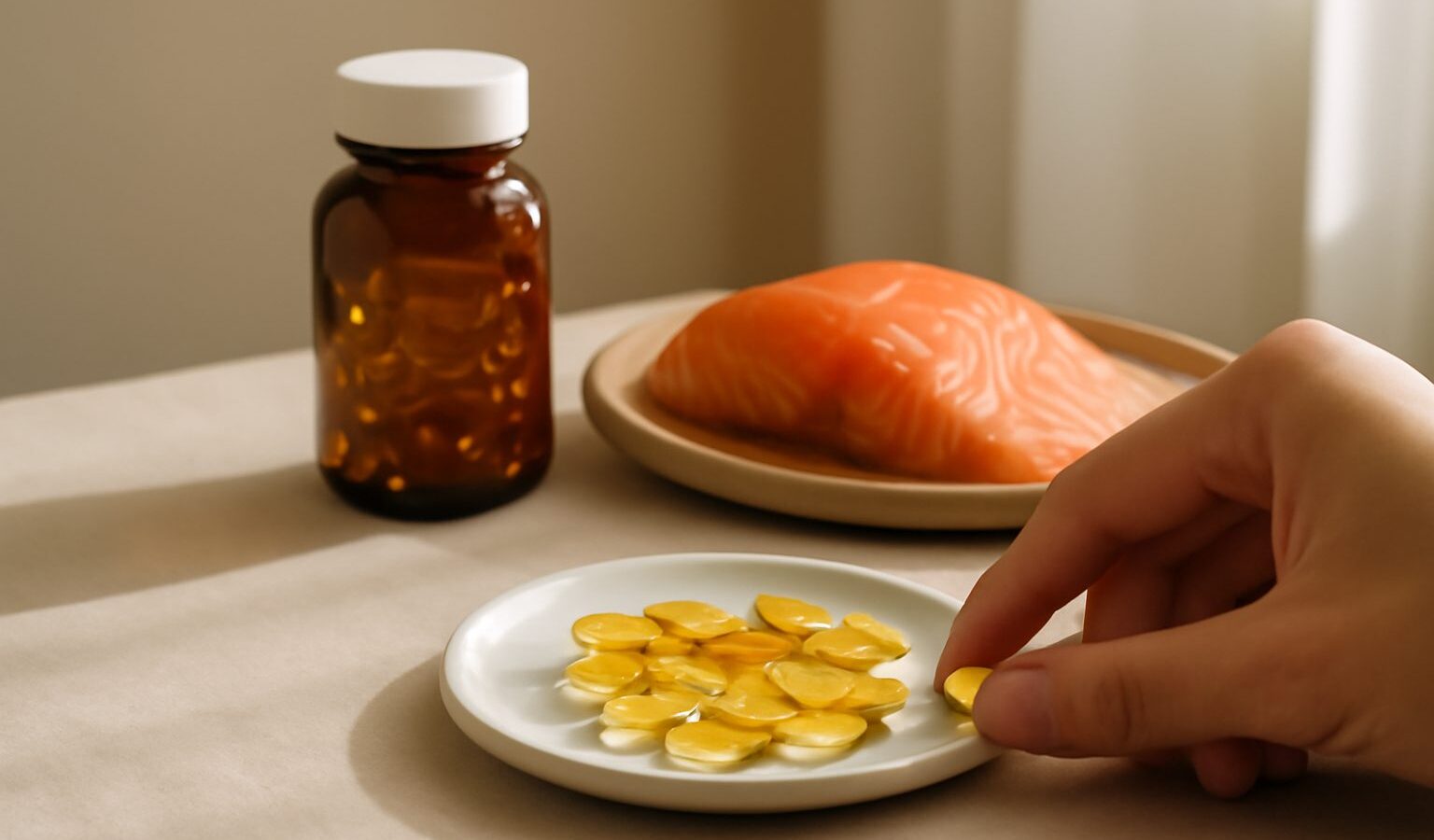
Walk down any pharmacy aisle and you will see rows of fish oil capsules promising all manner of benefits. Omega-3 has become one of the most talked about nutrients around, and interest in omega-3 in Singapore is no exception. But what exactly is it, do you really need a supplement, and how do you get it safely? This guide breaks it down in plain language, with a food first mindset.
A quick but important note first. This article is general information, not medical or dietitian advice. Fish oil is not right for everyone, and it can interact with certain medicines. Please do not start any supplement on the strength of a web article. If you are considering one, talk to a doctor, pharmacist or dietitian, especially if you have a health condition or take other medications.
What Omega-3 Actually Is
Omega-3 is a type of fat that your body needs but cannot make in large amounts on its own, so you have to get it from your diet. There are a few different forms. The two most talked about, often written as EPA and DHA, are found mainly in fish and seafood. A third form, found in certain plant foods, is one the body can only partly convert into the others.
These fats play a role in normal heart and brain function and in general health, which is why they get so much attention. It is worth keeping a level head, though. Omega-3 is one helpful piece of a balanced diet, not a magic cure. The most sensible way to think about it is as part of eating well overall, rather than as a single miracle nutrient.
Getting Omega-3 From Food
The good news for many people is that you can get plenty of omega-3 from food, and a food first approach is generally the wisest starting point. Oily fish are the richest natural source, and Singapore’s love of seafood makes this quite achievable.
Fish such as salmon, sardines, mackerel and tuna are good sources. Aiming to include oily fish in your meals a couple of times a week is a common, sensible target that many health bodies suggest, though your own needs may differ. For those who prefer plant foods or follow a vegetarian or vegan diet, sources such as walnuts, flaxseeds, chia seeds and certain oils provide the plant form of omega-3, though the body uses it less efficiently.
| Source | Type | Notes |
|---|---|---|
| Salmon, mackerel, sardines | Marine (EPA and DHA) | Richest everyday sources |
| Tuna | Marine (EPA and DHA) | Good source, enjoy in variety |
| Walnuts, flaxseed, chia | Plant form | Body converts only part of it |
| Fortified foods | Varies | Check the label for added omega-3 |
Building your meals around a variety of these foods is a pleasant and reliable way to look after your intake without relying on capsules. If you eat little or no fish, this is a useful point to raise with a doctor or dietitian, who can advise whether you are getting enough.
What Fish Oil Supplements Are
Fish oil supplements are simply a concentrated source of the marine omega-3 fats, usually sold as capsules. They exist because not everyone eats oily fish regularly, and some people are advised by a health professional to increase their intake.
For some people, a supplement may have a place. For many others who already eat a reasonably varied diet with some fish, food alone may be quite sufficient. There is no need to assume you must take a capsule just because it is widely sold. The best approach depends on your individual diet, health and circumstances, which is exactly why a chat with a professional is so useful before you begin.
Safety and Who Should Take Care
This is the part that deserves real attention. Fish oil is not automatically harmless just because it is natural and sold without a prescription. It can thin the blood slightly, which matters a great deal for some people.
If you take blood thinning medication, you should be especially careful, because combining it with fish oil could affect how your blood clots. The same caution applies if you have a bleeding disorder or are due to have surgery. Anyone who is pregnant, breastfeeding, managing a health condition or taking regular medicines should check with a doctor or pharmacist before starting fish oil. High doses in particular are not something to experiment with on your own.
Some people also notice minor effects such as a fishy aftertaste or mild tummy upset. These are usually harmless, but they are another reason to get proper guidance rather than simply following the dose on a random bottle. A professional can help you weigh up whether a supplement suits you and, if so, what makes sense for your situation.
Choosing Quality if You Do Supplement
If a health professional does suggest a supplement, it is worth choosing sensibly rather than grabbing the first product you see. Look for a reputable brand and check the packaging for clear information about what is inside. A pharmacist can point you towards trustworthy options and answer any questions.
Storage matters too. Fish oil can spoil, so keep it as the label directs and pay attention to the expiry date. If a capsule smells strongly off or rancid, do not take it. And remember that a supplement is meant to add to a good diet, not to replace one. Real food brings a whole range of other nutrients that a single capsule simply cannot match.
The Bottom Line
Omega-3 is a genuinely useful nutrient, and it is easy to see why it attracts so much interest. For most people, though, the simplest and safest way to get it is through food, especially oily fish enjoyed a couple of times a week, alongside plant sources for variety.
Fish oil capsules can help certain people, but they are not a default that everyone needs, and they carry real cautions, particularly around blood thinners and medical conditions. So keep food at the centre, stay a little sceptical of big promises, and let a doctor, pharmacist or dietitian guide you before you reach for a supplement. That balanced, careful approach will serve you far better than any single capsule ever could.
Explore more
A Simple Guide to Vitamins and Supplements
Getting Your Vitamins From Food Not Pills
Eating for a Healthy Heart
Nutrition Basics: A Beginner’s Guide