
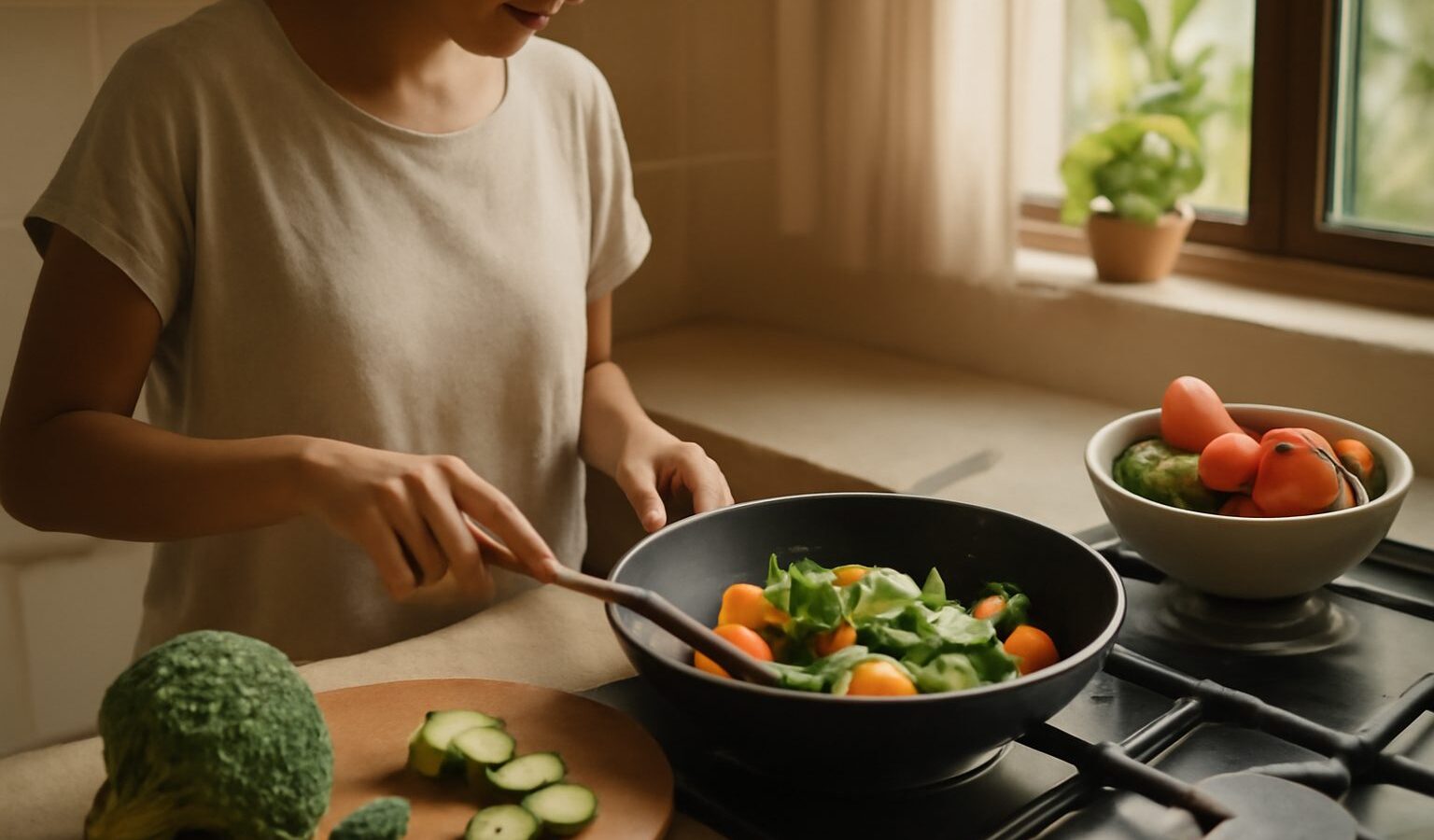
Vegetables get a bad name because most of us grew up eating them cooked badly: boiled to a grey mush, unseasoned, and sad on the plate. It does not have to be this way. Cooking vegetables in Singapore can give you bright, crunchy, deeply savoury results that you actually look forward to, and the techniques are simple. The difference between a limp plate of greens and a glossy, garlicky one comes down to heat, timing and a little seasoning confidence.
We are lucky here. The wet market and supermarket overflow with affordable local greens: kangkong, chye sim, kai lan, xiao bai cai, long beans, bitter gourd and more. Learn a few core methods and you can cook any of them well.
Why your vegetables turn out bland
Three mistakes cause most disappointing vegetables, and all three are easy to correct.
The first is low heat and crowding. Vegetables piled into a lukewarm pan release water and stew in it, turning soft and watery instead of caramelising. The second is overcooking. Greens go from vivid to drab and mushy in seconds past their peak, losing both texture and taste. The third, and the biggest, is underseasoning. Vegetables need salt to taste of anything; a pinch at the right moment wakes them up completely.
Fix those three and you are most of the way there. Cook hot, cook fast, season properly, and stop while there is still life in them.
The core methods worth knowing
You only need a handful of techniques to cover almost every vegetable in your kitchen.
Stir-frying is the local hero. A hot wok, a little oil, smashed garlic until fragrant, then the vegetable tossed quickly and finished with a splash of oyster sauce or a little light soy. Kangkong, chye sim and kai lan are made for this. Get the wok properly hot before anything goes in.
Blanching means a quick dip in salted boiling water, then draining. It is the trick behind those clean, bright plates of greens at zi char stalls, often finished with a drizzle of oyster sauce and some fried shallots. It suits kai lan, broccoli and chye sim beautifully, and takes barely two minutes.
Roasting is underused in our kitchens, partly because of the heat, but it transforms firmer vegetables. Toss pumpkin, cauliflower, sweet potato or long beans in oil and salt, spread them out on a tray, and roast hot until the edges char and sweeten. The dry heat concentrates flavour like nothing else.
Steaming keeps nutrients and works well for softer vegetables and for anyone cutting down on oil. Finish steamed greens with a hot dressing of soy, sesame oil and garlic so they are not plain.
Season with intention
This is the step home cooks skip most, and it is the one that matters most. Salt is not the enemy; underseasoned food is. Salt the blanching water so the vegetables absorb seasoning as they cook. Season stir-fries at the end with soy or oyster sauce, taste, and adjust.
Then think about layers of flavour beyond salt. A few ideas that suit our pantry:
- Aromatics: garlic, ginger, shallots, chilli and dried shrimp, fried in oil first to flavour the whole dish.
- Umami boosters: oyster sauce, light soy, a little fermented bean paste or belacan for greens like kangkong.
- Fat carries flavour, so a proper glug of oil, or a knob of butter on roasted vegetables, makes a real difference.
- Finishing touches: a squeeze of lime, fried shallots, toasted sesame seeds or a scatter of spring onion.
Acid deserves special mention. A little lime or vinegar at the end lifts everything and cuts richness. Once you start finishing vegetables with a squeeze of something sour, you will never stop.
Match the method to the vegetable
Different vegetables want different treatment. Getting the pairing right is half the battle, and timing is the other half.
| Vegetable | Best method | Rough timing | Doneness cue |
|---|---|---|---|
| Kangkong, chye sim | Hot stir-fry | 2 to 3 minutes | Just wilted, still bright green |
| Kai lan, broccoli | Blanch then dress | 2 minutes in water | Tender-crisp, snaps gently |
| Long beans | Stir-fry or roast | 4 to 6 minutes | Blistered, still with bite |
| Pumpkin, sweet potato | Roast hot | 25 to 35 minutes | Caramelised edges, soft centre |
| Bitter gourd | Stir-fry with egg or bean | 3 to 5 minutes | Softened, edges browned |
The theme across the table is simple: leafy greens want speed, firm vegetables want longer dry heat. When in doubt, pull leafy greens off the heat earlier than feels right, because they carry on cooking from residual heat.
Buying, prepping and keeping them fresh
Vegetables are cheapest and freshest at the wet market in the morning, but the supermarket is fine and convenient. Look for firm stems and unblemished leaves. In our heat and humidity, greens wilt fast, so buy what you will use within a few days rather than stocking up.
Store leafy vegetables loosely wrapped in the fridge, ideally with a bit of paper to catch moisture, and do not wash them until you are ready to cook, as wet leaves rot faster. Wash thoroughly to remove grit and any soil, especially with sandy greens like kangkong.
Prep smart. Cut stems and leaves separately when they cook at different speeds, adding tougher stems to the wok first and tender leaves last. Trim and dry everything before it hits a hot pan, because surface water steams and stops browning. A little organisation before you cook makes fast methods like stir-frying far less stressful.
Give these ideas one week of dinners and your relationship with vegetables changes. Hot pan, quick cook, real seasoning, a squeeze of acid to finish. Simple, cheap and genuinely delicious.
Explore more
Vegetables shine alongside the rest of your cooking. Build wok confidence with our guide to stir-frying basics, keep more nutrients by learning to steam food the right way, and round out the meal with a pot of fluffy stove-top rice.