
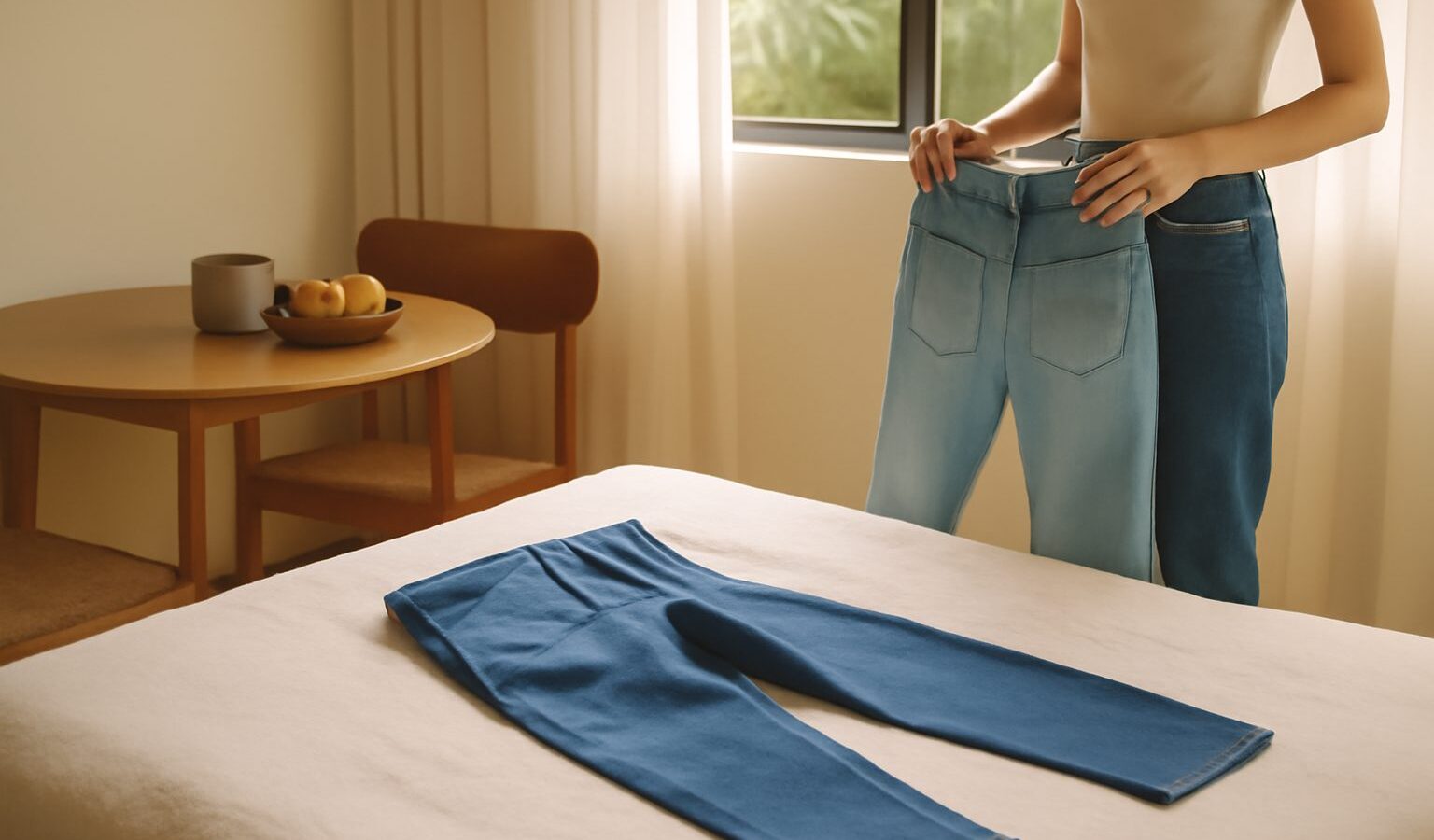
Jeans are the one item almost everyone owns and almost no one shops for confidently. Walk into any store and you face a wall of cuts, rises and washes, all called something different. This guide to jeans and denim fits cuts through the jargon so you can find a pair that actually suits you, feels good to wear, and works in Singapore’s climate rather than fighting it.
The truth is that fit matters far more than brand or price. A well-fitting budget pair looks better than an expensive pair in the wrong cut. So instead of chasing a label, it helps to understand the two things that shape every pair of jeans: the leg and the rise.

Understanding Leg Shapes
The leg is the first thing people notice, and it sets the whole mood of an outfit. Here are the main shapes and what they do.
- Skinny: close to the leg from hip to ankle. Sleek and easy to tuck into boots, though it can feel warm in humidity since it sits against the skin.
- Slim: fitted but with a little more room than skinny, especially through the calf. A comfortable middle ground for many people.
- Straight: the same width from knee to hem. A timeless, easy cut that flatters most bodies and never really dates.
- Tapered: roomier at the thigh, narrower at the ankle. Comfortable up top with a neat finish, good if you carry more through the thigh.
- Wide leg and relaxed: loose all the way down. Airy and current, and genuinely cooler in the heat since air moves around the leg.
- Bootcut and flared: fitted to the knee then widening. Balances fuller hips and reads a little dressier.
There is no best shape, only the one that suits your body and how you like to feel. If in doubt, a straight or slim leg is the most versatile starting point.
The Rise: The Detail That Changes Everything
Rise is the distance from the crotch seam to the top of the waistband, and it decides where the jeans sit on your body. It affects comfort even more than the leg does.
- Low rise sits below the belly button. It can feel young and casual but slips down easily and is less forgiving when you sit.
- Mid rise sits around the belly button. A comfortable, flattering default for most people that stays put through the day.
- High rise sits at the natural waist. It lengthens the leg, holds you in gently, and stays in place, which is why many people find it the most comfortable of all.
For everyday wear, a mid to high rise usually gives the least fuss, since it does not need constant tugging. If you spend a lot of time seated at a desk or on the MRT, a slightly higher rise keeps everything covered and comfortable.
Matching Fit to Your Body and Comfort
Every body is different, and the aim is jeans that make you feel good and let you move, not a set of rules about hiding anything. Still, a few practical pointers help you shop faster.
- If you carry more through the thigh, a tapered or straight leg with some stretch gives room where you need it without a baggy ankle.
- If you are petite, a slim or straight leg with a high rise lengthens the line; watch the hem length and cuff or hem it if needed.
- If you are tall, look for longer inseams so straight and wide legs keep their proportion instead of riding up.
- If you are curvy through the waist and hips, a contour or stretch waistband stops the gap at the back that stiff denim leaves.
- If you prefer room, relaxed and wide legs are both comfortable and very much in style, so you lose nothing by sizing up.
A little elastane, around two to five percent, adds comfort and helps jeans keep their shape through a humid day. Pure rigid denim looks great and softens over time, but it can feel stiff at first, so factor that in if you want easy comfort from day one.
Denim in the Tropics
Denim and a tropical climate are not natural friends, but a few choices make jeans wearable year round in Singapore.
- Go lighter in weight. Heavy raw denim is warm; a lighter-weight denim breathes far better for daily wear.
- Choose looser cuts for hot days. Straight, tapered and wide legs let air circulate, while skinny styles trap heat against the skin.
- Mind the wash. Darker washes look dressier and hide marks, while lighter washes feel casual and read cooler in bright sun.
- Layer for the aircon. Jeans are perfect for the office chill; pair them with a tee or shirt and add a light layer you can shed outdoors.
Denim also pairs with almost anything, which is part of its value. A pair of well-fitting jeans works with a crisp white shirt for smart casual, or with the perfect white t-shirt for an easy weekend look.
Comparing the Main Fits at a Glance
If you are choosing between styles, this table sums up how the common cuts behave day to day.
| Fit | Feel | Best paired with | Heat comfort |
|---|---|---|---|
| Skinny | Close, sleek | Longer tops, boots | Lower, sits on the skin |
| Straight | Easy, timeless | Almost anything | Moderate and versatile |
| Tapered | Roomy top, neat ankle | Tucked tees, sneakers | Moderate to good |
| Wide leg | Loose, airy | Fitted or tucked tops | High, air moves freely |
Use it as a starting point, then let the mirror and how you feel make the final call.
Buying Smart and Making Them Last
You do not need a premium label for good jeans, but denim is a place where a little more spend can pay off in longevity.
- Budget: fast-fashion chains and online marketplaces carry plenty of wearable jeans; check the stitching and waistband and buy one pair before committing.
- Mid-range: department stores and local boutiques often use sturdier denim and better construction, usually the best value per wear.
- Premium: quality denim and finishing can last many years and mould to your body, so the cost per wear often ends up low.
Secondhand denim is one of the smartest buys around; a lightly worn pair from a thrift shop or a marketplace like Carousell is often already broken in and gentle on your budget and the planet. Prices vary widely across brands and seasons, so check the current price with the retailer and let fit lead the decision.
To make jeans last, wash them less often and inside out in cool water, dry in the shade, and spot-clean small marks rather than washing the whole pair every wear. Denim thrives on gentle care, and a pair that fits well will earn its place for years.
Explore more
The right jeans anchor countless outfits. Sharpen a denim look with how to style a crisp white shirt, keep it easy with finding the perfect white t-shirt, or dress the whole thing up using how to style a blazer for smart casual and beyond.
Frequently Asked Questions
Which jeans fit is the most comfortable in Singapore’s heat? Wide leg, relaxed, straight and tapered cuts let air circulate, so they feel cooler than skinny jeans. A lighter-weight denim also breathes better than heavy raw denim. Pair them with a light top and carry a layer for the aircon.
Should I size up or down for stretch denim? Try your usual size first and check the waist and thighs when you sit and walk around. Stretch denim eases slightly with wear, while rigid denim feels stiff at first. If you sit a lot, make sure the waistband does not dig in.
How do I hem jeans that are too long? A local tailor can shorten the hem, and an original hem can often be kept for a neat finish. Cuffing is a no-cost alternative if you like a casual look. Petite shoppers especially benefit from checking length before buying.
How often should I wash my jeans? Less often than most clothes. Wash inside out in cool water, dry in the shade, and spot-clean small marks instead of laundering every wear. Gentle care helps denim keep its shape and colour for years.
Are secondhand jeans worth buying? Yes, a lightly worn pair is often already broken in and kind to both your budget and the planet. Check seams, zips and the waistband for wear. A small tailoring tweak can make a thrifted pair fit you properly.
Further reading: How to Style Double Denim · Understanding Denim Washes and Finishes · How to Wear a Denim Jacket in Singapore