
The perfect white t-shirt is the quiet workhorse of a wardrobe. It goes under a blazer, over your shorts, with a skirt, or on its own, and in Singapore’s heat it is often the most comfortable thing you own. Yet most of us have a drawer full of tees that sag, turn see-through, or go grey after a month, which is why finding the perfect white t-shirt is worth a little thought rather than grabbing whatever is nearest the till.
The good news is that a great white tee is not about the logo or the price. It comes down to a handful of things you can check in the shop: the fabric, the fit, the neckline, and how well it holds up to the wash. Get those right and one tee will outlast five cheap ones.
What Makes a White Tee Actually Good
A white t-shirt has nowhere to hide, so the details matter more than they do on a busy print. Here is what separates a keeper from a throwaway.
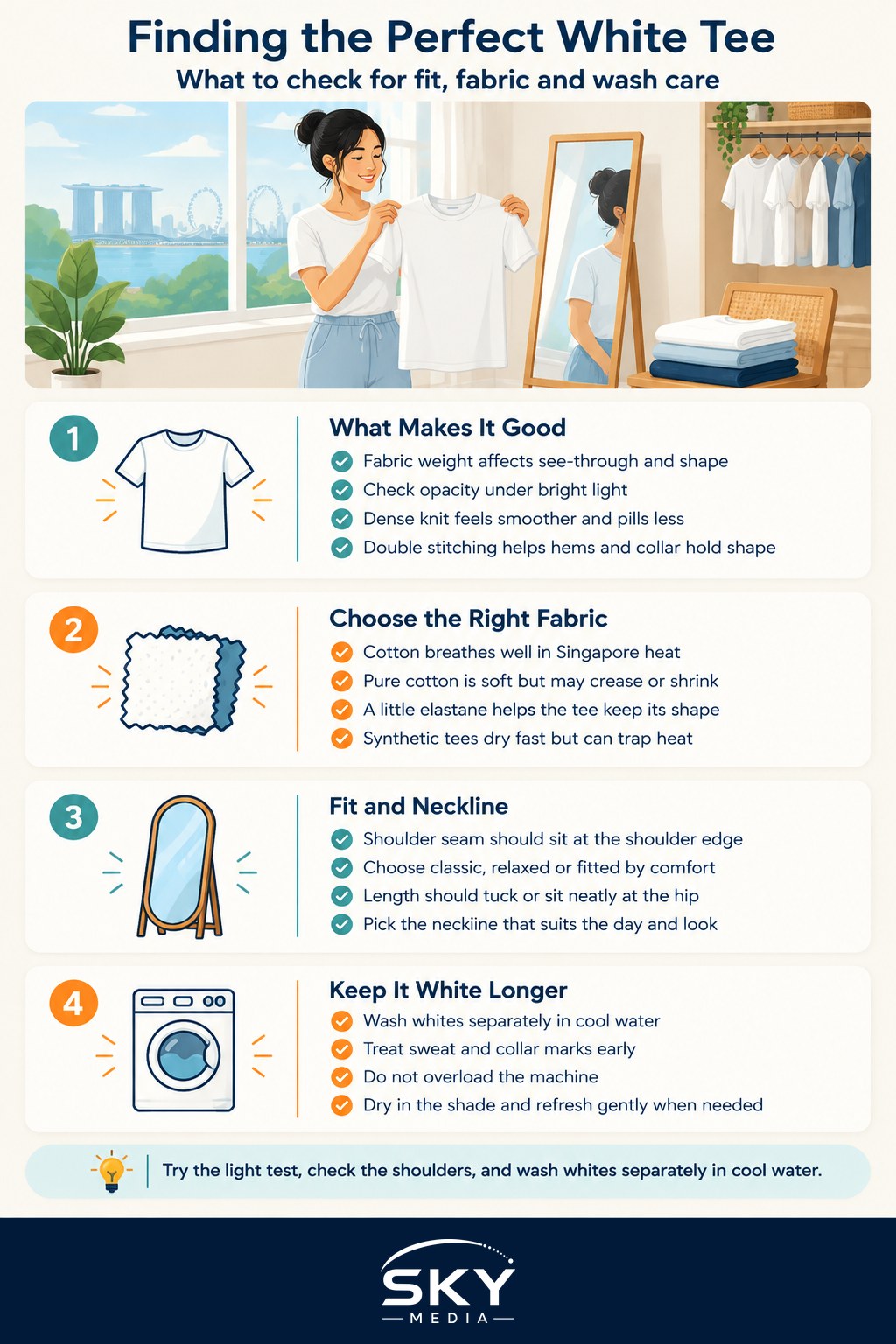
- Fabric weight. Very thin jersey feels cool but goes sheer and loses shape fast. A medium-weight cotton holds its form, resists creasing, and is less see-through, which matters a lot in white.
- Opacity. Hold the tee up to the light in the shop. If you can read your hand through it, it will show everything once you sweat or step into bright sun. A tighter knit or a slightly heavier weight solves this.
- The knit. Combed or ring-spun cotton feels smoother and pills less than basic open-knit cotton. Run your fingers across it; a dense, even surface is a good sign.
- Stitching. Check the neckline and hems. Double stitching and a ribbed collar keep their shape, while a single flimsy seam curls and stretches after a few washes.
None of this requires a premium label. Plenty of budget tees pass these checks, and plenty of expensive ones fail them, so trust your hands and eyes over the tag.
Fabric and the Singapore Climate
Cotton is the default for good reason. It breathes, absorbs moisture, and feels soft against the skin, which is what you want in humidity. For everyday wear in the tropics, a medium-weight cotton or a cotton-heavy blend is hard to beat.
That said, the market offers a few options, and each has a trade-off worth knowing.
- Pure cotton: breathable and soft, but can crease and may shrink slightly, so buy with a little room or wash cool.
- Cotton with a touch of elastane: holds its shape better and resists bagging at the elbows and hem, useful if you like a closer fit.
- Cotton-modal or cotton-bamboo blends: extra soft with a gentle drape, though often thinner, so check opacity carefully in white.
- Fully synthetic tees: quick-drying and cheap, but they can trap heat and hold odour, which is less pleasant in our climate.
For a white tee you will wear against the skin all day, breathability wins. Save the synthetics for the gym, where quick-dry matters more than airflow.
Fit and Neckline for Your Shape
Fit is personal, and there is no single correct silhouette. The goal is a tee that makes you feel comfortable and looks intentional, whatever your body shape. A few reference points help.
- Shoulder seam: it should sit at or just inside the edge of your shoulder. This one detail makes a cheap tee look tidy and an expensive one look sloppy.
- Body: a classic fit skims the body without clinging; a relaxed fit sits looser and reads casual; a fitted cut follows your shape more closely. All three are valid, so choose by how you like to feel.
- Length: long enough to tuck or to sit comfortably at the hip. Very short hems ride up in the heat, and very long ones can swamp a petite frame.
- Sleeves: a sleeve that ends around mid-bicep flatters most arms, while very tight or very long sleeves can feel less balanced.
The neckline changes the whole mood of the shirt, so pick the one that suits your day.
| Neckline | Best for | Good to know |
|---|---|---|
| Crew neck | Everyday, layering under shirts | Classic and neat; the safest all-rounder |
| V-neck | A softer, open look | Lengthens the neckline; keep the V shallow for balance |
| Scoop neck | Relaxed, warm-weather wear | Airy and casual; pairs well with high-waisted bottoms |
| Boat or wide neck | A dressier, styled feel | Sits off the collarbone; layer for coverage if you prefer |
Try the same size across a couple of cuts if you can. The size on the label varies a lot between shops, so the fit in the mirror matters more than the letter.
Keeping It White Wash After Wash
White tees go grey or yellow when they pick up dye, sweat residue and body oils, all of which our heat speeds up. A simple routine keeps them looking fresh.
- Wash whites separately in cool water so they do not absorb colour from darker clothes.
- Treat underarm and collar marks early, since sweat and deodorant build-up cause most yellowing. A gentle pre-soak before washing helps.
- Avoid overloading the machine so the tees actually rinse clean; leftover detergent is what dulls white over time.
- Dry in the shade. Airy, shaded drying protects the fibres, whereas long hours in strong direct sun can yellow and weaken some fabrics.
- Refresh occasionally with an oxygen-based soak rather than harsh bleach every wash, which can wear the fabric thin.
Treat a white tee well and it stays crisp far longer, which is better for your wallet and produces less waste than replacing it each season.
Shopping Without Overspending
You can find an excellent white tee at almost any budget, so spend where it counts.
- Budget: fast-fashion chains and online marketplaces carry cotton tees that pass the opacity and stitching checks. Buy one first, wash it, and only stock up if it holds shape.
- Mid-range: department stores and local boutiques often use denser cotton and better collars, which usually gives the best value per wear.
- Premium: heavier long-staple cottons cost more but keep their shape and colour for years, so the cost per wear can undercut cheaper tees you replace often.
Secondhand is a smart option too; a lightly worn tee from a thrift shop or a marketplace like Carousell can be great value. Prices shift constantly across brands and seasons, so compare the current price with the retailer rather than assuming, and let fabric and fit guide you over the label.
Buy one that fits your shoulders, feels breathable, and passes the light test, and you will reach for it more than anything else you own.
Explore more
A great white tee is the base layer of countless outfits. Dress it up with how to style a blazer, pair it with the right denim using our guide to jeans and denim fits, or step it up a notch with how to style a crisp white shirt when the day calls for something sharper.
Frequently Asked Questions
Why does my white tee turn see-through when I sweat? Thin jersey and loose knits go sheer, especially once damp. Hold a tee up to the light in the shop, and choose a medium-weight cotton with a denser knit. A skin-toned undershirt can also help in bright sun.
How many white tees should I own? There is no fixed number. Having a few lets you rotate them, so each lasts longer between washes. Buy one first, wash it, and only stock up if it holds its shape. That is kinder to your wallet than a drawer of throwaways.
Is it okay to dry white tees in the sun? Shade is the safer choice. Long hours in strong direct sun can yellow and weaken some fabrics. Dry in an airy, shaded spot near a window or fan, which protects the fibres and keeps whites brighter.
Are thin cotton-modal tees a good choice for white? They feel soft and drape nicely, but they are often thinner, so check opacity carefully in white. If you like the feel, look for a denser knit or a slightly heavier weight. Hold the tee up to the light before buying.
How do I remove yellow stains from a white tee? Treat sweat and deodorant marks early with a gentle pre-soak, then wash cool. For older stains, an occasional oxygen-based soak works better than harsh bleach each time, which can wear the fabric thin.