
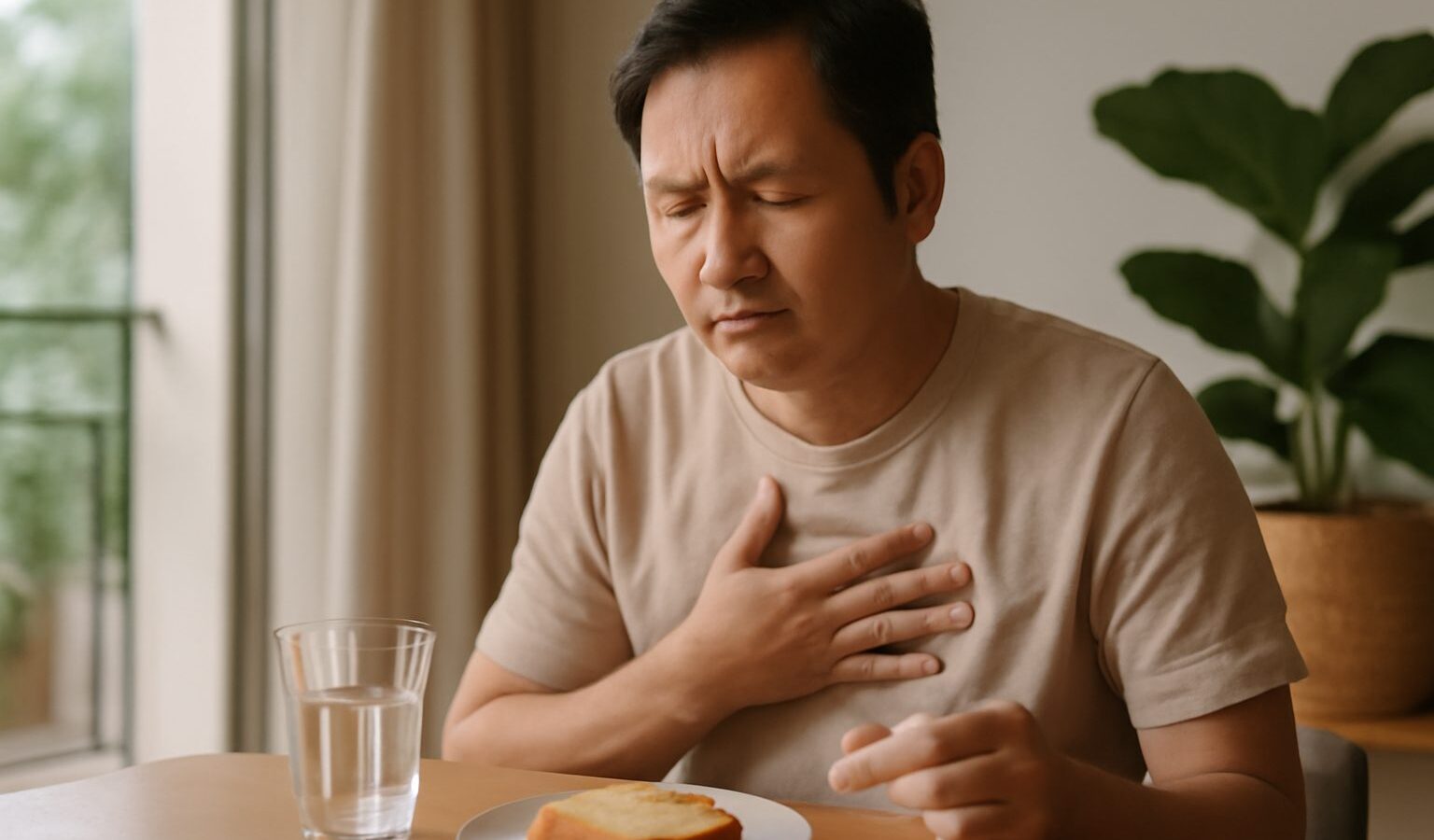
That burning feeling behind the breastbone after a big supper is something many people know well. Late hawker meals, strong coffee, and rich, oily food are all part of daily life here, so acid reflux in Singapore is a common complaint that quietly affects a lot of people. This guide offers calm, general information about acid reflux and GERD, from what they are to the everyday habits that help and the signs that mean you should see a doctor.
First, an important note. This article is general information only, not medical advice, diagnosis, or treatment. Reflux can overlap with other conditions and needs to be assessed individually, so please speak with a doctor, your polyclinic GP, or a specialist about your own symptoms. Do not start, stop, or change any treatment on your own.
What Acid Reflux and GERD Are
Your stomach makes acid to help digest food. A ring of muscle sits where the food pipe meets the stomach and normally keeps that acid where it belongs. When this valve relaxes or opens at the wrong moment, stomach contents can flow back up into the food pipe. That backward flow is what we call acid reflux, and the burning sensation it often brings is commonly known as heartburn.
Occasional reflux after a heavy or spicy meal is very common and not usually a cause for worry. When reflux happens frequently over time and starts to affect daily life, doctors may describe it as GERD, which stands for gastro-oesophageal reflux disease. The difference is largely about how often symptoms occur and whether they are causing problems. Only a doctor can tell whether what you are feeling is simple occasional reflux or something that needs closer attention, since other conditions can feel similar.
Common Triggers to Notice
Reflux tends to be nudged along by certain foods, habits, and timing. Triggers vary from person to person, so it helps to notice your own patterns rather than assume everyone reacts the same way. Some widely recognised triggers include:
- Spicy and oily food. Chilli-heavy dishes, deep-fried favourites, and very rich, creamy meals can set off symptoms in many people.
- Eating late at night. Lying down soon after a big meal makes it easier for acid to travel upward, so late suppers are a frequent culprit.
- Coffee and strong tea. Caffeine can relax the valve at the top of the stomach for some people.
- Alcohol. Drinking, especially in larger amounts or close to bedtime, is a common trigger.
- Carbonated and acidic drinks. Fizzy soft drinks and very acidic juices can aggravate symptoms.
- Large portions. A very full stomach puts more pressure on that valve.
- Carrying extra weight. Added pressure around the abdomen can make reflux more likely.
- Smoking. It can weaken the valve and worsen symptoms.
Noticing which of these affect you is a useful first step, and a food and symptom diary can make the pattern clearer for both you and your doctor.
Everyday Lifestyle Measures That Help
For many people, general lifestyle measures form the foundation of easing reflux, often alongside guidance from a doctor. These are broad, widely accepted habits, and your care team can help you adapt them to your routine.
- Eat smaller, earlier meals. Lighter portions and leaving a few hours between your last meal and lying down can make a real difference.
- Slow down. Eating more slowly and not lying flat straight after eating both help.
- Adjust your evenings. Some people find that raising the head of the bed slightly and avoiding late suppers eases night-time symptoms.
- Watch your triggers. Once you spot the foods or drinks that set you off, gently cutting back is more practical than trying to change everything at once.
- Mind your weight. Reaching and keeping a healthier weight can reduce pressure that contributes to reflux. HPB’s Healthier Choice symbols make balanced eating easier.
- Ease off smoking and alcohol. Both are worth reducing for reflux and for overall health.
- Loosen up. Very tight belts and waistbands can add pressure around the middle.
None of these replace medical advice, but together they create the conditions for fewer and milder symptoms over time. If lifestyle changes are not enough, a doctor can look at the fuller picture with you.
Lifestyle Measures Versus Medical Care
It helps to see how everyday habits and professional care work together rather than compete. One does not replace the other.
| Area | What lifestyle measures offer | What medical care provides |
|---|---|---|
| Understanding | Awareness of personal triggers | Assessment of whether it is reflux or something else |
| Diet and timing | Fewer flare-ups from smaller, earlier meals | A dietitian can tailor realistic changes |
| Frequent symptoms | Some relief, but not a full fix | A doctor investigates the cause and plan |
| Persistent GERD | Habits alone may not be enough | Only a doctor can advise on treatment |
| Warning signs | Not something to manage at home | Prompt evaluation and, if needed, referral |
The message is the same as with many conditions. Good habits do a lot of the work, and professional care guides and safeguards the whole plan.
Red-Flag Symptoms and When to See a Doctor
Most reflux is uncomfortable rather than dangerous, but some symptoms deserve prompt medical attention. See a doctor without delay if you notice difficulty or pain when swallowing, food feeling stuck, unintended weight loss, ongoing vomiting, signs of bleeding such as black stools or bringing up blood, or reflux that keeps coming back despite your best efforts. Symptoms that first appear in older adulthood are also worth checking.
It is also wise to see a doctor if you rely on remedies frequently, if symptoms disturb your sleep, or if they simply are not improving. A GP at a polyclinic or private clinic can assess you and, where appropriate, arrange further tests or a referral to a specialist.
One important caution: reflux can sometimes feel like chest discomfort, and chest pain should never be brushed off as “just heartburn”. If you have chest pain, especially with breathlessness, sweating, or pain spreading to the arm, jaw, or back, seek emergency care straight away. When in doubt, it is always safer to get checked quickly than to wait and see.
Explore More
Steady daily habits help with reflux and with health in general, so it is worth building a routine you can keep. See our guide to eating healthy on a budget in Singapore for practical everyday food ideas, and our health screening in Singapore guide to understand how to get checked. For your own symptoms and plan, your doctor is always the best guide.