

Maybe you have always wanted to try it, or you need more confidence in presentations, or you simply want a hobby that gets you out of your head after work. Acting classes for adults Singapore studios and arts groups run cover a wide range, from relaxed weekend workshops to structured courses aimed at people chasing roles in local film, TV and theatre. Knowing which type suits your goal saves you money and makes it far more likely you will stick with it.
This guide explains the main kinds of adult acting courses, what drives costs, what actually happens in class, and how to pick a good teacher.
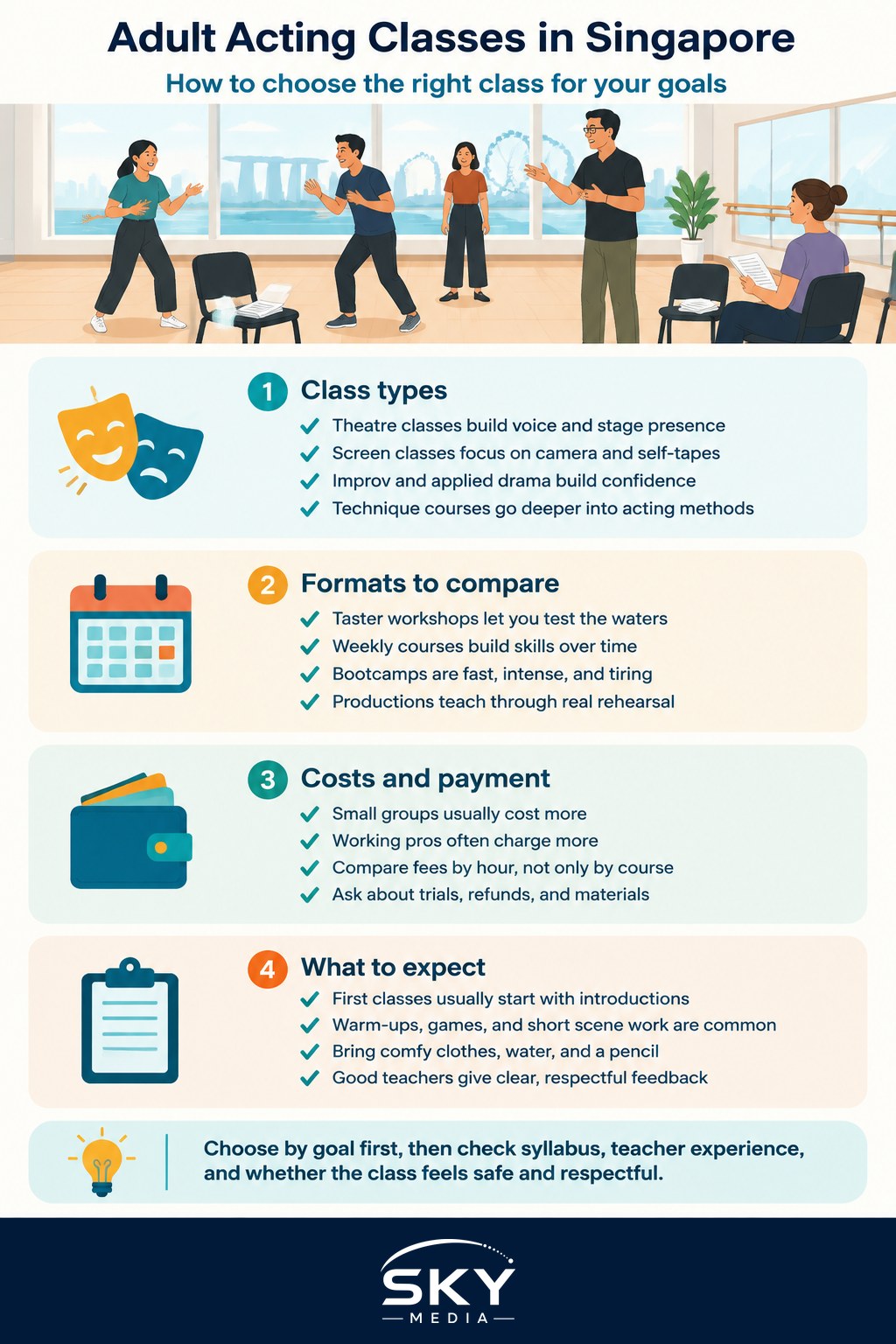
The Main Types of Adult Acting Classes
Stage or theatre acting. These focus on voice projection, physicality, working with a script and performing for a live audience. Classes often build towards a showcase or a short play at the end of the term. Singapore has an active theatre scene in English, Mandarin, Malay and Tamil, and some classes are taught in languages other than English.
Screen acting. Acting for film, TV and online content is subtler. The camera picks up small expressions, so classes cover scaled-down performance, hitting marks, continuity, working with a director, and self-tape auditions, which are now common for commercials and productions. Expect to watch yourself back on video a lot.
Improv-adjacent and applied drama. Improvisation classes build spontaneity, listening and quick thinking. Some are purely for fun, others are marketed for workplace confidence and communication. They are often the gentlest entry point because there is no script to memorise.
Method and technique-based courses. Some teachers anchor classes in a specific acting tradition, such as approaches derived from Stanislavski, Meisner or other well-known schools. These suit people who want to go deeper into craft.
Voice, accent and presentation. Related but narrower courses cover voice work, dialects for roles, or confidence on stage. If your main interest is your voice rather than your face, voice acting as a hobby may be the better starting point.
Comparing Formats Side by Side
| Format | Typical structure | Good for | What to expect |
|---|---|---|---|
| One-off taster workshop | A single session, a few hours | Testing whether you like it | Warm-up games, simple scene work, low pressure |
| Weekly term course | One evening or weekend slot over several weeks | Building real skills steadily | Progressive exercises, homework scripts, often an end-of-term showing |
| Intensive or bootcamp | Several full or half days close together | People with leave to take or a fixed goal | Fast pace, tiring, quick progress |
| Screen acting or self-tape course | Weekly or intensive, camera-based | Aspiring commercial or film actors | On-camera exercises, playback, audition practice |
| Community theatre production | Rehearsals over weeks leading to a show | Learning by doing | Auditions, rehearsal commitment, real performance |
What Affects the Cost
We do not quote fees, as they vary widely and change. Prices are shaped by:
- Class size. Small groups mean more stage time and feedback per person, and usually a higher price.
- Teacher’s background. Classes led by working professional actors or directors tend to cost more.
- Length and contact hours. Compare per hour rather than per course.
- Production costs. Courses ending in a public showcase may include venue, lighting or filming costs.
- Extras. Some include a filmed showreel clip or headshot session, others charge separately.
Before paying, ask whether there is a trial class, what the refund policy is if you miss sessions, and whether fees include materials. Some adult learning courses may be eligible for SkillsFuture Credit if they are listed on the official course directory, but many hobby acting classes are not. Check the SkillsFuture website for the specific course rather than assuming.
What Happens in Your First Class
Many beginners worry they will be pushed onto a stage alone on day one. In most adult beginner classes, that does not happen. A typical first session looks like this:
- Introductions and expectations. The teacher sets ground rules, often including that the room is a judgement-free space.
- Warm-ups. Stretching, breathing and voice exercises to loosen up. These can feel silly at first. Everyone else feels the same.
- Games. Group exercises for focus, listening and reacting, often borrowed from improv.
- Short scene or monologue work. You may pair up and read a short scene, usually from a script handed out in class.
- Feedback. Gentle notes from the teacher, sometimes peer feedback.
What to wear and bring:
- Comfortable clothes you can move and sit on the floor in.
- Shoes you can remove easily, as some studios work barefoot or in socks.
- A water bottle and a pencil for script notes.
- An open mind. Showing up and trying is the main skill in the first few weeks.
How to Choose a Good Class
Not every class is right for every learner. Look for:
- A clear syllabus. You should know roughly what will be covered each week.
- Teacher credentials and teaching experience. Being a good actor and being a good teacher are different skills. Ask how long they have taught adults.
- A safe, respectful room. Good teachers explain exercises involving physical contact or emotional material in advance and let you opt out. If something feels uncomfortable, you should be able to say so without pressure.
- Honest marketing. Be cautious of classes that promise agency representation, guaranteed roles or casting, or that require large upfront payments for “portfolio packages”. Legitimate training rarely guarantees work.
- The right fit for your goal. If you want a showreel, pick screen acting. If you want confidence for work, improv or applied drama may serve you better. If you want to perform live, look at theatre courses or community productions.
Making It a Regular Hobby
Acting improves with stage time, so think beyond a single course:
- Join a community theatre group. Many accept beginners for ensemble roles or backstage work, which teaches you a lot about productions.
- Watch local theatre and films. Seeing different styles of performance sharpens your eye.
- Pair it with movement or music. Many actors take dance or singing classes for range. Our guide to adult dance classes is a good place to begin.
- Practise at home. Read plays aloud, record short monologues on your phone, and watch them back.
If you are building a weekly routine of creative classes, music and art classes for adults and broader adult learning and night classes can help you plan around work.
Explore more: Voice Acting as a Hobby · Adult Dance Classes: Where to Start · Music and Art Classes for Adults
Further reading: How to Become a Voice Actor in Singapore