
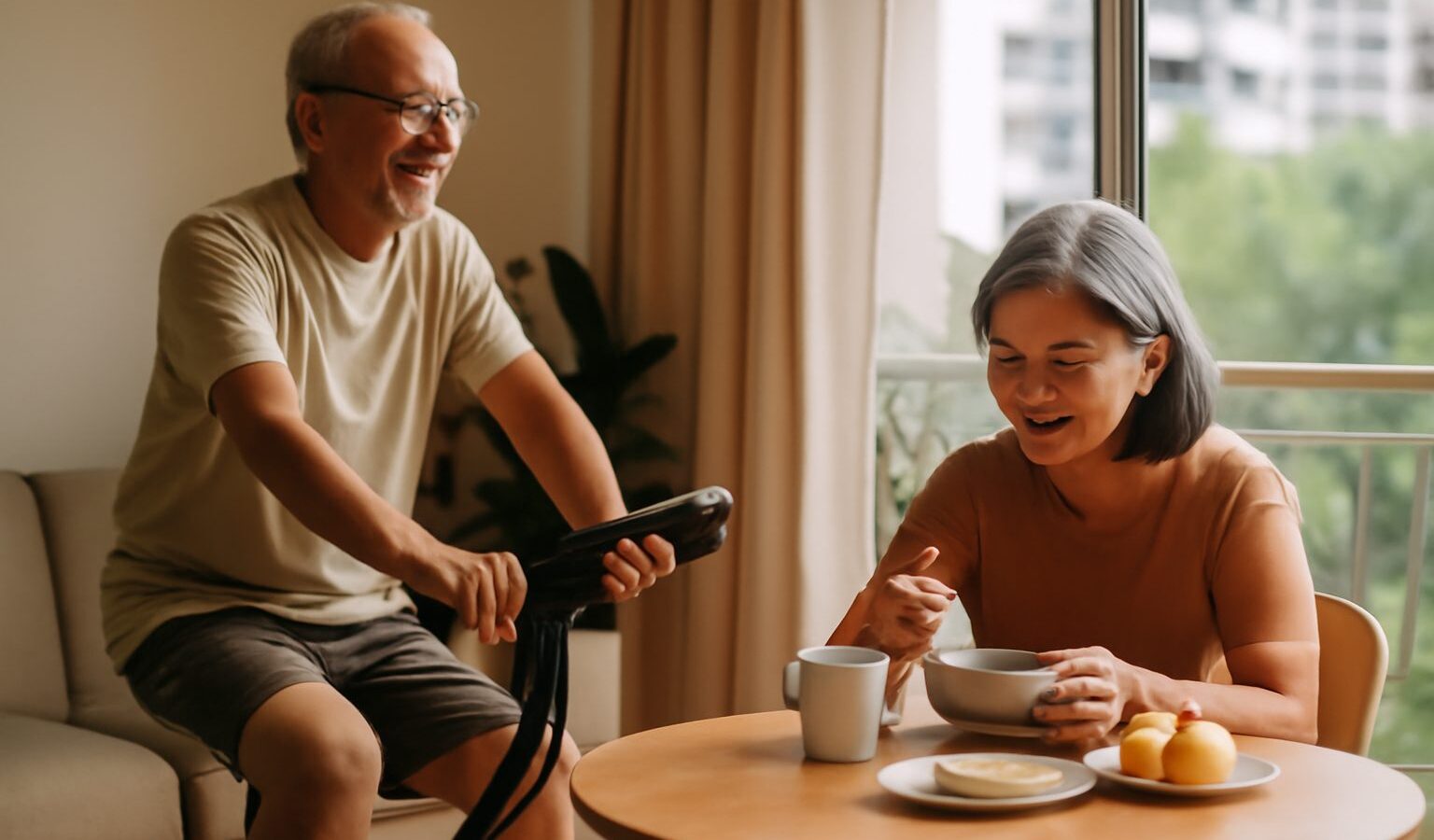
Retirement is not a full stop. For many older Singaporeans it opens up years, sometimes decades, of time to fill with the things that make life worth living. Active ageing in Singapore is the idea that later life can stay full and connected: that staying physically, socially and mentally engaged keeps people healthier, happier and more independent for longer. It is a national priority as well as a personal one, and there are more ways than ever to take part, many of them free or heavily subsidised and just a short walk from home.
This guide explains what active ageing means, why it matters, and the practical avenues open to you or the older person you are helping. It is general information to help you get started, not medical advice. Anyone with a health condition, or thinking of taking up new physical activity, should check with a doctor first.
What Active Ageing Really Means
Active ageing is often mistaken for “exercise for old people”. It is broader than that. It describes staying involved in life across three connected dimensions: the physical (moving your body and looking after your health), the social (relationships, company and belonging), and the mental (learning, purpose and keeping the mind occupied). Neglect one and the others tend to suffer. Someone who stays fit but isolated, or busy but lonely, is not ageing as well as they could.
The goal is not to stay young or to do everything a 30 year old does. It is to remain as capable, connected and content as possible for as long as possible, on your own terms. That might mean a daily walk and a weekly kopi with friends, or picking up the ukulele, or minding the grandchildren twice a week. Active ageing is deeply personal. What matters is engagement, not intensity.
The National Push and Active Ageing Centres
Singapore has an ageing population, and the response has been to build ageing well into the fabric of the neighbourhood. The clearest example is the network of Active Ageing Centres, community nodes usually run within HDB estates that act as a first port of call for seniors nearby. They organise group activities, exercise sessions, outings, befriending and light support, and they help connect older residents to services when needs arise.
The Silver Generation Office, under the Agency for Integrated Care, reaches out to seniors through Silver Generation Ambassadors who visit homes, share information and link people to programmes. Alongside this sit national movements encouraging exercise, healthier eating and staying socially connected in later life. You do not need to navigate all of this alone. Dropping in at your nearest Active Ageing Centre, or letting an Ambassador point the way, is usually the simplest first step. Check current locations, programmes and eligibility with the Agency for Integrated Care.
Ways to Stay Engaged
The opportunities fall into a handful of broad avenues. Most people mix several rather than picking just one.
- Exercise programmes. Group classes such as tai chi, qigong, brisk walking groups, gentle aerobics and strength and balance sessions run at community centres, parks and Active Ageing Centres. Doing them in a group adds company to the movement.
- Community activities. Interest groups, karaoke, board games, gardening, cooking, day trips and festive celebrations give a regular reason to leave the house and see familiar faces.
- Lifelong learning. Courses on smartphones and digital tools, languages, art, music and cooking are widely offered for older learners, some through the National Silver Academy and community providers. Learning keeps the mind sharp and gives structure to the week.
- Volunteering. Befriending other seniors, helping at community events, mentoring younger people or supporting a cause gives a strong sense of purpose, which research links closely to wellbeing in later life.
- Intergenerational bonding. Time with grandchildren, younger neighbours or students, whether through family, school programmes or community projects, benefits both sides and keeps older people plugged into the wider world.
The Health and Wellbeing Benefits
Staying engaged is not just pleasant, it is protective. Regular movement helps maintain strength, balance and mobility, which lowers the risk of falls and helps people stay independent in their own homes. Social connection is one of the strongest predictors of wellbeing in later life; loneliness, by contrast, is increasingly recognised as a genuine health risk. Keeping the mind active through learning and conversation supports memory, mood and confidence.
The dimensions reinforce one another. A weekly exercise class delivers physical benefit and social contact at once. A learning course exercises the mind and introduces new people. This is why active ageing is framed as a whole way of living rather than a single healthy habit. None of this is a cure or a guarantee, and it is not a substitute for medical care, but it stacks the odds in your favour.
Active Ageing at a Glance
The table below maps the main dimensions of active ageing to concrete ways to engage. Use it as a menu, not a checklist.
| Active-ageing dimension | How to engage |
|---|---|
| Physical health | Join a tai chi, walking or strength and balance group; use a senior gym corner or fitness park |
| Social connection | Drop in at an Active Ageing Centre; join an interest or hobby group; attend community outings |
| Mental stimulation | Take a course through lifelong learning providers; learn digital skills, a language or a craft |
| Sense of purpose | Volunteer, befriend other seniors, or mentor younger people |
| Family and community ties | Spend regular time with grandchildren; join intergenerational programmes |
| Everyday wellbeing | Build simple routines that combine movement, company and something to look forward to |
How to Get Started Locally
Start small and start near. The easiest entry point is usually the Active Ageing Centre closest to home, where staff can suggest activities that fit your interests, health and energy. From there you might add one exercise session and one social or learning activity a week, then build from what you enjoy. If mobility, health or getting out of the house is a worry, speak to the centre or the Agency for Integrated Care about gentler options and support.
A few practical tips. Go with a friend or neighbour the first time; company makes it far easier to keep coming back. Pick things you are genuinely curious about rather than what you feel you “should” do. And if you are taking up physical activity after a long gap or with a health condition, check with your doctor first and begin gently. Active ageing is a long game, and the point is to keep going, not to rush.
Explore more
Ready to build the physical side of active ageing? Our guide to staying fit and active as a senior covers safe, effective exercise for older adults. And for the mental and social side, see hobbies and learning for seniors in Singapore, full of ideas to keep your days full and your mind engaged.