
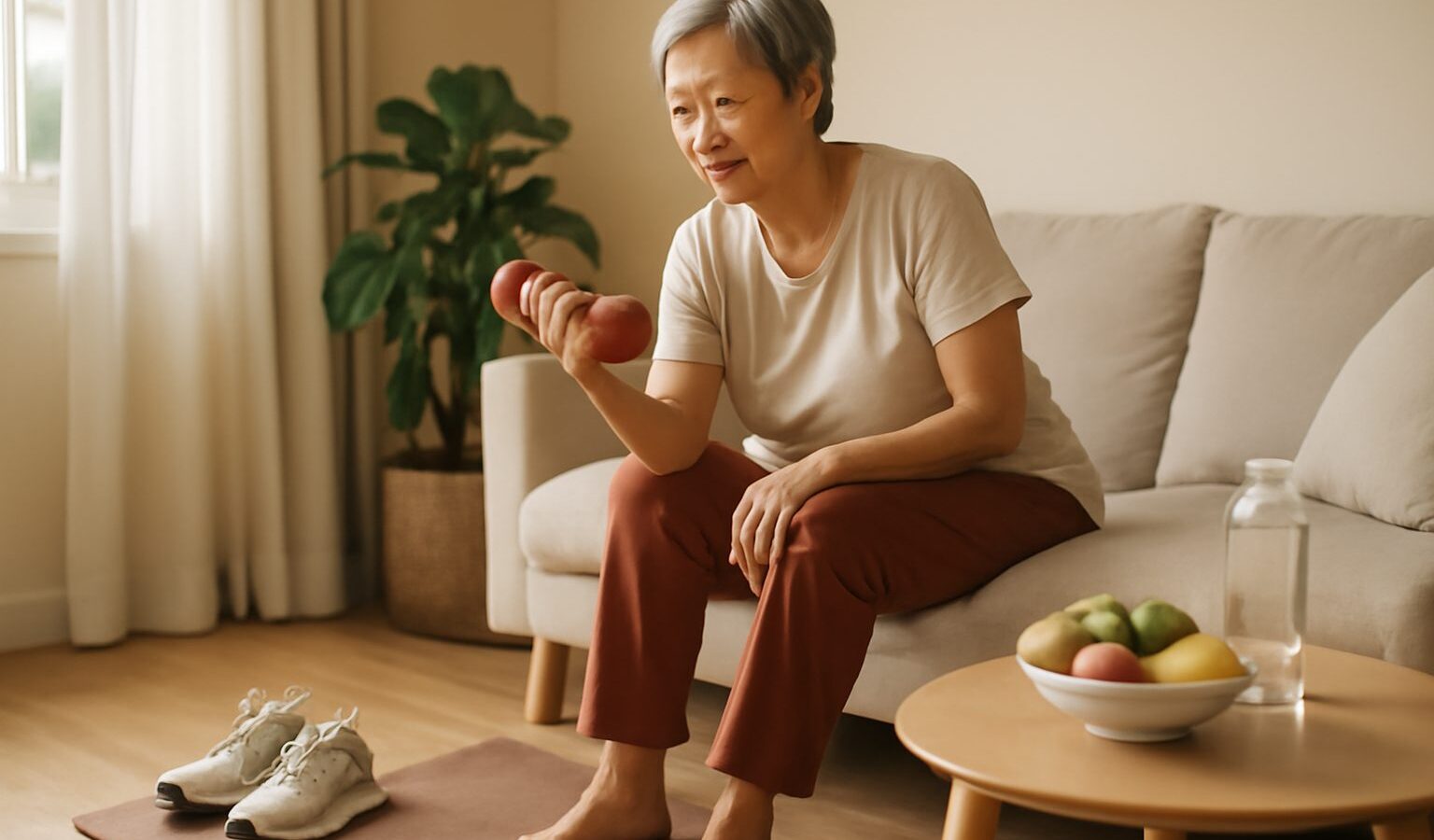
Keeping the body moving is one of the best things anyone can do for a healthy, independent later life. Good senior fitness in Singapore is not about hard workouts or the gym; it is about regular, gentle, well chosen activity that keeps you strong, steady and mobile so you can keep doing the things you enjoy. The good news is that it is never too late to start, and much of what helps most is simple, low cost and available close to home.
This article is general information to help you get moving safely, not medical advice. Everyone is different, and some conditions call for specific precautions. Before you start any new exercise, especially if you have a health condition, have not been active for a while, or are recovering from illness or surgery, please check with your doctor first.
The Four Kinds of Exercise That Matter
A well rounded routine covers four types of movement, and each does a different job.
- Strength work, such as gentle resistance exercises, standing up from a chair repeatedly, or light weights, keeps muscles from wasting with age. Strong muscles make everyday tasks easier and help protect the joints.
- Balance exercises, like standing on one leg with support nearby, heel to toe walking, or tai chi, train the body to stay steady and recover from a stumble.
- Flexibility work through gentle stretching keeps joints and muscles supple, which helps with reaching, bending and dressing.
- Aerobic activity such as brisk walking, swimming or cycling gets the heart and lungs working, supporting energy, mood and overall health.
Most people naturally focus on walking and forget the other three. A little of each, spread across the week, gives far more benefit than any single type on its own.
Why Strength and Balance Matter Most
If you only have energy for one focus, make it strength and balance. Falls are one of the biggest threats to independence in later life; a single serious fall can lead to a fracture, a hospital stay and a lasting loss of confidence. Muscle strength and good balance are the body’s main defences against falling, and unlike some risks, they are things you can actively improve at almost any age.
Strength and balance training does not need equipment. Sit to stand repetitions using a sturdy chair, calf raises while holding a kitchen counter, and slow, controlled weight shifts from one foot to the other are all effective, and they can be done at home. The key is to do them regularly and to have steady support within reach. If you have already had a fall, feel unsteady, or worry about your balance, speak to your doctor, who may refer you for a proper falls assessment or physiotherapy.
Gentle Options That Work Well
Plenty of activities suit older bodies without pounding the joints. Tai chi and qigong are excellent choices: their slow, flowing movements build balance, leg strength and calm, and classes are widely available in parks and community spaces. Brisk walking is the simplest aerobic exercise of all, free and easy to build into a daily routine. Swimming and water based exercise are gentle on the joints and good for people with knee or hip problems, since the water supports your weight. The best activity is the one you will actually keep doing, so choose something you enjoy.
Where to Exercise Around the Neighbourhood
You do not need a gym membership. Singapore’s estates are dotted with places to get moving:
- Senior gym corners and outdoor fitness stations offer simple, low impact machines designed for older users, free to use and often shaded.
- Fitness parks and park connectors give safe, flat, pleasant routes for walking and gentle exercise, best enjoyed in the cooler parts of the day.
- Community exercise classes at community centres and Active Ageing Centres run group tai chi, gentle aerobics and strength and balance sessions, adding company and encouragement to the movement.
Exercising in a group has a hidden benefit: the social contact and shared routine make it far easier to keep going than exercising alone.
Matching Exercise to the Benefit You Want
The table below shows what each type of exercise mainly helps with. A good weekly routine borrows from more than one row.
| Exercise type | Main benefit for seniors |
|---|---|
| Strength (chair stands, light weights) | Maintains muscle, makes daily tasks easier, supports joints |
| Balance (tai chi, single-leg stands) | Improves steadiness, lowers the risk of falls |
| Flexibility (gentle stretching) | Keeps joints supple for reaching, bending and dressing |
| Aerobic (brisk walking, swimming) | Supports heart, lungs, energy and mood |
| Water exercise / swimming | Gentle on joints, good with knee or hip problems |
| Group classes | Adds motivation, routine and social contact |
Starting Slowly and Staying Safe
The most common mistake is doing too much too soon. Begin gently, perhaps ten to fifteen minutes at a time, and build up gradually as you feel stronger. Warm up with easy movement, stop if you feel chest pain, dizziness, breathlessness or sharp joint pain, and rest when you need to. Wear supportive shoes, hold a rail or steady chair when doing balance work, and never push through pain. Steady progress beats a burst of effort followed by injury.
Singapore’s heat and humidity deserve real respect. Exercise in the cooler morning or evening hours, stay in the shade where you can, and drink water before, during and after activity rather than waiting until you feel thirsty; older adults do not always sense thirst reliably. If you feel faint, overheated, unusually tired or unwell, stop, cool down and rehydrate, and seek help if it does not pass. When in doubt about what is safe for you, ask your doctor. Exercising within your limits, day after day, is what keeps you fit and active for the long run.
Explore more
Since staying steady is such a big part of senior fitness, read our guide to preventing falls at home for seniors for practical ways to make your home safer. And to see how exercise fits into a fuller, more connected later life, explore active ageing in Singapore.
Related across Sky Media: Staying Fit in Singapore’s Heat