
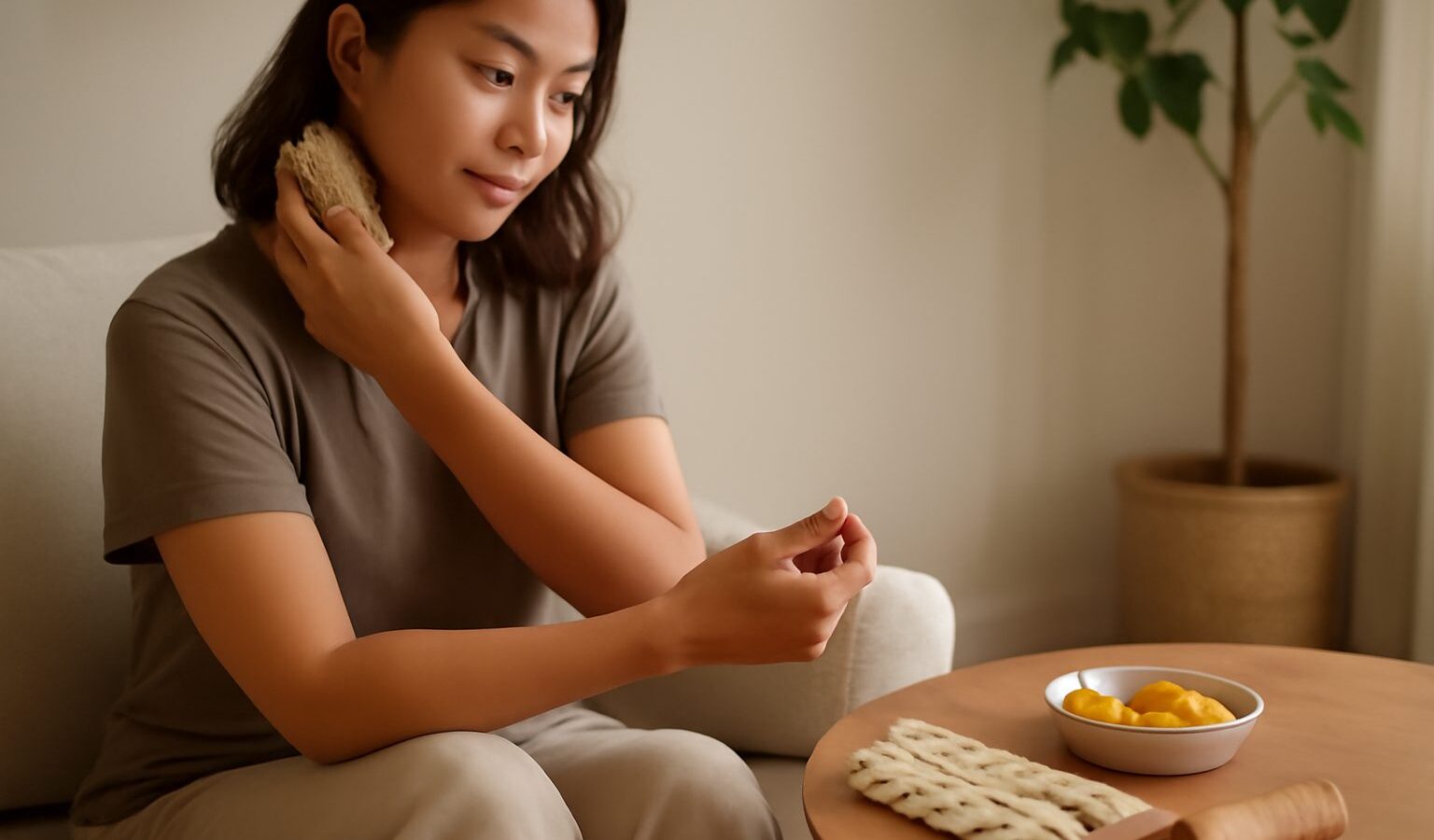
After a long day hunched over a laptop or squeezed onto a packed MRT, a few quiet minutes of hands-on care can feel like a small reset. Acupressure and self-massage are two of the easiest ways to give yourself that moment at home, no appointment needed. If you are curious about acupressure in Singapore but not sure where to start, this guide walks through the basics gently, so you can try it as a relaxation ritual rather than a quick fix.
Before we begin, one honest note. Acupressure and self-massage are traditional and complementary wellness practices. They can feel soothing and help you unwind, but they are not proven medical treatments and not a substitute for proper medical care. If you have a health condition, are pregnant, or have any new or worrying symptoms, please see a doctor and do not delay treatment.
What acupressure actually is
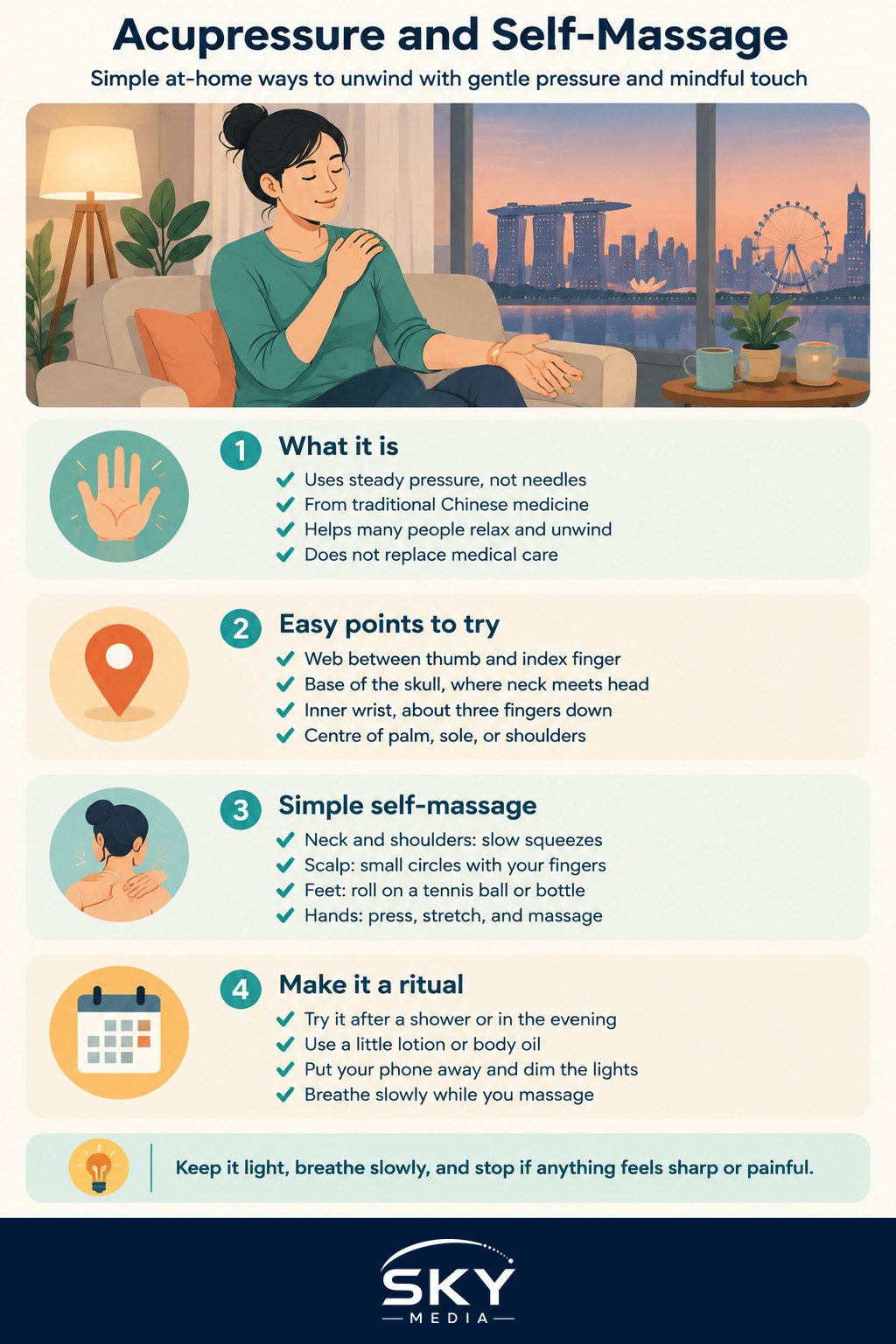
Acupressure comes from the same tradition as acupuncture, but instead of fine needles, you use steady pressure from your fingers, thumbs, or a rounded tool. The idea, drawn from traditional Chinese medicine, is that pressing certain points on the body encourages you to relax and release tension. You do not need to believe any particular theory to enjoy it. Many people simply find that firm, mindful pressure on a tight spot feels good and helps them slow down.
Think of it as a cousin of the everyday habit of rubbing your own temples or squeezing your shoulders. Acupressure just gives you a few reference points and a calmer, more deliberate way of doing it. It sits comfortably alongside other gentle practices, and if you already enjoy facial massage and gua sha, you will find the mindset familiar.
A few simple points to start with
You do not need to memorise a whole map of the body. A handful of well-known, easy-to-reach points is plenty for a beginner. Use a comfortable, steady pressure, hold for around 30 seconds to a minute while breathing slowly, and stop if anything feels sharp or painful.
- The web between your thumb and index finger. Pinch this fleshy area gently with the thumb and finger of your other hand. Many people reach for it when they feel tense or headachey. Skip this one entirely if you are pregnant.
- The dip at the base of your skull. Rest your thumbs where your neck meets the back of your head and press upward and inward, slowly. Lovely after a day of screen time.
- The inner wrist, about three finger-widths down from the crease. Press softly with your thumb. This point is often used as part of a wind-down routine.
- The centre of your palm, the sole of your foot, and the tops of your shoulders. These respond well to simple thumb pressure and small circles.
Keep it light and curious. This is relaxation, not a workout, and more force is not better.
Self-massage techniques for tight spots
Self-massage is broader than acupressure and just as useful. You can knead, stroke, and circle your way through the areas that carry the most tension. In our climate, warm hands and a little slip help, so a small amount of body oil or lotion makes everything smoother.
For the neck and shoulders, cup one hand over the opposite shoulder and squeeze in a slow rhythm, then walk your fingers up the side of your neck. For the scalp, spread your fingers and move the skin in small circles, which can feel wonderful before bed. For tired feet, roll the sole over a tennis ball or a chilled bottle while seated. For the hands, press and stretch each finger and massage the palm after a day of typing.
If your eyes feel strained, a soft press around the brow bone and temples pairs well with the advice in our guide to easing eye strain and screen fatigue. And if you want a fuller wind-down, folding self-massage into a wider routine for managing stress and relaxation helps it become a habit rather than a one-off.
Making it a calming Singapore-friendly ritual
The magic of self-massage is often less about technique and more about attention. A few practical touches make it easier to keep up in a busy Singapore week. Do it in the cool of the evening or after a shower when muscles are warm and relaxed. Aircon can leave skin dry, so a hydrating lotion keeps hands gliding. Put your phone away, dim the lights, and breathe slowly as you work, since the slow breath is doing as much as your hands.
You might set aside five minutes before bed, or a quick shoulder press at your desk mid-afternoon. If you enjoy the ritual and want to explore hands-on wellness more broadly, our overview of foot care and reflexology is a good next read.
When to skip it and see a professional
Gentle self-care has limits. Avoid pressing directly on broken skin, bruises, varicose veins, swellings, or areas that are hot, red, or painful. Be extra cautious during pregnancy, and check with your doctor first if you have a chronic condition, are on blood thinners, or have recently had surgery. Most importantly, acupressure and self-massage do not diagnose or treat illness. If you have persistent pain, headaches, dizziness, numbness, or any symptom that is new, worsening, or affecting your daily life, see a doctor rather than relying on self-massage.
Approached this way, acupressure and self-massage are a lovely, low-cost way to reconnect with your body at home. Keep the pressure kind, the breathing slow, and the expectations realistic, and let it be what it does best, which is helping you feel a little calmer and a little more at ease.
Frequently Asked Questions
How hard should I press when doing acupressure on myself? Use firm but comfortable pressure, enough to feel a dull pressure without sharp pain. Hold steadily while breathing slowly, and ease off if it hurts or tingles. More force is not better, and bruising is a sign you pressed too hard.
Can acupressure help with headaches or neck stiffness? Gentle pressure may ease tension and help you relax, which some people find eases tight shoulders and a stiff neck. It is not a treatment. If headaches are frequent, severe, sudden or come with dizziness or numbness, see a doctor.
Can I use a massage ball or tennis ball instead of my fingers? Yes, a tennis ball or similar ball works well for the soles of the feet, upper back and shoulders when leaning against a wall. Start with gentle pressure and avoid rolling over bones, bruises or joints. Stop if you feel sharp pain.
Which acupressure points should be avoided in pregnancy? Some points, including the web between thumb and index finger as mentioned in this guide, are traditionally avoided in pregnancy. Others may be too. Ask your doctor or midwife before trying acupressure while pregnant, and skip it if unsure.
How long should a self-massage session last? A few minutes is plenty to start with. Five minutes before bed or a quick shoulder press mid-afternoon can feel beneficial. Spending longer is fine if it feels good, but stop if an area becomes sore or tender.