

Bringing someone new into your child’s daily life is a big step, full of hope and, if we are honest, a little anxiety too. Whether you are welcoming a nanny, a helper, a grandparent taking on more care, or an infant-care educator, the early weeks set the tone for everything that follows. For families settling in a new caregiver singapore parents often feel a mix of relief and worry, and that is completely natural. The good news is that a warm, patient, and well-planned settling-in period helps everyone, especially your child, find their footing.
This is a gentle guide to making the transition smoother for your child, your caregiver, and you. Think of it as building a small team around your little one, with trust and communication at its heart.
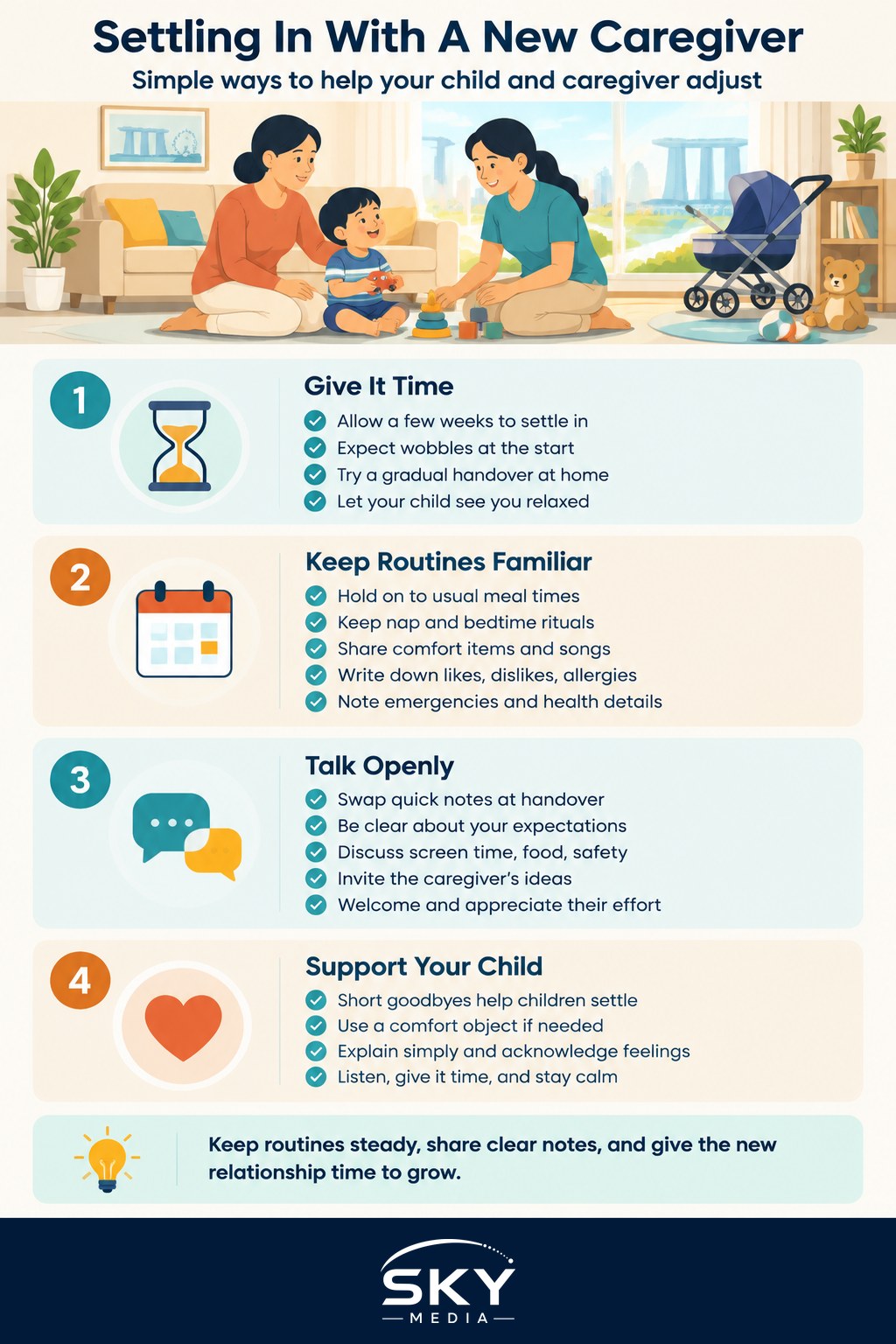
Give Everyone Time to Settle
The single most helpful mindset is patience. Children rarely bond with a new person overnight, and caregivers need time to learn your child’s rhythms, quirks, and comforts. Expecting instant harmony puts pressure on everyone. Instead, plan for a settling-in period of a few weeks, and treat the wobbles along the way as normal rather than as signs that something has gone wrong.
Where you can, arrange a gradual handover. If your schedule allows, spend some time together at home before the caregiver takes over fully. Let your child see you being warm and relaxed with the new person, because little ones take their cues from you. When they sense that you trust this adult, they are far more likely to relax too.
Consistency Is Comforting
Children feel safest when the world is predictable. During a transition, keeping the familiar parts of the day steady gives your child an anchor while one big thing changes. Try to hold on to the usual meal times, nap routines, favourite songs, comfort items, and bedtime rituals, and share these clearly with your caregiver.
A written routine can be a wonderful gift to a new caregiver. It removes guesswork and helps them step confidently into your child’s day. You might jot down:
- Meal and snack times, along with what your child likes, dislikes, and any allergies.
- Nap and sleep habits, including comfort objects and how your child likes to be settled.
- Play, outdoor time, and any regular activities or classes.
- How your child shows they are hungry, tired, or upset, and what soothes them.
- Emergency contacts and any health information, kept somewhere easy to find.
Warm, Open Communication
A good relationship with your caregiver rests on honest, kind communication in both directions. Set aside a few minutes at handover each day to swap notes on how things went, what your child enjoyed, and anything that came up. These small conversations build trust and catch little issues before they grow.
It helps to be clear about your expectations from the start, while staying open to your caregiver’s experience and ideas. Talk through your approach to screen time, discipline, food, safety, and outings, and invite them to share what has worked well for them. A caregiver who feels respected and included will care for your child with more confidence and warmth.
Do remember that your caregiver is settling in too. A new home, a new family’s habits, and a new little personality to learn are a lot to take on. Small gestures of welcome and appreciation go a long way towards building a happy, lasting arrangement.
Helping Your Child Through the Change
Some children take to a new caregiver easily, while others protest, cling, or become clingier with you for a while. Both responses are normal. Younger children may go through a spell of separation anxiety, and older ones might test the new boundaries. Meeting these moments with calm reassurance helps your child learn that the new adult is safe and kind.
The table below offers a gentle sense of what you might see at different ages and how you can help.
| Age of child | Common reactions | How you can help |
|---|---|---|
| Babies | Clinginess, more crying, unsettled feeds or sleep | Keep routines steady, allow slow bonding, let the caregiver learn baby’s cues |
| Toddlers | Protest at handover, testing limits, tears | Short, warm goodbyes, a comfort object, consistent daily rhythm |
| Preschoolers | Questions, occasional refusal, big feelings | Explain simply, acknowledge feelings, praise time spent happily together |
| School-age children | Reserve, comparison to previous carers, quietness | Listen openly, give it time, involve them in small ways |
Keep your goodbyes short, warm, and confident. Long, anxious farewells can unsettle a child more than a quick cuddle, a cheerful wave, and a clear promise that you will be back. Over time, as trust grows, most of these early reactions fade.
Building Trust Over the First Weeks
Trust is earned in small, steady moments rather than all at once. In the early days, you might check in a little more often, agree on how you would like to stay in touch during the day, and gently observe how your child and caregiver are getting on. As you see warmth and reliability, you can relax your monitoring and let the relationship breathe.
Notice the good things and say them out loud. A caregiver who hears that you appreciate the tidy nap routine, the patient feeding, or the lovely photo from the playground feels valued and motivated. Positive feedback builds a happier working relationship than a long list of corrections ever could.
When to Rethink an Arrangement
Most settling-in bumps smooth out with time and communication. Now and then, though, an arrangement is simply not the right fit. If, after a fair settling-in period and honest conversations, you have ongoing concerns about your child’s safety, wellbeing, or happiness, it is reasonable to review the situation. Trust your instincts as a parent, and remember that seeking a better match is not a failure but a caring decision.
Bringing a new caregiver into your family takes patience, warmth, and a willingness to work as a team. Give it time, keep the lines of communication open, and before long the anxious early days usually give way to a comfortable, trusting routine that supports your whole family.
Explore more
Frequently Asked Questions
How long does it take for a child to bond with a new nanny? It varies, and children rarely bond overnight. Plan for a settling-in period of a few weeks and treat wobbles as normal rather than a sign that something is wrong. A gradual handover, with you present at first, helps a lot.
What should I write down for a new caregiver on day one? Cover meal and snack times with likes, dislikes and allergies, nap habits and comfort objects, regular activities, how your child shows hunger or tiredness, and what soothes them. Add emergency contacts and health information in an easy-to-find place.
Should I worry if my toddler cries when I leave with the caregiver? Protest at handover is common and usually fades as trust grows. Keep goodbyes short, warm and confident, leave a comfort object and keep the daily rhythm consistent. Long, anxious farewells tend to unsettle children more.
How do I give feedback to a caregiver without upsetting them? Start by saying what you appreciate, then raise concerns kindly and specifically. A few minutes at handover each day for swapping notes catches small issues early. Remember your caregiver is settling into a new household too.
When is it time to change caregiver arrangements? If, after a fair settling-in period and honest conversations, you still have concerns about your child’s safety, wellbeing or happiness, it is reasonable to review the arrangement. Trust your instincts. Looking for a better match is a caring decision, not a failure.
Further reading: How to Handle Handover Between Parents and Caregivers