

Handing your little one over at the childcare gate for the first time can pull at your heart in ways you did not expect. If you are worried about how to help your baby adjust to childcare in Singapore, take a breath. Tears at drop-off, a few unsettled naps and some extra clinginess in the evenings are all normal, and they usually pass as your baby learns that this new place is safe and that you always come back.
Whether you are returning to work, moving your child from a helper or grandparent to an infant care centre, or simply wanting more social time for your little one, a gentle and patient approach makes the biggest difference. Here is how to make those early weeks smoother for both of you.
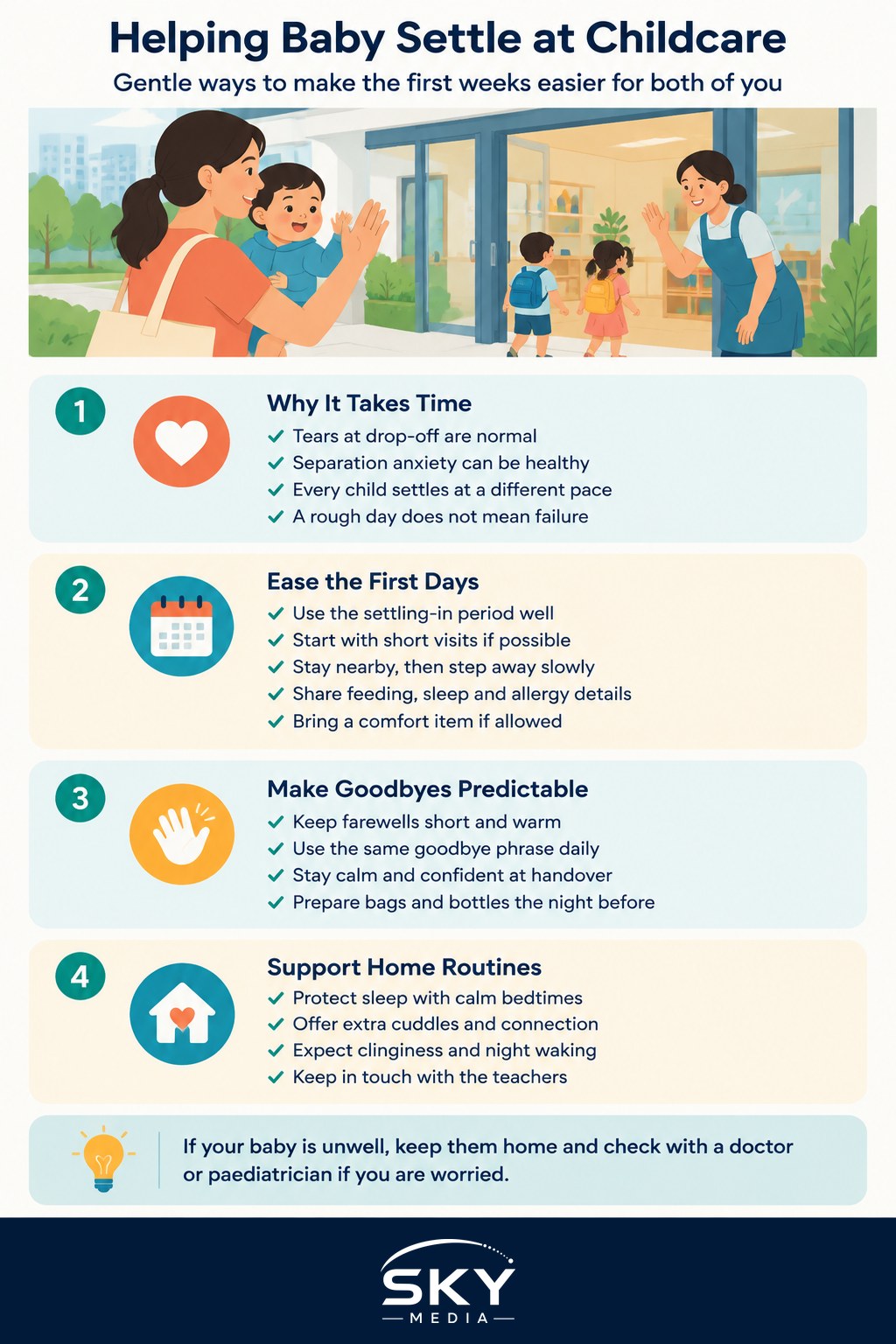
Why Settling In Takes Time
Babies and young toddlers thrive on familiar faces, smells and routines. A childcare centre is a whole new world of unfamiliar adults, other crying children, different food and a nap environment that is not their own cot at home. It makes complete sense that they need time to feel secure.
Separation anxiety is a healthy sign of attachment, and it often peaks somewhere in the second half of the first year and again in toddlerhood. Your baby protesting when you leave does not mean you are doing something wrong. It means they love you and know the difference between you and a new caregiver. That bond is exactly what helps them feel brave enough to explore once they trust the new setting.
Every child settles at their own pace. Some are happy within days, while others need a few weeks of ups and downs. A wobble after a long weekend or a bout of illness is common too, so try not to read too much into a single rough morning.
Making the Most of the Settling-In Period
Most centres in Singapore offer a settling-in or orientation phase, and it is worth taking it seriously rather than rushing back to a full day straight away.
- Start with short sessions. If the centre allows, begin with an hour or two and build up gradually over one to two weeks.
- Stay nearby at first if permitted, then step away for short stretches so your baby learns that you leave and return.
- Share the details. Tell caregivers about feeding cues, nap habits, comfort words and any allergies so they can care for your child the way you do.
- Bring a familiar comfort item if the centre permits, such as a small cloth or a lovey that smells like home.
Talk to your baby’s teachers openly. They settle new children all the time and can tell you how your little one is really doing once you are out of sight, which is often far calmer than the drop-off tears suggest.
Building a Goodbye Routine That Works
A predictable goodbye helps your baby feel secure. Keep it short, warm and consistent. A quick cuddle, a cheerful phrase you use every day such as “Mummy always comes back”, a wave at the window, and then go. Drawing out the farewell or sneaking away tends to make anxiety worse, because your child never quite knows when you might vanish.
It is fine to feel emotional, but try to keep your face and voice calm and confident at handover. Babies are expert readers of our feelings, and if you seem worried, they sense that something is wrong. Save your own wobble for the walk to the MRT.
Arriving with a little buffer of time helps too. Rushed, stressful mornings set an anxious tone, so lay out bags, bottles and clothes the night before where you can.
Easing the Transition at Home
What happens outside centre hours matters just as much. A well rested, connected baby copes far better with the day ahead.
- Protect sleep. Overtired babies find everything harder, so keep bedtimes calm and consistent. Our guide to baby sleep and routines can help.
- Reconnect in the evenings with unhurried cuddles, play and feeding, so your baby banks plenty of reassurance.
- Expect some clinginess, extra night waking or fussiness at first. This usually settles as the routine becomes familiar.
- Read simple books about saying goodbye and coming back, which helps toddlers make sense of the pattern.
If clinginess is intense, you may find it helpful to read about managing your toddler’s clinginess and attachment and dealing with separation anxiety in children, which show how normal these feelings are.
Managing Illness and Your Own Feelings
It is very common for babies to catch a run of coughs, colds and tummy bugs in their first months of childcare as their immune systems meet new germs, especially in our warm, humid climate where viruses circulate year round. This is normal and usually eases with time. See a doctor or your paediatrician if you are worried about a fever, feeding or breathing, and keep your child home when they are unwell, both to help them recover and to protect the other children.
Do not forget yourself in all of this. Guilt, sadness and second-guessing are incredibly common for parents starting childcare. Talk to other mums and dads, lean on your partner, and remember that quality childcare offers your baby warmth, stimulation and social connection. If low mood lingers, reach out to your doctor for support.
A Gentle Wrap-Up
Helping your baby adjust to childcare is a process, not a single event. Go slowly through the settling-in period, keep goodbyes short and loving, protect sleep and reconnection at home, and trust that the tears usually fade faster than you fear. Give it a few weeks, stay in close touch with the teachers, and before long that anxious little face at the gate will be waving you off and toddling in to play.
Official sources: Early Childhood Development Agency (ECDA)
Further reading: Full-Day vs Half-Day Childcare