
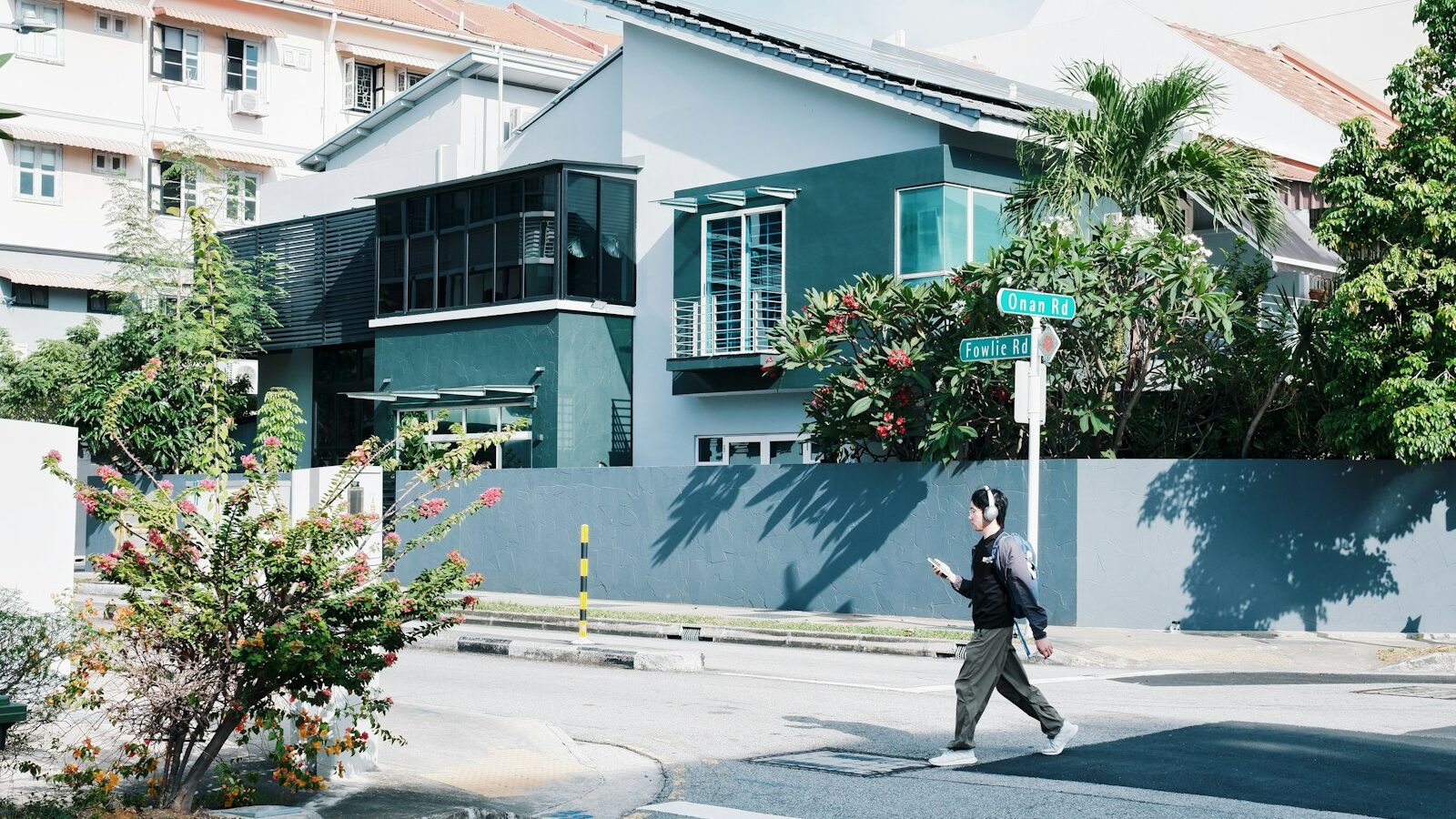
One of the first surprises many newcomers feel is the size of the space they can afford. If you are coming from a house with a garden or a sprawling apartment, adjusting to a smaller home in Singapore can be a jolt. Where will everything go? How will the family not trip over each other? The good news is that this island is full of people living happily in compact HDB flats and neat condos, and once you learn a few tricks, a smaller space can feel calmer, cheaper to run and easier to keep. Here is how to make the shift with a smile.
Change How You Think About Space
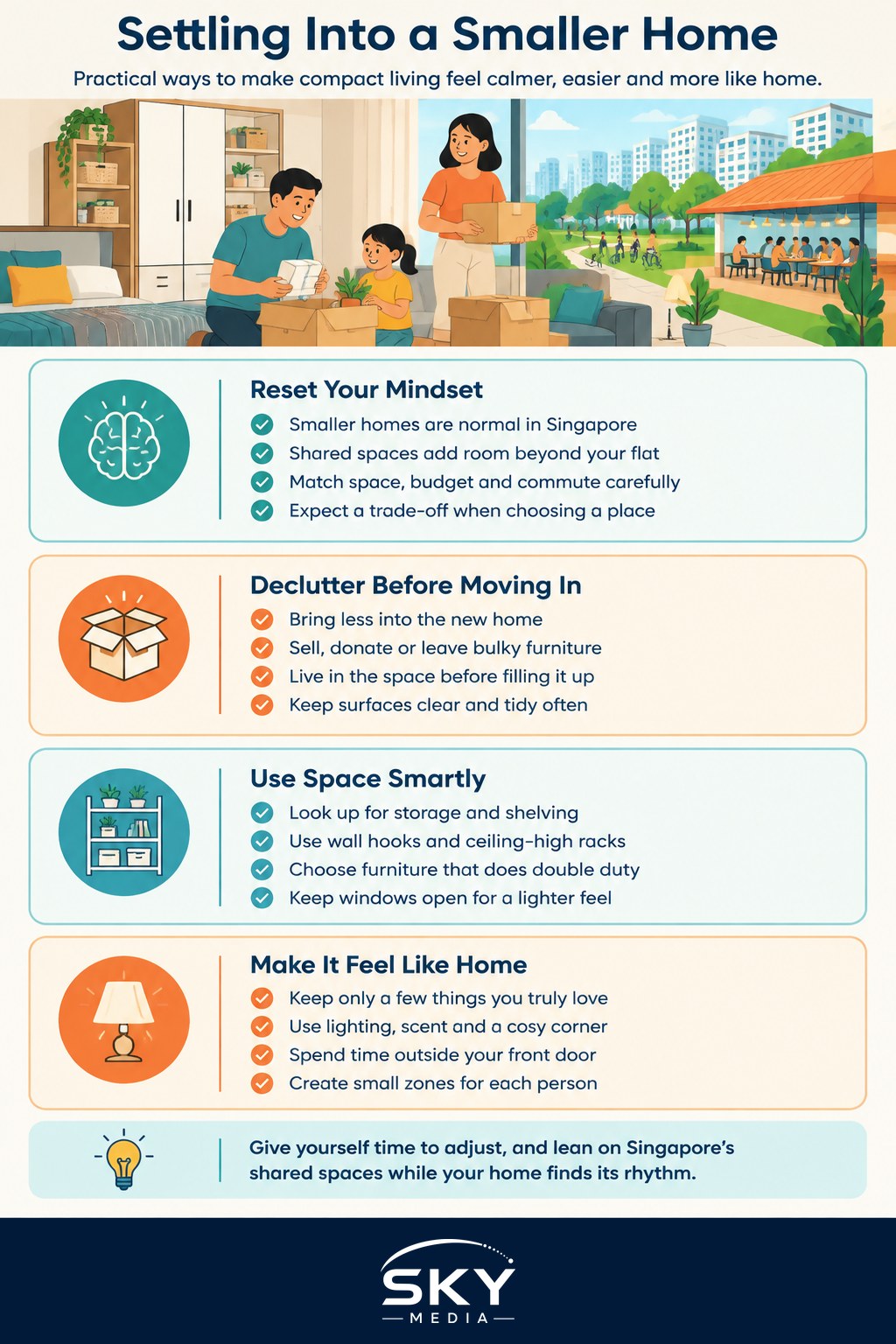
The first adjustment is in your head, not your floor plan. Land is scarce here, so smaller homes are simply how Singapore lives, from young couples to well-off families. That means the whole city is designed to give you back the space your home does not have. Your living room extends to the void deck and the neighbourhood park. Your dining room includes the hawker centre down the road. Your gym might be the fitness corner or the park connector. When you count the shared spaces around you, your home is far bigger than its square footage suggests.
It helps to arrive with realistic expectations before you even pick a place. Our guides on the cost of setting up home when you arrive and choosing which neighbourhood to live in can help you weigh space against location, budget and commute, which is a trade-off almost everyone here makes.
Declutter Before You Unpack
The kindest thing you can do for a smaller home is to bring less into it. If you are still packing, be ruthless. Every item you ship or buy needs a place to live, and in a compact flat there is no forgotten basement to swallow the excess. Sell, donate or leave behind the bulky furniture that suited your old home but will crowd this one.
Once you are in, resist the urge to fill every corner at once. Live in the space for a couple of weeks and notice how you actually move through it. You will quickly learn where you need storage and where an empty patch of floor is worth keeping. A few useful habits:
- Keep flat surfaces mostly clear, since clutter reads as chaos in a small room.
- Give every category of thing one home, so tidying is quick.
- Do a small regular clear-out rather than one giant purge a year.
Use Every Vertical Centimetre
When floor space is tight, look up. Tall shelving, over-door hooks, wall-mounted racks and storage that reaches toward the ceiling turn empty air into usable space. In the kitchen, magnetic strips and hanging rails free up counters. In the bedroom, beds with drawers underneath and a slim wardrobe do a lot of quiet work.
Choose furniture that earns its place twice. A sofa bed for guests, a dining table that folds away, nesting stools, an ottoman that stores blankets. Foldable and multi-use pieces are your best friends in a compact home. Light colours, mirrors and keeping window views open all make rooms feel airier than they are.
Do not forget the practical side of moving in. Getting your utilities set up and your internet sorted early means you can settle in without the frustration of a half-working home. A small space comes together fast once the basics are running.
Make It Feel Like Home, Not a Storage Unit
A smaller home should still feel warm, not clinical. Choose a handful of things you truly love, photos, a rug, a plant on the windowsill, and let those carry the personality. It is better to display a few meaningful items well than to cram in everything you own. Good lighting, a scent you like and a comfortable reading corner will do more for the mood than extra square metres ever would.
Get outside often, too. Part of thriving in a compact flat is not spending every hour inside it. Explore the park connectors, linger at a kopitiam, join a class at the community centre. When your daily life spills happily beyond your front door, the size of your home stops mattering so much.
Give Yourself and Your Family Time
Everyone adjusts at a different pace. Children may miss having their own big room, and you may miss the quiet of extra distance from each other. Talk about it openly, create little zones so each person has a spot that feels like theirs, even if it is just a shelf or a corner, and agree on simple house rhythms for shared spaces.
Within a few months, most newcomers find that a smaller home in Singapore is not a sacrifice but a nudge toward a lighter, more outward-facing life. You own less, clean less, spend less on filling rooms, and lean more on the city around you. That is not settling for less. For many, it turns out to be exactly the reset a fresh start needs.
Frequently Asked Questions
Should I ship my furniture or buy new pieces after I arrive? For a smaller home, buying or renting locally is often simpler than shipping bulky pieces. Shipping costs can outweigh the value of big items that may not fit the layout. Bring things of sentimental value, measure your new space first, and buy larger items once you have lived there a while.
Where can I store seasonal items or luggage in a flat with no storeroom? Use space under beds, top shelves of wardrobes and boxes stacked neatly in a corner. Vacuum storage bags help for bedding and clothes. If you still run out of room, consider paid storage services, but first ask whether you need to keep the item at all.
How do I stop a small flat from feeling stuffy in the humidity? Keep air moving by opening windows when it is safe, using fans and avoiding heavy furniture that blocks airflow. Dry laundry in a well-ventilated spot and keep clutter low, since it traps moisture and dust. Light colours and tidy surfaces make rooms feel fresher too.
How do we give everyone privacy in a compact home? Create small personal zones, such as a desk corner, a curtain around a bed or a shelf each member can call their own. Agree on quiet times and shared-space routines. Even small boundaries help, and regular time out of the flat reduces friction as well.
Will noise from neighbours be a problem in an HDB flat or condo? Some noise is part of living close together, and most neighbours are understanding if you keep things reasonable. Be considerate with music, late-night activities and renovation hours yourself. If a problem persists, speak politely first, then involve your town council or condo management.