

You have just landed after a long flight, you are tired and a little disoriented, and the first real decision of your trip is waiting: how to get from the airport into the city. Handled well, airport transfers abroad are a smooth twenty-minute ride that sets a calm tone for the whole holiday. Handled badly, they turn into an overpriced taxi, a wrong bus, or a stressful hour hunting for the right platform. Coming from Changi, where the MRT, taxis and coaches all run like clockwork, it is easy to assume every airport is as seamless, but arrivals abroad vary enormously. This guide gives you a simple method to research your options before you fly and to choose confidently once you land, wherever in the world you touch down.
Do Your Homework Before You Fly
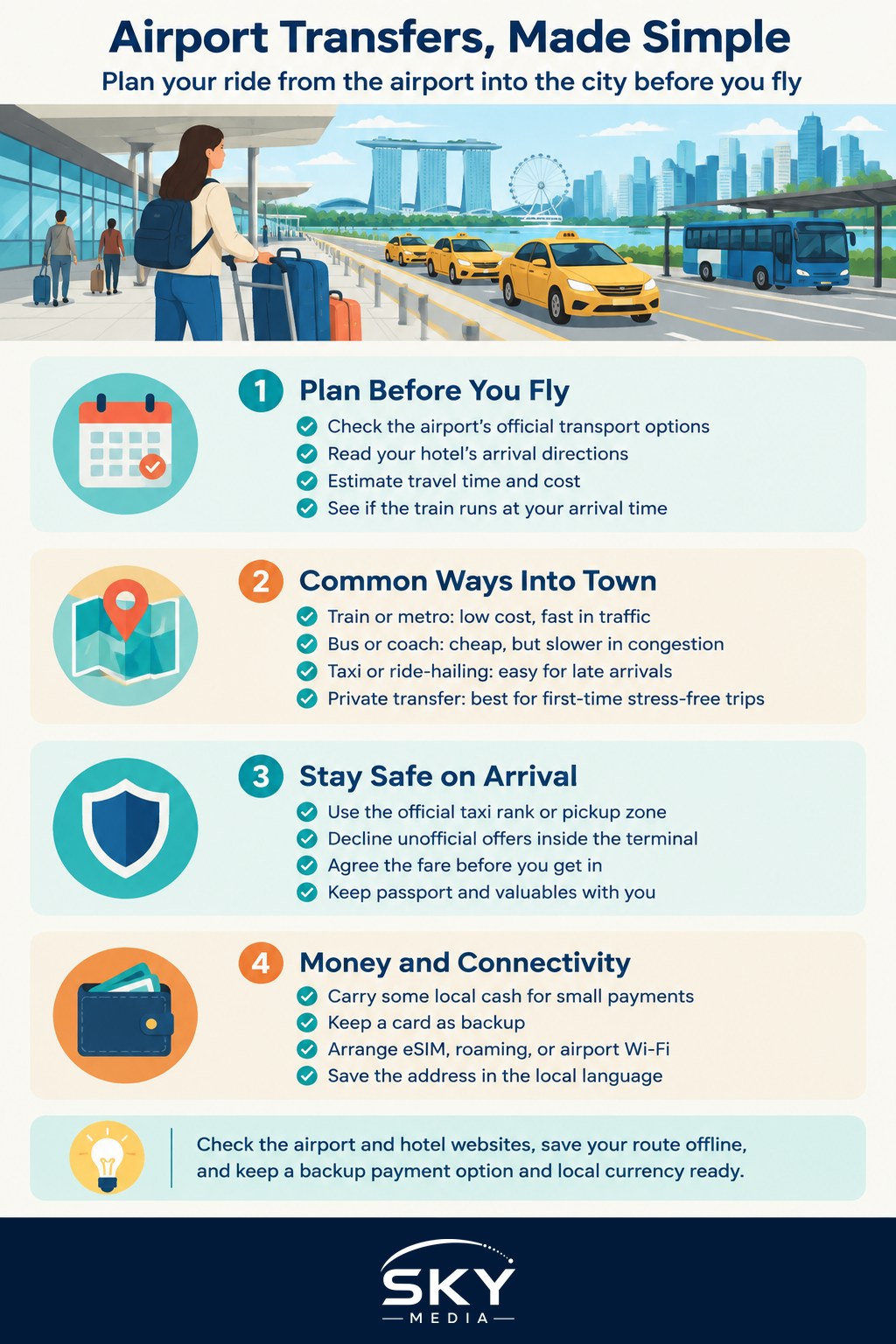
The best transfer decision is made before you leave Singapore, when you are rested and have Changi’s free Wi-Fi rather than a foggy head in a strange terminal. Once you have booked your flight, spend ten minutes learning how people typically get from that airport to your accommodation. Search the airport’s official website, which usually lists the ground transport options, and look up your hotel’s own arrival directions, which often name the nearest station or the recommended route.
Note a few things down while you research. What is the rough travel time and cost for the main options? Does the train or metro run at the hour you land, or does a late arrival rule it out? Is your hotel walkable from a station, or will you still need a short taxi at the other end with heavy bags? Save a screenshot of the route and the address in the local language, since showing a driver written text avoids pronunciation trouble. Doing this homework turns a stressful arrival into a decision you already made calmly days earlier.
The Main Ways Into the City
Most cities offer a familiar menu of transfer types, each with its own balance of cost, speed and comfort. Your right answer depends on your budget, your luggage, the time you land and how confident you feel navigating a new place.
| Option | Rough cost | Best for | Watch out for |
|---|---|---|---|
| Airport train or metro | Low | Solo or light travellers, budget trips, beating traffic | Steps and changes with heavy bags; may stop late at night |
| Airport bus or coach | Low | Budget travellers, direct routes to city hubs | Slower in traffic; limited late-night service |
| Official airport taxi | Medium to high | Late arrivals, groups, lots of luggage, door-to-door ease | Use the marked rank only; confirm meter or fixed fare first |
| Ride-hailing app | Medium | Travellers who prefer an upfront price and a mapped route | Designated pickup points; patchy coverage in some countries |
| Prepaid private transfer | Higher | Families, first visits, arriving very tired | Book through a reputable provider; confirm the meeting point |
Trains and metros are often the fastest and cheapest way in for a single traveller who can manage their bag, and they sidestep the traffic that snarls road routes at peak hours. Buses suit tight budgets and drop you at central hubs, though they crawl in congestion. Taxis and ride-hailing come into their own late at night, with a group, or when you are simply too tired to navigate, trading money for a door-to-door ride. Prepaid private transfers cost the most but remove all uncertainty, which can be worth it for a family with young children on a first visit somewhere unfamiliar. Treat every price here as a rough, illustrative guide, since fares vary widely by city and move over time; check current rates when you plan.
Staying Safe From the Terminal to the Kerb
The arrivals hall is a classic spot for touts, so a little firmness keeps you out of trouble. Almost everywhere, unofficial drivers approach tired arrivals inside the terminal offering a taxi or a lift. Politely decline and walk to the official, marked taxi rank or the signed ride-hailing pickup zone instead. A genuine airport taxi queues at a designated rank with clear signage and a marked vehicle, not a stranger tapping your shoulder near the baggage belt.
Build a few safe habits into every arrival:
- Agree the fare model before you get in: either the meter runs, or you confirm a fixed price out loud first.
- Prefer official ranks, airport-authorised counters, or a reputable ride-hailing app over any freelance offer.
- Keep valuables, passport and phone on your person, not in a bag in the boot, and watch your luggage into the vehicle yourself.
- Share your live location or the ride details with someone back home, and note the local emergency number before you travel.
- Check the current MFA (Ministry of Foreign Affairs) travel notices for your destination, as advice on local transport safety and reliable operators can change.
None of this needs to make you anxious. The vast majority of drivers are honest, and a confident traveller who heads straight for the official rank rarely runs into problems.
Paying, Connectivity and Small Details That Help
The little logistics decide whether a transfer feels smooth or fiddly. Sort out money and connectivity before you need them. Have a small amount of local currency for a bus fare, a ticket machine or a taxi that does not take cards, and carry a card as backup, since many cities now run cashless transport. Work out your data plan too, because a working phone map transforms a foreign arrival: arrange a travel eSIM or roaming before you leave Singapore, or note where the airport’s free Wi-Fi reaches so you can book a ride or check a route on landing.
A few final details smooth the path. Many metro systems use a stored-value card or a contactless tap that is cheaper than single tickets, so a quick look at how the local system pays off. Keep your accommodation’s address saved offline in the local language, and screenshot the route in case you lose signal underground. If you land late, lean towards a taxi or prepaid transfer over a train that may have stopped running, and confirm your hotel’s check-in hours so you are not stranded outside a locked lobby. These small preparations, made calmly from home, are what let you step off the plane and into the city without missing a beat.
Explore more
Once you are in town, our guide to getting around by public transport abroad takes over from the airport transfer. Since arrivals are a moment to stay alert, read staying safe while travelling alongside this, and to handle fares, cards and cash smoothly on the ground, see managing money while travelling.
Frequently Asked Questions
What if I land after my hotel reception has closed? Tell the hotel your flight number and arrival time before you travel, and ask about late check-in or a key arrangement. Confirm how self check-in works. Keep the hotel’s contact number handy in case you are delayed.
Is it better to pre-book an airport transfer through my hotel? It can be convenient, particularly for late arrivals, families or heavy luggage, but it may cost more than a taxi or train. Ask the hotel for the price and compare, and confirm the meeting point.
Can I get a child seat in a taxi or transfer overseas? It varies by country and company. Many taxis do not carry child seats, while some private transfers provide them if requested in advance. Ask when booking and check the local rules for children in cars.
What should I do if a taxi driver refuses to use the meter? Politely decline, step out and take another taxi from the official rank. Agreeing a fixed price clearly before you start is also fine. Avoid arguing and make a note of the plate if you feel unsafe.